Need help?
Do you have a question about the OpenVox WGW1002 and is the answer not in the manual?
Describes the OpenVox VoxStack Series GSM Gateway as an open source asterisk-based GSM VoIP Gateway solution for SMBs and SOHOs with a friendly GUI and modular design.
Illustrates a typical topological graph showing how the WGW1002 connects SIP phones, Soft SIP phones, and Elastix Server via the Internet.
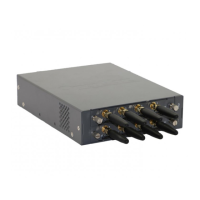
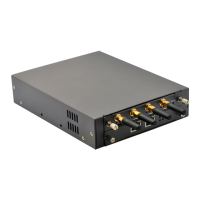
Displays an image of the VS-GW1202-8G model, showing its physical layout and components.
Lists key features of the WGW1002, including Asterisk-based operation, codec support, SMS functionality, IMEI modification, and hot-swap capability.
Provides technical specifications like weight, size, frequency, temperature range, operation humidity, power source, and LAN ports.
Details the default IP address (172.16.99.1) and username (admin) for accessing the gateway's interface.
Explains that the "Status" page provides comprehensive information on GSM, SIP, Routing, and Network status.
Details the various parameters displayed on the System Status page, including Port, Signal, BER, Carrier, Registration Status, PDD, ACD, ASR, GSM Status, and Remain Time.
Introduces the Time settings section, which allows configuration of the gateway's system time and time zone.
Explains the options for configuring time settings, including System Time, Time Zone, POSIX TZ String, and NTP server settings for synchronization.
Describes how to reset or modify the gateway's username and password for web and SSH access.
Details the fields for Web Login Settings (User Name, Password, Confirm Password, Port) and SSH Login Settings.
Explains how to select different languages for the system interface and how to upload custom language packages.
Shows the interface for language settings, including selecting the language and enabling advanced options for downloading/deleting packages.
Describes how to configure automatic reboots for the gateway based on time intervals like daily, weekly, or monthly.
Illustrates the settings for scheduled reboot types (By Day, By Week, By Month, By Running Time) and running time configuration.
Explains how to perform system reboots and Asterisk reboots separately using prompt confirmations.
Introduces system update options, including firmware updates and online updates, with cautions about configuration file impact.
Explains how to backup and upload configuration files to retain settings during updates or system resets.
Shows a prompt for system updates, comparing current and newest versions and warning about potential configuration damage.
Provides details on accessing system information such as software/hardware versions, storage, memory, contact address, and uptime.
Introduces the GSM settings section, where users can view SIM card status and port information.
Displays the GSM System status, showing port details, signal strength, carrier, registration status, and other key GSM parameters.
Details the configuration options for individual GSM ports, including speaker/microphone volume, DAC/ADC gain, CLIR, and SMS center number.
Covers settings like Band binding, PIN code application, CLIR (Caller ID restriction), and Call Waiting for GSM ports.
Explains how to automatically modify IMEI numbers for GSM modules, including enabling the feature and setting modification intervals.
Details advanced IMEI modification settings, allowing manual input or autogeneration of IMEI numbers for specific ports.
Introduces settings to limit call durations, either per call (Single Call Duration Limit) or overall.
Explains the "Call Duration Limitation" settings, including minimum charging time, alarm thresholds, and auto-reset options.
Describes how to save configuration settings from one GSM port to others, ensuring consistency across the device.
Shows the interface for saving settings to other ports, including options to sync all settings or select specific ones.
Displays detailed GSM information for each port, including IMEI, network status, signal quality, and SIM details.
Introduces the SIP Endpoints section, which lists and shows the status of registered SIP endpoints.
Shows the SIP Status interface, detailing endpoint name, registration status, and credentials.
Explains how to add new SIP endpoints and modify existing ones, covering registration types like Anonymous and Endpoint registers.
Details the configuration for Anonymous Registration and Register to Gateway modes for SIP endpoints.
Describes the configuration for the gateway registering itself to a SIP server, including settings for name, username, password, and transport.
Shows the interface for registering the gateway to a server, with options for name, username, password, and transport protocols.
Lists various call options related to DTMF mode, Remote-Party-ID, Caller ID presentation, and trust settings.
Details signalling options like Progress Inband, Allow Overlap Dialing, Append user=phone to URI, and Allow Transfers.
Covers timer settings for SIP transactions, such as default T1 timer, call setup timer, and session timers.
Explains session timer features, minimum/maximum session refresh intervals, and session refresher settings.
Details general networking options for SIP, including UDP/TCP bind ports, authentication timeouts, and hostname lookup.
Covers internal SIP calls, prefixes, and NAT traversal settings for SIP networking.
Explains NAT settings like local network, subscribe network change event, and IP address handling for NATed environments.
Details NAT settings such as matching external addresses, dynamic exclude static, and externally mapped TCP ports.
Lists options for parsing and compatibility, including RFC interpretation, compact headers, SDP owner, and shrink caller ID.
Covers registration expiry settings and retry mechanisms for SIP connections.
Details security options such as matching authentication username, realm configuration, and allowing guest calls.
Explains security settings like Always Auth Reject, Authenticate Options Requests, and handling of SIP authentication.
Describes media settings such as premature media, and TOS (Type of Service) for SIP and RTP packets.
Details codec settings, allowing users to prioritize different audio codecs like G.711, G.729, and GSM.
Shows the interface for selecting and prioritizing audio codecs for voice transmission.
Displays the routing rules interface, showing how calls are directed between SIP and GSM ports.
Illustrates creating new call routing rules, defining sources, destinations, and dial patterns.
Explains how to set up call routing rules, including specifying routing names, incoming sources, and outgoing destinations.
Details advanced routing rule options, including dial patterns, prepend, prefix, and Caller ID matching.
Defines parameters for routing rules, such as Routing Name, Call Comes in From, and Send Call Through.
Explains advanced dial pattern matching sequences (X, Z, N, ranges, wildcards) and special matching rules.
Describes how to create time-based routing rules, specifying time ranges, weekdays, and months for call routing.
Provides an example of configuring time patterns to route calls based on specific date and time conditions.
Shows how to change rules for setting Caller ID name, number, and forward number for calls.
Explains how to configure failover numbers for calls, allowing the system to try alternative numbers if the primary fails.
Details how to create GSM or SIP groups for load balancing and automatic port selection when making calls.
Illustrates establishing a group with a name, type (GSM), policy (Roundrobin), and members.
Explains Mobile Number Portability (MNP) settings, including enabling the feature and providing the MNP URL for number manipulation.
Introduces SMS settings, allowing users to enable SMS storage and status reports for tracking messages.
Details the "General" SMS settings, including enabling SMS Received, Local Stored, and Status Report.
Covers sender options for SMS, such as resending failed messages and setting the number of retries.
Defines sender options like "Resend Failed Message", "Repeat Same Message", and "Verbose" level.
Explains how to configure the gateway to forward received SMS messages to specified email addresses.
Shows the interface for SMS to Email options, including SMTP server, sender/destination addresses, and TLS settings.
Describes SMS control settings, allowing operation of the gateway via SMS commands and passwords.
Details SMS control formats for rebooting, restoring config, and getting IP info, along with inbox auto-clean settings.
Explains how to send SMS messages via HTTP requests, including URL, username, password, and port configuration.
Shows the HTTP to SMS interface, detailing URL parameters for sending SMS messages.
Describes how to send SMS messages to an HTTP server, specifying URL and message content.
Details how to send SMS messages from the gateway to specified numbers, with options for port selection and message content.
Shows the SMS Sender Status interface, including statistics reports and detailed sending logs.
Explains how to manage received SMS messages, including scanning, deleting, cleaning, and exporting.
Details the SMS Information interface for viewing received messages, with filtering and sorting options.
Describes how to view sent SMS messages, showing details like receiver, time, message content, and transmit status.
Introduces LAN settings, covering IP types (Factory, Static, DHCP) and reserved IP addresses for network access.
Details LAN interface settings, MAC address, IP address, Netmask, Default Gateway, and Reserved Access IP configuration.
Explains how to configure DNS servers for network resolution, allowing input of up to four server addresses.
Defines DNS settings, emphasizing that the IPs are provided by the local network service provider.
Explains how to enable or disable DDNS (dynamic domain name server) configuration, including type, username, password, and domain.
Shows the DDNS interface for enabling dynamic domain name server configuration, including type, username, password, and domain.
Defines DDNS settings, covering enablement, server type, account credentials, and domain name.
Describes the network connectivity checking tool, supporting Ping and Traceroute commands to test network reachability.
Details the network connectivity checking tool, supporting Ping and Traceroute commands to test network reachability.
Explains how to enable and configure the Asterisk API interface for managing the gateway remotely.
Details Asterisk API settings, including manager name, secret, deny/permit rules, and various access rights (System, Call, Log, etc.).
Shows how to access the gateway API using Putty, demonstrating a telnet connection to the Asterisk Call Manager.
Describes the Asterisk CLI interface for running commands directly on the gateway's Asterisk core.
Details the Asterisk CLI interface for running commands directly on the gateway's Asterisk core.
Lists common Asterisk CLI commands available for debugging and managing the gateway.
Explains the Asterisk File Editor, allowing users to edit and create configuration files for the system.
Explains the Asterisk File Editor, allowing users to edit and create configuration files for the system.
Shows a list of configuration files within the Asterisk File Editor, enabling creation and modification.
Introduces log settings, allowing users to enable different types of logs (System, Asterisk, SIP, AT Commands) for monitoring.
Details system log controls, including enabling logs, auto-clean settings, max size, and verbose/notice levels.
Displays the actual system log entries, showing events like power on, restarts, and configuration changes.
Shows system log entries and provides controls for refresh rate and cleaning up logs.
Displays logs for AT commands sent to the GSM module, showing transmitted commands and responses.
Presents AT command logs, including TX (transmit) and RX (receive) data, and module revision information.
Shows Call Detail Record (CDR) output, listing call information like Caller ID, Callee ID, start time, duration, and result.
Displays CDR output and statistics for GSM outbound calls, showing counts for all calls, answered, canceled, etc.
Defines various log options like System Logs, Auto clean, Verbose, Notice, Warning, Debug, Error, DTMF, SIP Logs, and CDR logs.
Defines log options including Asterisk logs, SIP logs, Debug AT Commands Logs, and Call Detail Record logs.
Lists general information about the device, including wireless port, temperature ranges, power specifications, and maximum power.
Details general specifications like operating humidity and power supply.
Lists supported GSM features such as volume adjustment, IMEI modification, PIN identification, band binding, and USSD transceiver.
Lists further GSM features like SMS bulk transceiver, call transfer, and open API interface (AMI).
Outlines SIP features including adding/deleting SIP trunks, combining trunks into groups, and SIP registration with domains.
Lists supported SIP registration types (Anonymous, Endpoint registers, Gateway registers) and protocols (SIP, IAX, TCP, UDP, etc.).
Covers support for routing calls before number changes, routing after number changes, and GSM->IP/IP->GSM routing.
Details support for adding, modifying, and deleting routing rules, as well as unlimited routing rules and flexible routing settings.
Lists business control features like permitting/prohibiting calls, automatic callback, speed dial, and customizable IVR/DISA.
Continues business control features, including customizable IVR and DISA applications.
Highlights system features like convenient Web GUI configuration, signal strength indicator, NTP sync, DTMF modes, and SSH access.
Lists system features such as AT command interface, GSM ports group management, PDD/ACD/ASR/BER display, and codec support.
Covers network features like DDNS support, network types (Static IP, Dynamic, PPPOE), and web login modification.
Details network features including ping/traceroute commands on the web.
Lists operation and maintenance features such as SMS remote control, echo cancellation, jitter buffer, and gateway board hot-plug.
Covers operation maintenance like reboot settings, firmware updates via HTTP, detailed log output, factory reset, and warranty.
 General
| Network Interface | 1 x 10/100Mbps Ethernet |
|---|---|
| Network Standard | IEEE 802.3, IEEE 802.3u |
| Fax | T.38 |
| Power Supply | DC 12V/1A |
| Storage Temperature | -20°C to 70°C |
| Humidity | 10% to 90% Non-condensing |
| VoIP Protocols | SIP |
| Voice Codecs | G.711 |
| Operating Temperature | 0°C to 40°C |
| Ports | 2 GSM Channels |

 To Next Page