Appendix C: About Cell Balancing
In Section Section 2.3, we asserted that each battery cell must be top-balanced separately, before assembling
the battery pack.
Here, we will prove why.
Q: But Steve, doesn’t the BMS have a built-in balancer?
A: Yes, the BMS has a built-in balancing function. HOWEVER no, it is not capable of doing an initial balance
on new cells.
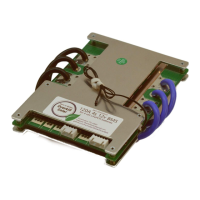
The balancer works by connecting a tiny bleed resistor (see Figure C.1 below) to the cells with the highest
voltage, and the excess energy in those cells turns into waste heat. This is a slow process. The intention is that
the BMS can maintain the balance on the cells as they slowly drift over their lifetime.
Figure C.1: Bleed Resistors within the 12V BMS
A batch of new cells needs to be top-balanced before they can be expected to charge properly as a battery
pack.
Q: Why?
A: Because of the nature of the LiFePO4 voltage curve. At the top end of a charge cycle, the cell voltage spikes
quickly, and charging must be stopped to prevent damage to the cells. If one cell is at a higher state of charge,
(in terms of amp-hours or coulombs), even by a small amount, it will spike while the other cells are still in the
"bulk" phase of their charge cycle (See Figure C.1 below). On the linked graph, the red line is the highest
cell,which triggers a "cell overvoltage" alarm before the pink/green cells get to a full charge. The BMS must
then disconnect to protect the high cell, and the battery pack will be at a lower voltage than expected. You
want all the cells to spike up at the same time, and the only way this can happen is for them to be well
balanced.


 To Next Page
