Basic Orientation
2-20 LIFEPAK 20 Defibrillator/Monitor Operating Instructions
Note: When the CodeManagement Module is attached to the defibrillator, the green LED on the
CodeManagement Module and the AC Mains LED on the defibrillator are both illuminated while the
device is connected to AC power.
BATTERY OPERATION
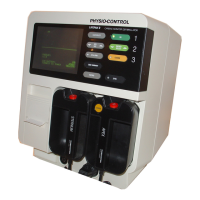
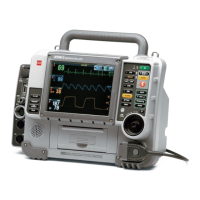
The LIFEPAK 20 defibrillator/monitor and the CodeManagement Module each have an internal
battery. Battery operation for the defibrillator is explained below. Battery operation for the
CodeManagement Module is explained on page 2-20.
LIFEPAK 20 Defibrillator/Monitor Battery
The internal nickel-metal hydride battery is rechargeable and intended to be used for standby
operation. The defibrillator automatically switches to battery power when the power cord is
disconnected from an AC outlet or from the defibrillator.
A new, fully charged battery provides approximately 90 360-joule discharges, 70 minutes of pacing, or
approximately 120 minutes of continuous monitoring before the defibrillator turns off. When the LOW
BATTERY: CONNECT TO AC POWER message appears on the screen, immediately plug the power
cord into an AC outlet to continue use and begin recharging the battery. If low battery messages
frequently appear, the battery may need to be replaced. Contact Physio-Control Technical Service or
qualified service personnel for assistance.
Connect the defibrillator to AC power after each use to recharge the battery. Typically, new fully
depleted batteries recharge for 2.5 hours to regain full capacity. Partially depleted batteries recharge
for a time period equivalent to the time the defibrillator was in use. For example, if the defibrillator was
used one hour, the required recharge time will be approximately one hour.
New batteries or batteries that have been stored for an extended time should be recharged before they
are used. Connect the defibrillator to an AC power outlet for 2.5 hours to bring the battery to full
charge.
Battery Performance and Life
Several factors can contribute to the nickel-metal hydride battery’s performance and life cycle,
including:
1 The defibrillator’s use for assisting patients (“on time” and shocks).
2 The defibrillator’s use when the battery is at minimum capacity (low battery condition).
3 The battery’s normal self-discharge rate and the energy used by defibrillator self-tests.
To maximize battery performance and life, plug the defibrillator/monitor into an AC outlet to recharge
the battery whenever the defibrillator/monitor is not in use. As a reminder, you can set up the
LIFEPAK 20 defibrillator/monitor to sound a series of warning beeps, identified as AC LOSS ALERT,
whenever the defibrillator is turned off and not plugged into an AC outlet (refer to the General Setup
Menu, page 8-3).
Note: Even when properly maintained, the internal rechargeable nickel-metal hydride battery
should be replaced every two years.



 To Next Page