Monitoring
3-10 LIFEPAK 20 Defibrillator/Monitor Operating Instructions
How a Pulse Oximeter Works
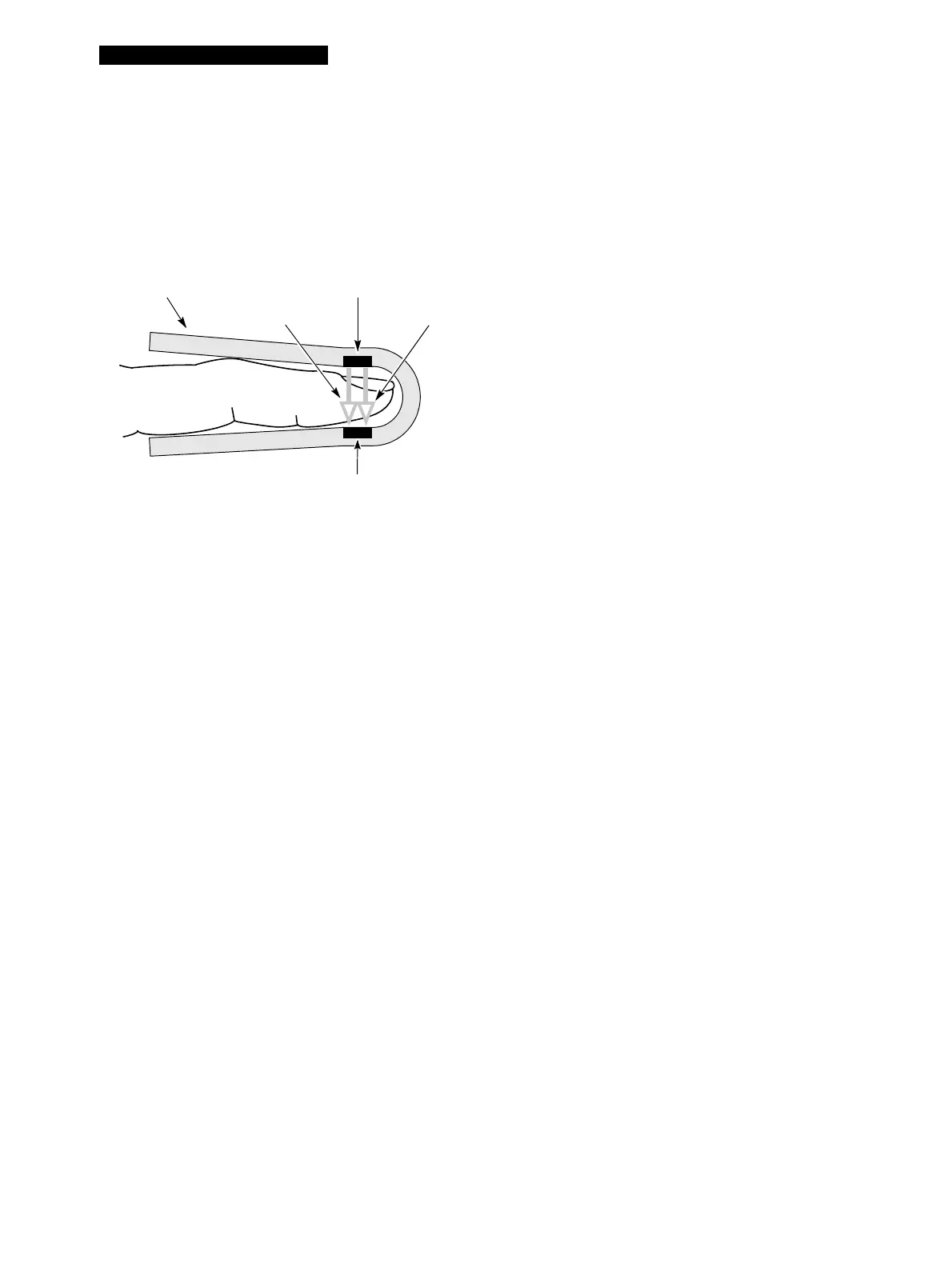
A pulse oximeter sensor directs light through a fleshy body site (usually the finger or earlobe). The
sensor sends light from the emitting diodes to the receiving detector as shown in Figure 3-4. Oxygen
saturated blood absorbs light differently as compared to unsaturated blood. The pulse oximeter
translates the amount of light received into a saturation percentage and displays an SpO2 reading.
Normal values typically range from 95% to 100% at sea level.
Figure 3-4 How a Pulse Oximeter Works
The quality of the SpO2 reading depends on correct sensor size and placement, adequate blood flow
through the sensor site, patient motion, and exposure to ambient light. For example, with very low
perfusion at the monitored site, readings may read lower than core arterial oxygen saturation. Test
methods for accuracy are available by contacting your local Physio-Control representative.
SpO2 Monitoring Considerations
Each oximeter sensor is applied to a specific site on the patient. Use the following criteria to select the
appropriate sensor:
• Patient weight
• Patient perfusion to extremities
• Patient activity level
• Available application sites on the patient’s body
• Sterility requirements
• Anticipated duration of monitoring
To help ensure optimal and accurate performance:
• Use a dry and appropriately sized sensor.
• Keep the sensor site at the same level as the patient’s heart.
• Apply it according to the Directions for Use provided with the sensor.
• Observe all warnings and cautions noted in the sensor’s Directions for Use.
Sensor (holds LEDs and
detector)
Red Infrared
Light emitting
diodes
Light receiving
detector



 To Next Page