System Overview
RUBY-9715VG2AR User’s Manual 1-1
Chapter 1
System Overview
1.1 Introduction
Multi-core technology has been a major evolution in IT industry now since various
applications are running in parallel. Multi-core processing will help address these
computing challenges. This evolution in technology will allow for increased
performance and efficiency in computers that can simultaneously run multiple
complex applications and successfully complete more tasks at the same time.
Moreover, on multi-core systems, since each core has its own cache, the operating
system has sufficient resources to handle most compute intensive tasks in parallel.
Since Intel has presented dual core technology in one processor package, it is good
news for all users expect server adopters.
The power of dual-core delivers exceptional benefits to platform but the thermal
issues exist. Due to constraint of processor architecture and manufacturing process,
heat generated by dual core processor is much higher than single core processor.
Since Intel® Pentium® D processors with a thermal design power rating of 130W
runs up to 3.4 GHz, it is not proper to mount this hot engine on single board
computer. ATX form factor is the one that Portwell choose to provide the solution
for those 19” rack mount applications since it has been approved with both thermal
and vibration issues.
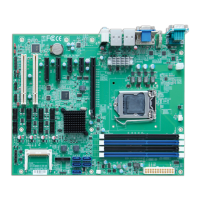
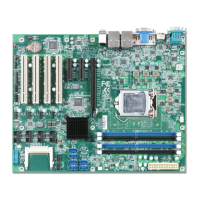
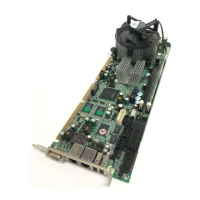
RUBY-9715VG2AR which is the industrial main board, adopts Intel’s latest PCI
Express chipset based on Intel® 945G and ICH7R that supports up to 1066MHz FSB
processor. It delivers outstanding system performance through high-bandwidth
interface such as dual–channel DDR2 667 memory, PCI-Express x16 graphic, six PCI
slots, four SATA 300 ports and one IDE channel. This chipset includes the Intel®
GMA 950 graphics core which provides responsive graphics performance and
stunning video playback and support ADD2 allowing user to receive SDVO signal
through PCI Express x16 slot to offer 2nd independent display.
In addition, RUBY-9715VG2AR also strengthens its storage capability with next-
generation Serial ATA 300 ports and Intel® Matrix Storage Technology. The
chipset have four integrated SATA ports for transfer rates up to 3 Gb/s, which is
double the speed of the current SATA interface of 1.5Gb/s. SATA 3Gbits/sec
essentially provides a larger pipe to move data faster. Together with Intel® Matrix
Storage Technology, it adds support for RAID 0,1, 5 and 10 level providing quick
access to data and protection against data loss for maximum performance, protection
and upgradeability.
Downloaded from StockCheck.com





 To Next Page