63
Systems
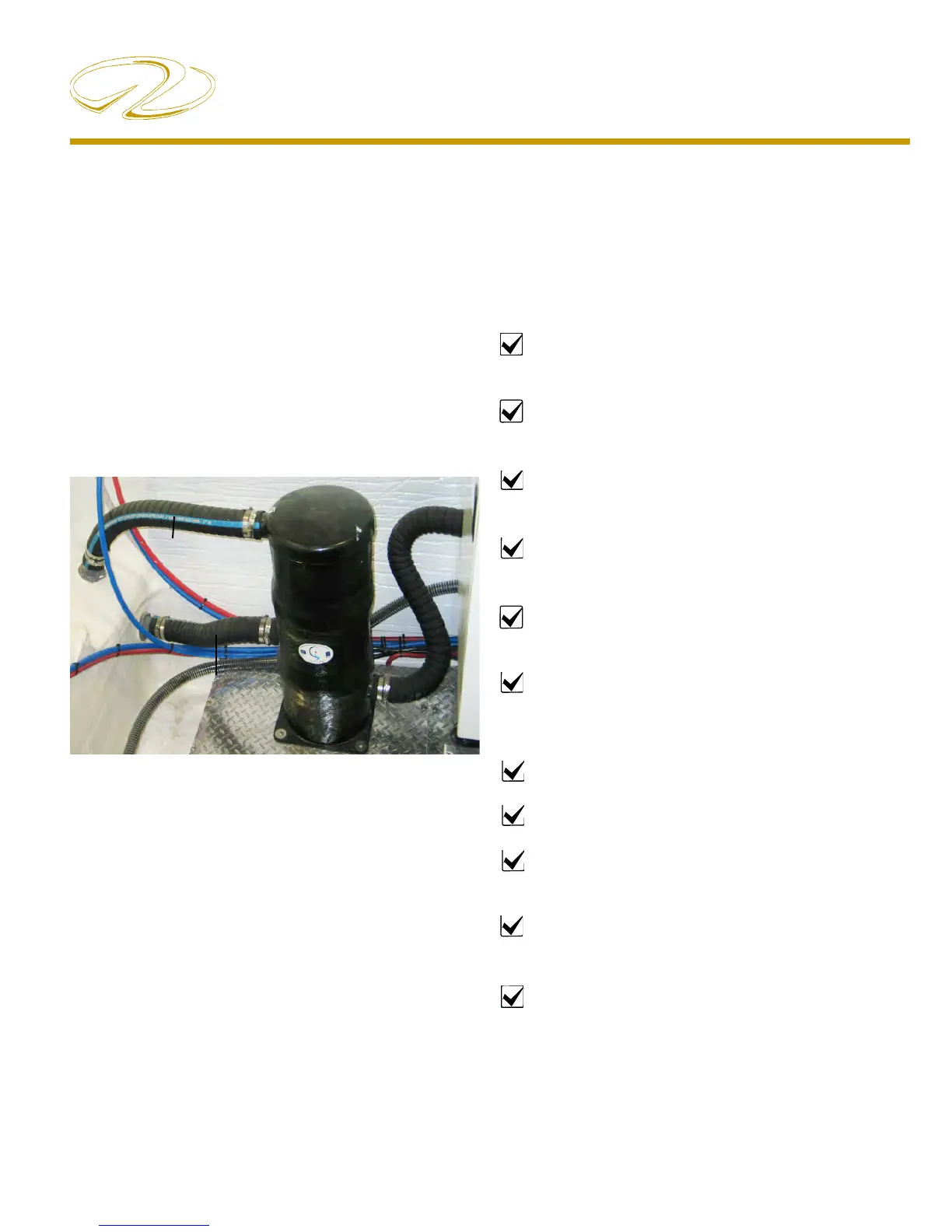
Typical Exhaust System
The generator exhaust system features a dual tier operation.
As the water and exhaust exit the generator they travel to
the muffl er. The muffl er discharges the heavier water out
the muffl er bottom and through the hull. The exhaust
itself is exited out the muffl er top and through the hull.
The benefi ts of the system are two-fold. First, the actual
decibel or sound level is decreased. In addition, the lower
resonating sound is more pleasing to the ear. For colder
climates, a drain plug is installed in the muffl er.
Before departure always check the hose connections
for signs of water and air leaks. Tighten hose clamps as
needed.
GEN-SET
OUTLET
TYPICAL GENERATOR MUFFLER
EXHA
UST
DISCHARGE
WATER
DISCHARGE
TRANSOM
Turn generator seacock off. Check strainer for debris.
Turn generator seacock on before starting generator.
Ensure that all main panel and equipment breakers
are off.
Inspect the generator for fuel, oil, exhaust or water
leaks.
Check generator engine oil level. Top off with correct
viscosity as required.
Check coolant for proper level at recovery tank. Add
as needed.
Check the main fuel tank to ensure there is adequate
gasoline for both the generator and the engines. Apply
the one-third rule.
Check for loose wires at the alternator.
Check the port side cranking battery (weekly).
Check drive belts for wear and proper tension
(weekly).
Record the hour meter reading to meet maintenance
scheduling.
Before Starting Generator
The following items should be checked each time before
starting the generator. This covers the basic system
components.
Check the blowers for proper operation. Start blowers
and let run at least 4 minutes before attempting to start
the generator. Run blowers continously while generator
is running.



 To Next Page