REAGENT TANK
2
Getting to know your vehicle - 175
Introduction
The reagent must not
come into contact with
eyes or skin. If it does,
wash the affected area
withplentyofcoldwater.Ifneces
sary, consult a doctor.
No work whatsoever is
permitted on any part of
the system. To prevent
damage, only qualified
personnel from our network may
work on the system.
If the "XXX MILES (KM)
lockout fille AdBlue"
message appears, fill the
reagent tank and refer to
the filling instructions.
Risk of immobilisation of the
vehicle.
Fuel filler cap: this is a
specific type.
If you have to replace it,
make sure it is identical
totheoriginalcap.Contactanap
proved Dealer. Do not wash the
filler area with a high pressure
washer.
Please ensure that you comply with
the legislation of your country.
It is important to remember that failure
to respect regulations in force could
lead to legal action being taken against
the vehicle owner.
Operating principle
ThereagentisintendedforDieselen
gines fitted with the SCR (selective
catalytic reduction) system. Using the
reagentreducesthequantityofnitro
gen oxides in exhaust gases.
Consumption in real time depends on
vehicleusageconditions,theequip
ment fitted and the user's driving style.
Reagent quality
Use only reagents which comply
with the ISO22241standardandin
accordance with the mark on the tank
filler cap.
Topping up
Useable capacity of the tank: be
tween approximately 4.84 gal and
5.5 gal (22 litres and 25 litres)(de
pending on the vehicle).
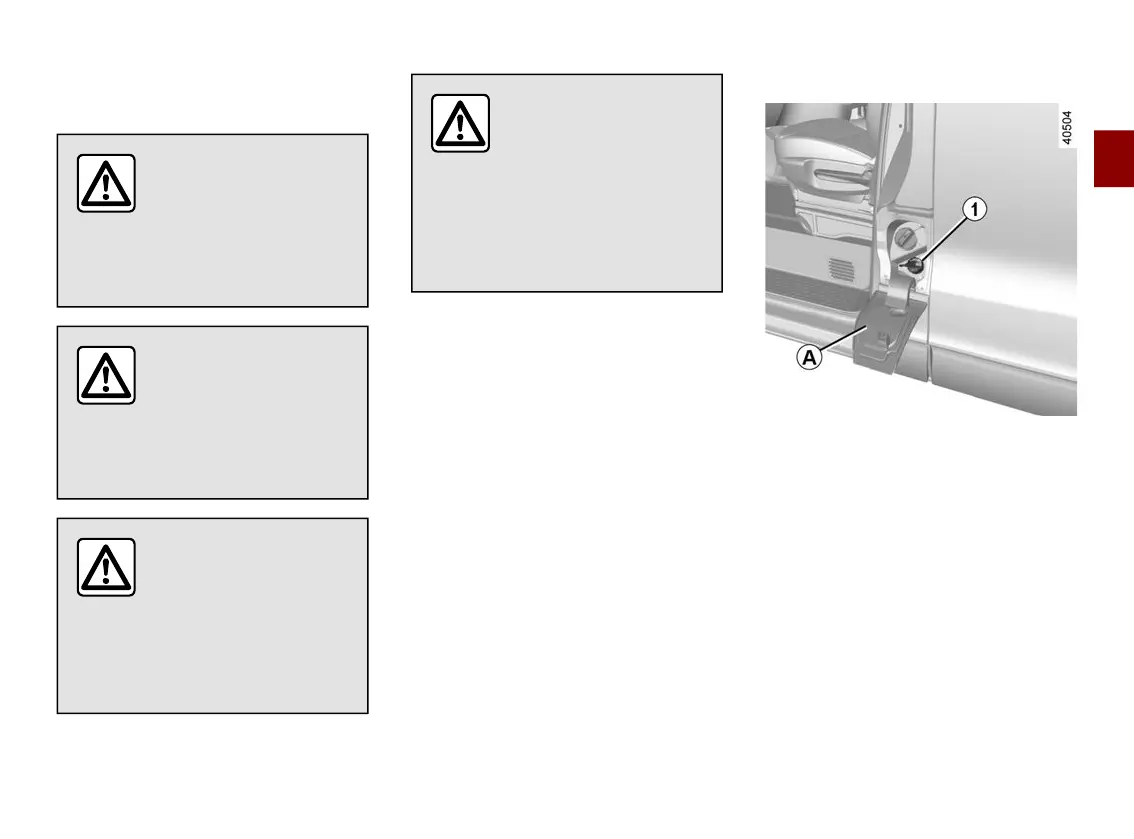
With the ignition off, open the front left-
hand door to open the flap
A
. Loosen
the cap
1
.
Note: ammonium hydroxide vapour
may escape from the cap opening
when the tank temperature is high.








 To Next Page