ADDITIONAL DRIVING AID FUNCTIONS
3
Driving - 233
Active emergency braking
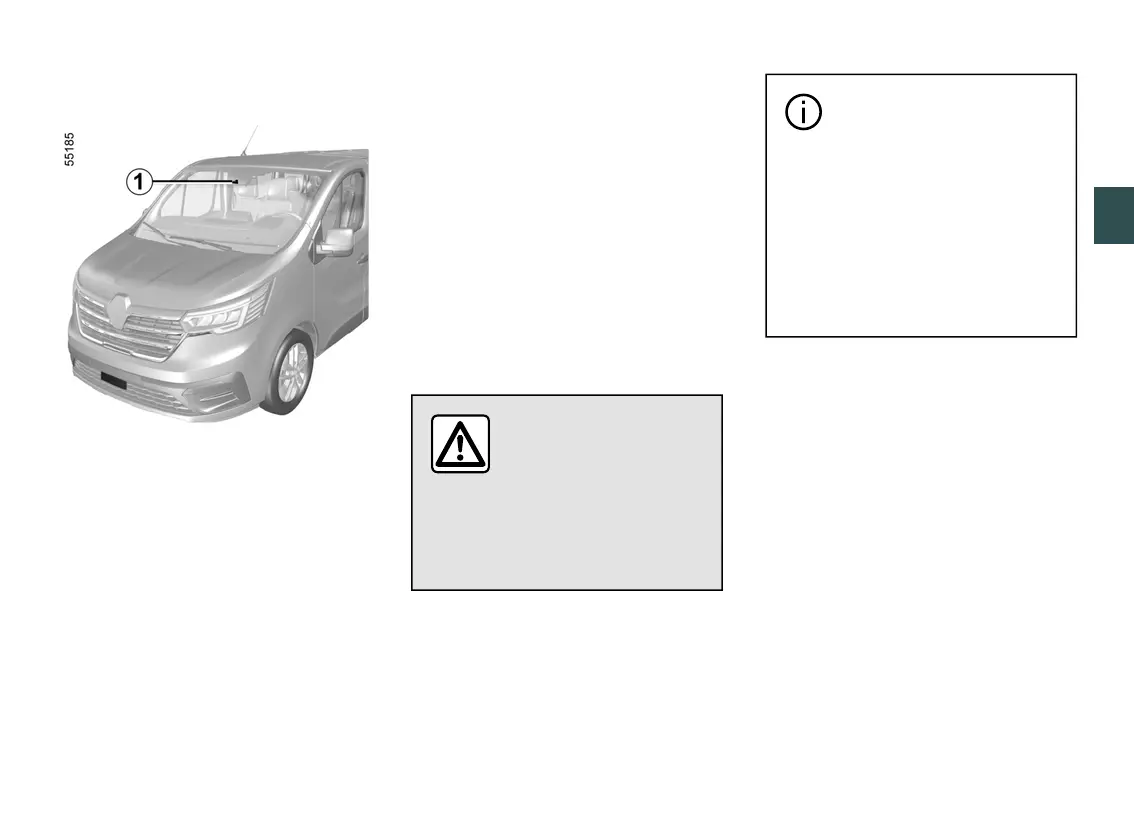
The system uses information from the
camera
1
to determine how far your
vehicle is:
– from the vehicle ahead in the same
lane;
or
– from any oncoming vehicles in the
contextofamanoeuvretochangedi
rection;
or
– fromvehiclespassingperpendicular
ly.
or
– stationary vehicles;
or
– surroundingpedestriansandcy
clists.
The system informs the driver if there
is a risk of head-on collision to enable
appropriate emergency manoeuvres
(pressingthebrakepedaland/orturn
ing the steering wheel).
Dependingonthereactivityofthedri
ver, the system can assist with braking
in order to limit damage or prevent a
collision.
The system is otherwise inactive
and does not trigger an alert.
Thisfunctionisanaddi
tional driving aid. This
function is not under any
circumstances intended
toreplacetheduecareandatten
tion of the driver, who should at all
times be in control of the vehicle.
This system can apply
maximum braking to the
vehicle until it is completely
stationary if necessary.
For safety reasons, always wear
your seat belt when travelling in
your vehicle and make sure that it
is loaded so that no items can be
thrownforwardandhittheoccu
pants.
Location of the camera
1
Makesurethewindscreenisnotob
scured(bydirt,mud,snow,condensa
tion etc.).
Operation
Whendriving,ifthereisariskofcolli
sion, the system:
– alerts you of a collision risk: the
"Obstacle detected" message appears
on the instrument panel accompanied
by a beep.
Note: if the driver presses the brake
pedal and the system still detects a
risk of collision, the braking force may
beincreasedifitisnotsufficienttopre
vent the collision.
– braking may be triggered: if the
driver does not react to the alert and










 To Next Page