ENVIRONMENT
3
Driving - 197
Manufacture
Your vehicle has been designed with
respect for the environment in mind
foritsentireservicelife:duringitspro
duction, usage and at the end of its
service life.
Your vehicle has been manufactured at
a factory which complies with a policy
to reduce the environmental impact on
the surrounding areas (reduction of
water and energy consumption, visual
andnoisepollution,atmosphericemis
sions and waste water; sorting and
reusing waste).
Emissions
Your vehicle has been designed to
emit fewer greenhouse gases (CO
2
)
while in use and therefore to consume
less fuel (e.g. 225 g/mile (140 g/km),
equivalent to 1.17 gal/62 miles (5.3 l/
100 km) for a diesel vehicle).
Our vehicles are also equipped with a
particlefiltersystemincludingacat
alytic converter, an oxygen sensor and
anactivecarbonfilter(thelatterpre
vents vapour from the fuel tank being
released into the open air).
For certain diesel vehicles, this system
also has a particle filter to reduce the
volume of soot particles emitted.
Pleasemakeyourowncontri
bution towards protecting the
environment too.
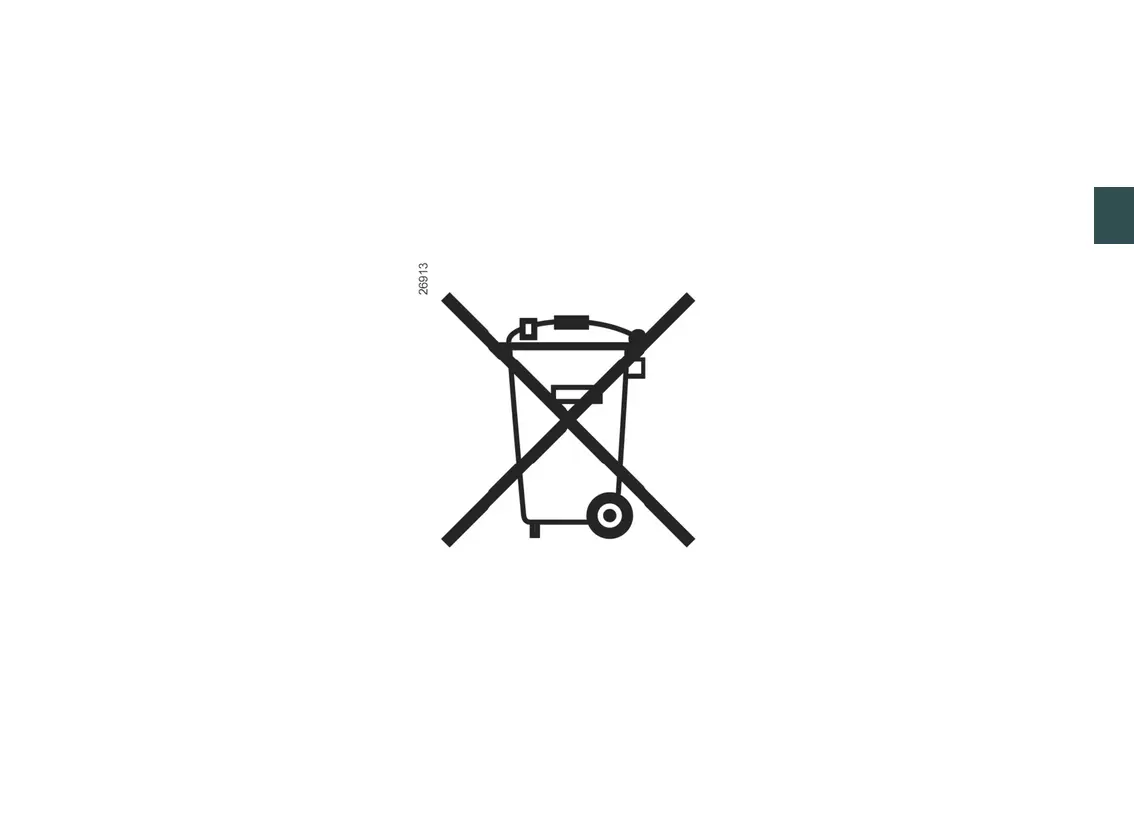
– Parts and vehicles at the end of their
life must not be thrown away. They
must be handed to a legal entity that
complieswithenvironmentalstan
dards.
– Worn parts and components that are
replacedduringroutinevehiclemainte
nance,suchastyresoroil(tanksemp
tied or filled) must be disposed of at
dedicated collection points.
– Wornelectricalandelectroniccom
ponents that are replaced (such as
batteries) must not be thrown away as
rubbish. Take them to an approved
dealer or consult your local authority
forinformationonappropriaterecy
cling facilities.
– Tooptimisetherecyclingofyourve
hicleattheendofitslife,youcancon
tact an approved dealer or visit the
manufacturer's website to be directed
tocollectionpointsthatguaranteere
spect for the environment according to
local laws.
Recycling
Your vehicle is at least 85% recyclable
and at least 95% recoverable.
To achieve these objectives, many of
thevehiclecomponentshavebeende
signed to enable them to be recycled.
The materials and structures have
been carefully designed to:
– allow these components to be easily
removedandreprocessedbyspecial
ist companies;
– promote a circular economy (re-use,
recycling, recovery, etc.)
This is particularly true for electrified
vehicle batteries.
Inordertopreserverawmaterialre
sources,thisvehicleincorporatesnu
merous parts made from recycled
plasticsorrenewablematerials(veg
etable or animal-derived materials
such as cotton or wool).








 To Next Page