Section 2: Description of Charging System
8
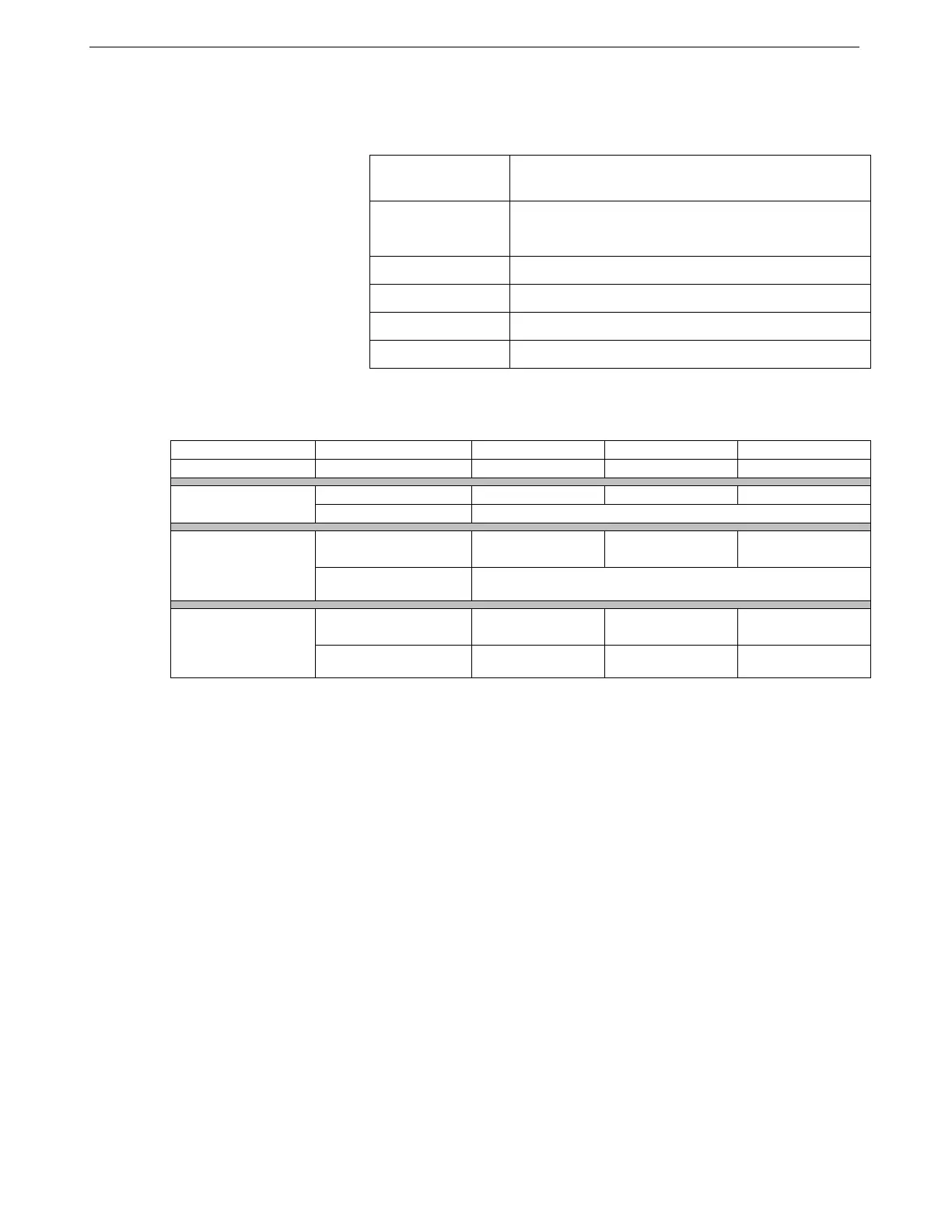
Specifications
Battery Charger
Display
2 line display, 20 characters each line,
character height 5 mm (0.2 inch)
Input Power
200 Watts maximum
100-250 VAC, 47-63 Hz, or 124-370 VDC
Environmental
For indoor use; do not get wet
Materials
Anodized aluminum housing
Dimensions
15.8 x 33.0 x 7.9 cm (6.2 x 13 x 3.1 inches)
Weight
2.7 kg (6 lbs)
Batteries (typical values)
Number of Cells 12 9 6
For use with SBE:
17, 17plus 19, 19plus, 25 -
Output Voltage
1
14.4V 10.8V 7.2V
Power Available
to Instrument
Output Power
2
8 Amp-hours
2
Charge
Delivered
2, 3
550 KJ 415 KJ 275 KJ
Charging
Charge Time
(from fully discharged)
120 minutes
Discharge
Capacity
3
440 KJ 330 KJ 220 KJ
Discharging
Discharge Time
(from full charge)
75 minutes 110 minutes 140 minutes
Notes:
1
Output voltage of a fully charged, new battery pack is typically more than the
nominal values listed.
2
All of the charge delivered to the battery pack cannot actually be extracted by
the instrument. For a typical battery pack, Sea-Bird recommends assuming
that 75% of the delivered charge is available to power the instrument
For example, for a 12-cell battery pack:
75% * 550 KJ charge delivered = 412 KJ charge available.
Converting, 412 KJ = 8 Amp-hours (see Note 3 for conversion).
If you note during charging that the battery pack temperature rises above
45 °C, we recommend derating the battery pack capacity to 70% of the
delivered charge.
3
Battery capacity is historically measured in Amp-hours. New technology
makes it convenient to measure capacity in Kilo-Joules, which is a more
accurate indication of battery charge. The following formulas provide a
nominal conversion between Kilo-Joules and Amp-hours:
Amp-hours = Kilo-Joules * 1000 / (3600 * Battery Voltage)
Kilo-Joules = Amp-hours * 3600 * Battery Voltage / 1000
132


 To Next Page