SEL-487E-3, -4 Data Sheet Schweitzer Engineering Laboratories, Inc.
14
analog outputs that use GOOSE messages provide
peer-to-peer transmission of analog data. Each relay
can receive as many as 256 remote analog inputs
and use those inputs as analog quantities within
SEL
OGIC control equations.
➤ IEC 61850 standard operating modes. The relay
supports Test, Blocked, On, and Off. The relay also
supports Simulation mode for added flexibility.
MMS File Services
This service of IEC 61850 MMS provides support for file
transfers completely within an MMS session. All relay
files that can be transferred via FTP can also be transferred
via MMS file services.
MMS Authentication
When enabled via a setting in the Configured IED Descrip-
tion (CID) file, the relay requires authentication from any
client requesting to initiate an MMS session.
Architect Software
Use ACSELERATOR Architect SEL-5032 Software to
manage the IEC 61850 configuration for devices on the
network. This Windows-based software provides easy-
to-use displays for identifying and binding IEC 61850
network data among logical nodes that use IEC 61850-
compliant CID files. Architect uses CID files to describe
the data available in each relay.
Serial Communications
MIRRORED BITS Communications
The SEL patented MIRRORED BITS technology provides
bidirectional relay-to-relay digital communication.
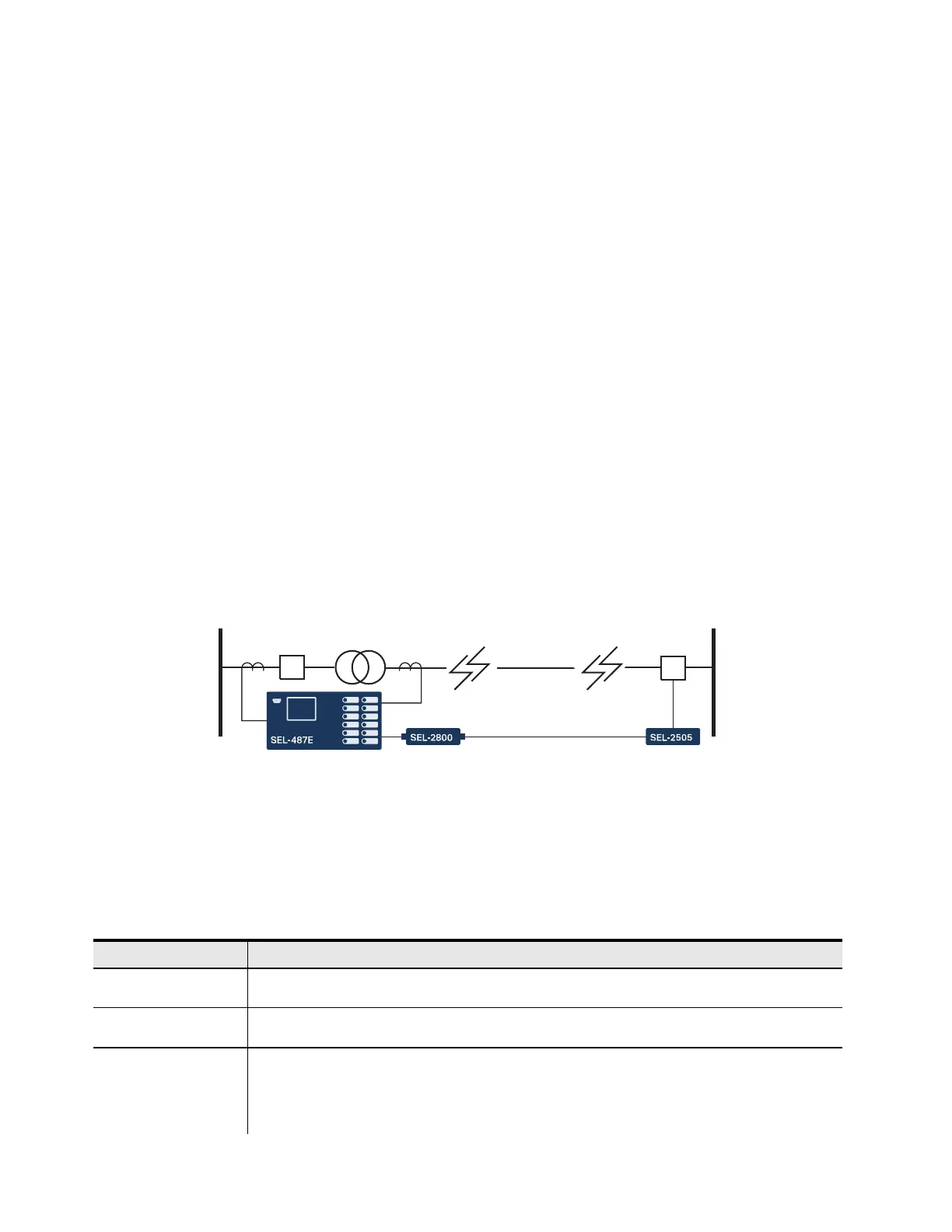
Figure 23 shows two relays with SEL-2815 Fiber-Optic
Transceivers that use M
IRRORED BITS communications.
M
IRRORED BITS communications can operate simultane-
ously on any two serial ports. This bidirectional digital
communication creates additional outputs (transmitted
M
IRRORED BITS) and additional inputs (received
M
IRRORED BITS) for each serial port operating in the
M
IRRORED BITS communications mode.
Communicated information can include digital, analog,
and virtual terminal data. Virtual terminal allows opera-
tor access to remote relays through the local relay. You
can use this M
IRRORED BITS protocol to transfer infor-
mation between stations to enhance coordination and
achieve faster tripping.
Open Communications Protocols
The relay does not require special communications software. ASCII terminals, printing terminals, or a computer sup-
plied with terminal emulation and a serial communications port are all that is required. Table 2 lists a brief description of
the terminal protocols.
Figure 23 Integral Communication Provides Secure Protection, Monitoring, and Control as Well as Terminal Access to
Both Relays Through One Connection
HV Breaker
MIRRORED BITS Communications
HV Busbars LV Busbars
Remote
LV Breaker
Power
Cable
Table 2 Open Communications Protocol (Sheet 1 of 2)
Type Description
ASCII Plain-language commands for human and simple machine communications. Use for metering, setting, self-test
status, event reporting, and other functions.
Compressed ASCII Comma-delimited ASCII data reports. Allows external devices to obtain bay data in an appropriate format for
direct import into spreadsheets and database programs. Data are checksum protected.
Extended Fast Meter, Fast
Operate, and Fast SER
Binary protocol for machine-to-machine communications. Quickly updates SEL-2032 Communications Pro-
cessors, RTUs, and other substation devices with metering information, bay element, I/O status, time-tags,
open and close commands, and summary event reports. Data are checksum protected. Binary and ASCII proto-
cols operate simultaneously over the same communications lines so that control operator metering information
is not lost while a technician is transferring an event report.


 To Next Page