Schweitzer Engineering Laboratories, Inc. SEL-487E-3, -4 Data Sheet
15
Automation
Flexible Control Logic and
Integration Features
Use the control logic to perform the following:
➤ Replace traditional panel control switches
➤ Eliminate remote terminal unit (RTU)-to-bay wiring
➤ Replace traditional latching relays
➤ Replace traditional indicating panel lights
Eliminate traditional panel control switches with 96 local
control points. Set, clear, or pulse local control points
with the front-panel pushbuttons and display. Program
the local control points to implement your control scheme
via SEL
OGIC control equations. Use the local control
points for such functions as trip testing, enabling/disabling
reclosing, and tripping/closing circuit breakers.
Eliminate RTU-to-bay wiring with 64 remote control
points per relay. Set, clear, or pulse remote control points
via serial port commands. Incorporate the remote control
points into your control scheme via SEL
OGIC control
equations. Use remote control points for SCADA-type
control operations (e.g., trip, close, settings group selection).
Replace traditional latching relays for such functions as
remote control enable with 64 latching control points.
Program latch set and latch reset conditions with SEL
OGIC
control equations. Set or reset the latch control points via
control inputs, remote control points, local control points,
or any programmable logic condition. The relay retains
the states of the latch control points after turning on fol-
lowing a power interruption.
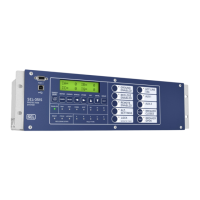
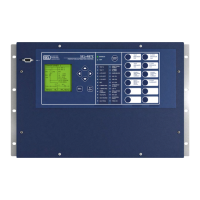
Replace traditional indicating panel lights and switches
with as many as 24 latching target LEDs and as many as
12 programmable pushbuttons with LEDs. Define cus-
tom messages (i.e.,
BREAKER OPEN, BREAKER CLOSED,
RECLOSER ENABLED) to report power system or relay con-
ditions on the large format LCD. Control displayed mes-
sages with SEL
OGIC control equations by driving the
LCD via any logic point in the relay.
SELOGIC Control Equations With
Expanded Capabilities and Aliases
Expanded SELOGIC control equations put relay logic in
the hands of the engineer. Assign inputs to suit your
application, logically combine selected bay elements for
various control functions, and assign outputs to your
logic functions.
Programming SEL
OGIC control equations consists of
combining relay elements, inputs, and outputs with
SEL
OGIC control equation operators (Table 3). Any ele-
ment in the Relay Word can be used in these equations.
For complex or unique applications, these expanded
SEL
OGIC functions allow superior flexibility.
Ymodem Support for reading event, settings, and oscillography files.
Optional DNP3 Level 2
Outstation
DNP with point remapping. Includes access to metering data, protection elements, contact I/O, targets, SER,
relay summary event reports, and settings groups.
IEEE C37.118 Phasor measurement protocol.
M
IRRORED BITS SEL protocol for exchanging digital and analog information among SEL relays and for use as low-speed termi-
nal connection.
IEC 61850 Ethernet-based international standard for interoperability between intelligent devices in a substation.
PRP PRP provides redundant Ethernet network capabilities for seamless operation in the event of loss to one network.
SNTP Ethernet-based SNTP for time synchronization among relays.
FTP and Telnet Use Telnet to establish a terminal-to-relay connection over Ethernet. Use FTP to move files in and out of the
relay over Ethernet.
Table 2 Open Communications Protocol (Sheet 2 of 2)
Type Description
Table 3 SELOGIC Control Equation Operators (Sheet 1 of 2)
Operator Type Operators Comments
Boolean AND, OR, NOT Allows combination of measuring units.
Edge Detection F_TRIG, R_TRIG Operates at the change of state of an internal function.
Comparison >, , =, <=, <, < >
Arithmetic +, –, *, / Uses traditional math functions for analog quantities in an easily programmable equation.


 To Next Page