CGM User Guide
Section 1: System Overview 16
• Monitoring results of the product can only be used as a reference
for the auxiliary diagnosis of diabetes, not as the basis for clinical
diagnosis.
• If there is a burning sensation, or any discomfort, please remove the
CGMS immediately
1.3.3.2 Testing Your Blood Glucose
Glucose levels in the interstitial uid can be dierent to blood glucose
levels and may mean that sensor glucose results are dierent to blood
glucose. You may notice this dierence during times when your blood
glucose is changing quickly; for example, after eating, taking insulin, or
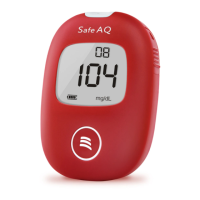
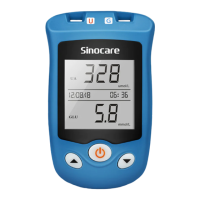
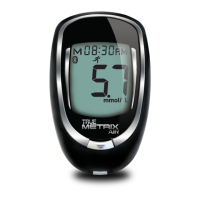
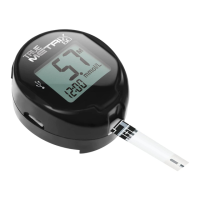
exercising. If you suspect that your result may be inaccurate, check the
result by conducting a ngerstick test using a blood glucose meter.
1.3.3.3 Get Ready Before Start
• Clean and dry your hands and your insertion site before inserting
your sensor. Wash your hands with soap and water, not gel cleaners,
and then dry them before opening the Sensor Pack. If your hands are
dirty when you insert the sensor, you may get germs on the insertion
site and get an infection.
• Clean your insertion site with alcohol wipes to prevent infections.
Do not insert the sensor until your skin is dry. If your insertion site
is not clean and completely dry, you run the risk of infection or the
transmitter not sticking well.
• Make sure you do not have insect repellent, sunscreen, perfume, or
lotion on your skin.
• Things to check before insertion:
■ Keep the safety guard locked until you put the armed applicator
against your skin. If you remove the safety guard to unlock rst,


 To Next Page