Page 54 December 2007
ZB2044
Handling Loads Section 2 - Operation
3. Extend boom to the
d e s i r e d r e a c h a n d
tilt forks forward in a
horizontal position.
WARNING
Do not extend boom if placing maximum
rated load; instead back up from load.
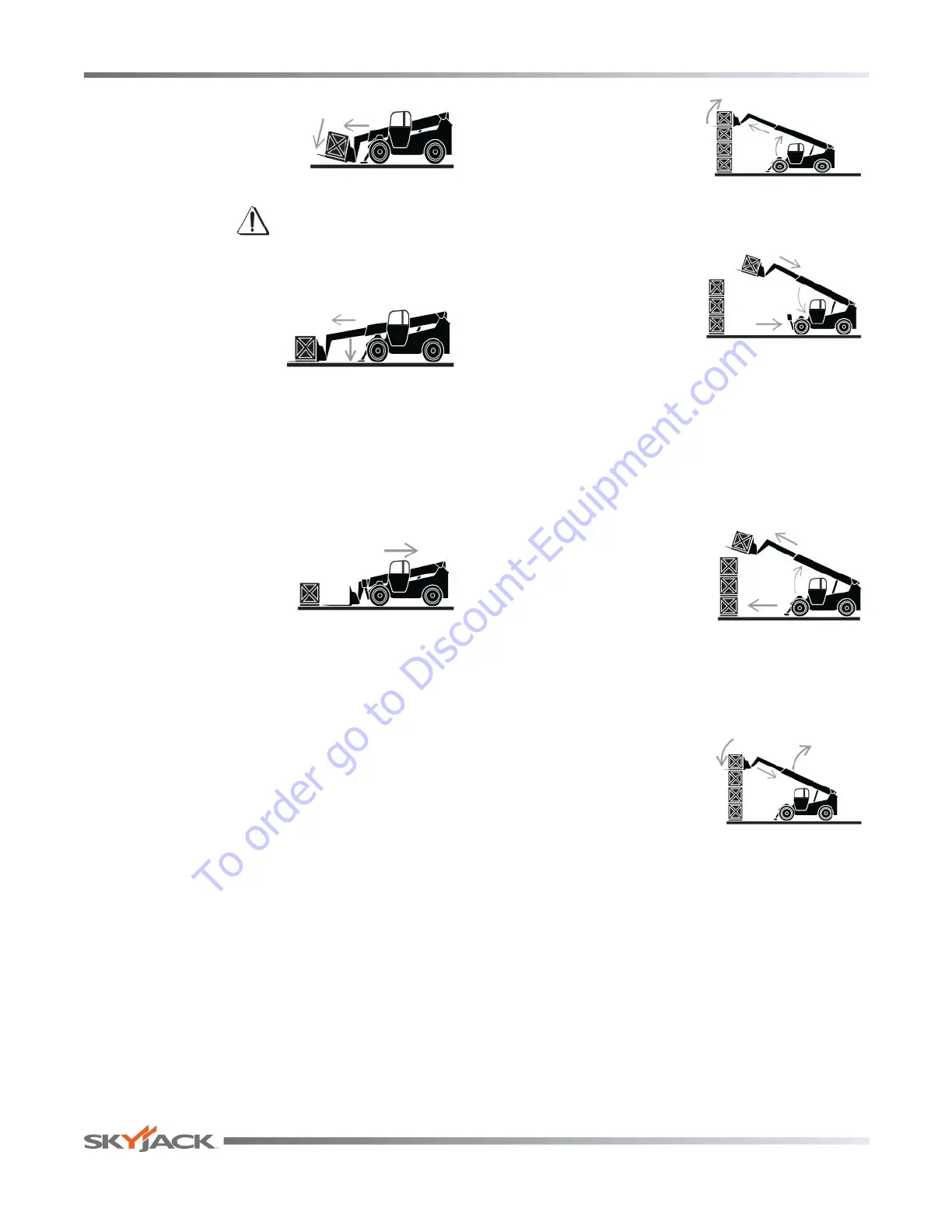
4. Place the load in a
horizontal position
then lower boom until
the load is completely
off the forks. Do not apply downward force with
the forks.
5. Free the forks gradually by lowering and retracting
the boom alternately.
6. When forks are clear of the load, fully retract the
boom.
7. Raise outriggers and
return to transport
position.
2.14-2 Handling Loads at Variable Heights
Picking up a Load
1. Shift transmission lever to neutral and apply
parking brake.
2. Check that the telehandler is level using the level
indicator. Adjust frame level if necessary.
3. Ensure the forks are as far apart as possible for
the width of the load. This increases the stability
of the load and the lift.
4. Approach load slowly; raise and extend the boom
until the forks are perpendicular to the load.
5. Deploy outriggers for
maximum stability of
telehandler.
6. Extend and lower the
boom to insert the forks
under load and raise it 5 to 10 inches.
7. Tilt forks backwards.
Fully retract the boom
and raise outriggers,
then check telehandler
s t a b i l i t y b e f o r e
transporting the load.
Placing a Load
1. Shift transmission lever to neutral and apply
parking brake.
2. Deploy outriggers and check that the telehandler
is level using the level indicator. Adjust frame level
if necessary.
3. R a i s e a n d e x t e n d
bo om u n ti l th e lo a d
is perpendicular over
placement point.
4. Pl a c e the l o a d in a
horizontal position and lower boom until the load
is completely off the forks. Do not apply downward
force with the forks.
5. Free the forks gradually
by raising and retracting
the boom alternately.
6. When forks are clear
of the load, fully retract
the boom and raise
outriggers, then return to transport position.
To order go to Discount-Equipment.com


 To Next Page