The eects of gradient factors on the dive profile
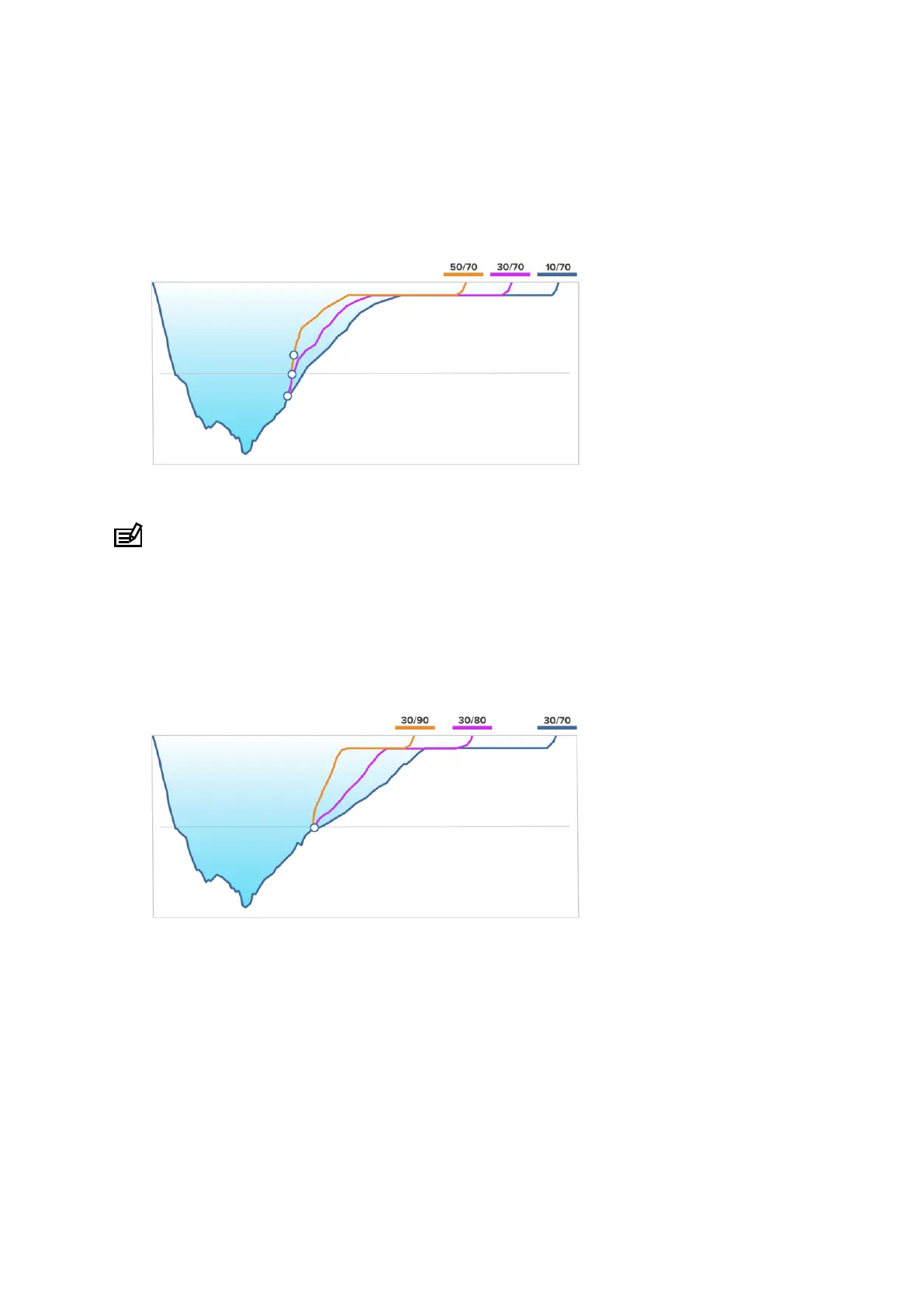
GF Low % eect on dive profile is illustrated in the following picture. It shows how GF Low %
determines the depth where the ascent starts slowing down and the depth of the first
decompression stop. The illustration shows how the dierent GF Low % values change the
depth of the
first stop. The higher the GF Low % value is, the shallower the first stop occurs.
NOTE: If GF Low % value is too low, some tissues may still on-gas when the first stop
occurs.
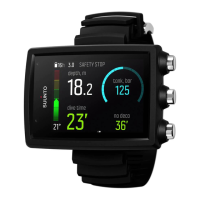
GF High % eect on the dive profile is illustrated in the following picture. It shows how GF
High % determines the decompression time spent in the shallow phase of the dive. The
higher the GF High % value is, the shorter the total dive time is, and the less time diver spend
in shallow water. If GF High % is set to a lower value, the diver spends more time in shallow
water and total dive time gets longer.
If you want to see the comparison of the Suunto Fused™ RGBM 2 algorithm and the Bühlmann
16 GF algorithm, go to suunto.com/support.
4.10.3. Diver safety
Because any decompression model is purely theoretical and does not monitor the actual
body of a diver, no decompression model can guarantee the absence of DCS.
Suunto EON Steel Black
24


 To Next Page