AFMS N°D01 FOR GARMIN GFC700 AUTOPILOT INSTALLATION AND
RNAV/RNP NAVIGATION ELIGIBILITY
AUTOPILOT FUNCTIONS
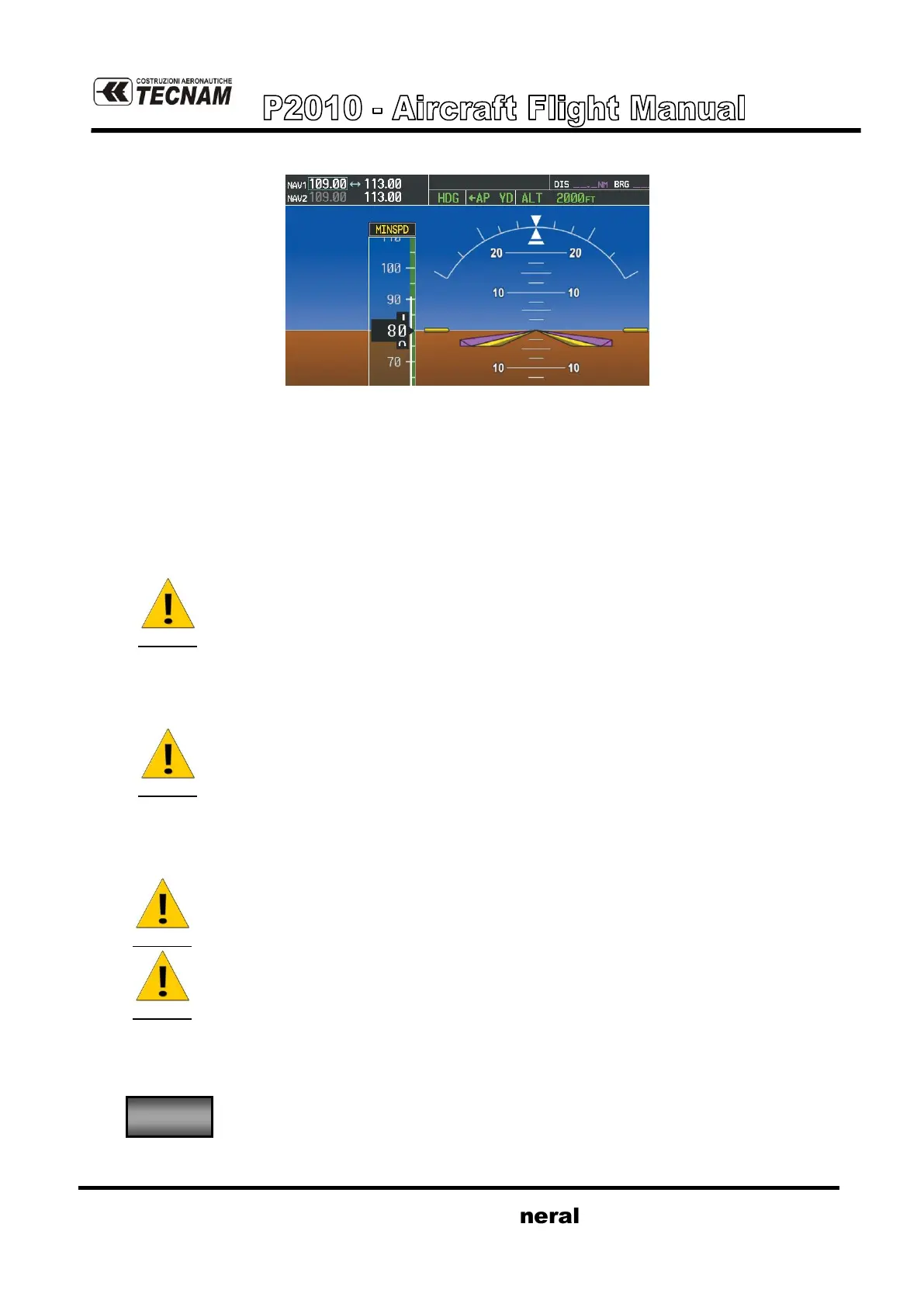
How Underspeed Protection functions depends on which vertical flight director
mode is selected.
For the purpose of this discussion, the vertical flight director modes can be divid-
ed into two categories:
- It is important to maintain altitude for as long as possible (altitude-
critical modes).
- Maintaining altitude is less crucial (non-altitude critical modes).
If USP engages while Autopilot is in PIT or VS mode, and power is ab-
ruptly set to full throttle, pilot may expect a slight nose up tendency that
will be quickly counteracted by autopilot. This is a normal behaviour, the
slight nose up tendency in this case will be due to abrupt power advance,
but will be immediately damped by Autopilot (with PIT or VS turning
green on the annunciation panel).
USP engagement is a consequence of autopilot failing to properly moni-
toring A/P and aircraft behaviour. This is mainly caused by a pilot re-
quest that cannot be fulfilled due to lack of power coupled with unattain-
able pitch input.
Pilot need to continuously monitor autopilot performance, while checking
that mode selections are compatible with aircraft performance.
If Autopilot is engaged in FLC mode, FLC mode will downgrade to PIT mode
when in USP for more than 10 seconds.
If USP engages while in ALT mode, upon USP disengagement FD will com-
mand bars to regain pre-selected altitude (altitude selected before USP en-
gagement). Pilot must monitor A/P to check if previous pre-selected altitude is
still attainable with energy available. It is recommended in this case to pre-
select a new altitude in order to speed-up energy management and recover
from slow speed conditions.
When USP becomes active, expect a small FD adjustment due to reaction to
very low speed condition.


 To Next Page