CLASS B
+
& C MOTORHOME
47
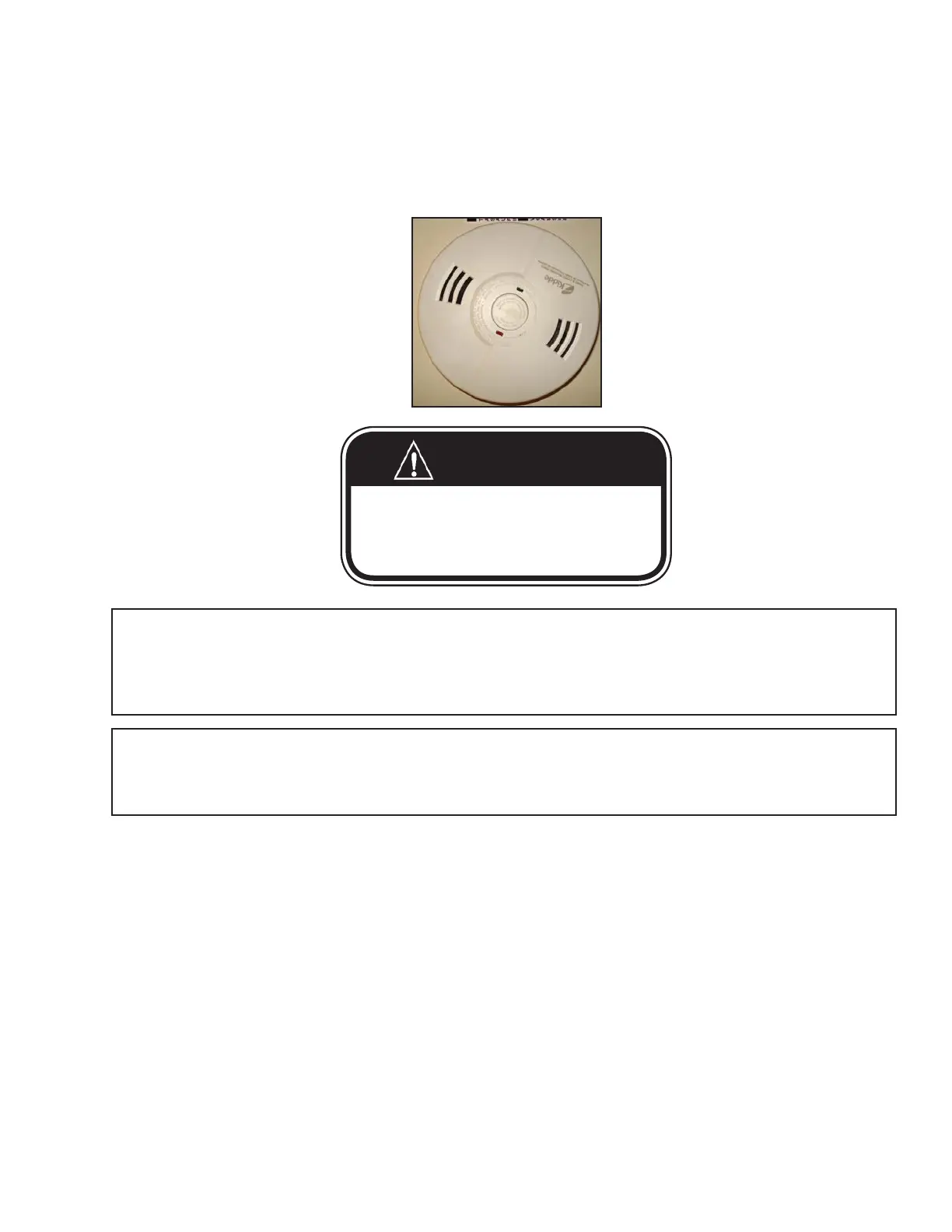
6.3.2 COMBINATION SMOKE & CARBON MONOXIDE ALARM
This alarm is located on the ceiling in the coach and sounds whenever there is an unsafe amount of carbon monoxide or
smoke in the vehicle. Refer to the User's Manual in the Owner's Information Package for complete operating and maintenance
instructions. This alarm features separate sensors to detect smoke and Carbon monoxide; the two alarm systems work
independently. It is powered by three 'AA' batteries. Slide the access door open to replace the batteries.
CAUTION
This Combination Smoke/Carbon Monoxide Alarm has two separate alarms. This CO sensor is designed to detect
Carbon Monoxide gas from any source; it is not designed to detect any other gases. It will only indicate the presence
of carbon monoxide gas at the sensor. Carbon monoxide gas may be present in other areas. The Smoke Alarm will only
indicate the presence of smoke that reaches the sensor. The smoke sensor is not disigned to sense gas, heat or ames.
WARNING:
This Smoke/CO alarm cannot operate without working batteries. Removing the batteries for any reason,
or failing to replace the batteries at the end of their service life, removes your protection.
Test the alarm once a week. If it fails to test correctly, have it replaced immediately!
If the SMOKE ALARM sounds:
a. Check for the presence of a re. If re is suspected, leave the vehicle immediately.
b. Open doors, vents and windows to air out vehicle and silence alarm. Correct and eliminate smoke source.
c. Check alarm on a regular basis. Check when removing from storage, before trips and weekly thereafter. Depress
center button to test alarm electronics. Test alarm sensor by blowing smoke (from safe, re-free source) past sen-
sor. If alarm does not sound when testing, determine source of problem and correct or replace alarm.
d. Smoke alarms are not perfect and do not respond in all situations. The best safe-guard is re prevention.
If the CARBON MONOXIDE alarm sounds and the CO red light is ashing:
a. Move everyone to a source of fresh air.
DO NOT remove the batteries.
b. Turn o all fuel burning devices.
c. Open doors, vents and windows to air out vehicle and silence alarm. Leave the vehicle until the alarm stops.
c. Have a qualied service personnel check all appliances, etc.. Clean, repair or replace any defective components.
d. Have a qualied service personnel check all engine exhaust system components. Repair or replace any defective
components.
Carbon Monoxide gas is an odorless and colorless
gas that is lethal to people. Do not breathe in any
exhaust, heating or cooking fumes to prevent
asphyxiation.
WARNING



 To Next Page