5.4
Solid walls
5.4.1
Mortar-based installation
W
W
s≥ 40
s≥ 40
W
s≥ 40
a
≥
40
a ≥ 40
220
220
220
①
①
①
࿇
࿆
࿇
࿆
࿇
࿆
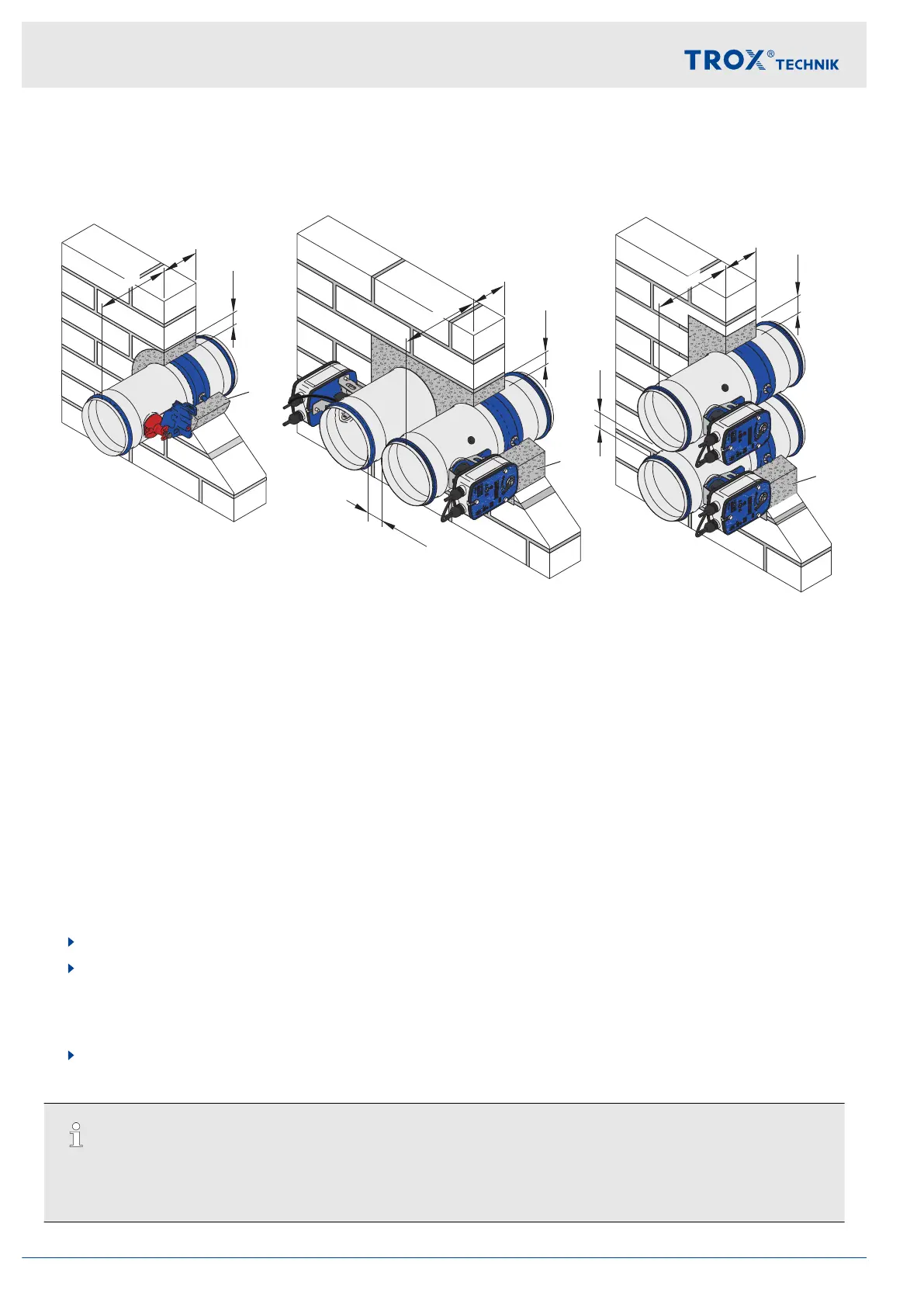
Fig. 7: Installation into a solid wall
①
Mortar
Ⓐ
Installation side
Ⓑ
Operating side
Personnel:
Specialist personnel
Materials:
Mortar
Ä
‘Acceptable mortars for mortar-based installation’ on page 14
Requirements
Performance class EI 120 S
Solid walls or fire walls made of, for example, concrete, aerated concrete, masonry, or solid gypsum wallboards
according to EN 12859 (without open spaces), gross density ≥ 500 kg/m³ and W ≥ 100 mm
≥ 40 mm distance to load-bearing structural elements
40 mm minimum distance between two fire dampers
1. Create an appropriate opening or cut hole: ØDN + at least 80 mm
2. Push the fire damper into the installation opening and secure it. Make sure that the distance from the con-
necting spigot on the operating side to the wall is 220 mm.
If the wall thickness is >115 mm , extend the fire damper on the installation side with an extension piece or a
spiral duct.
3. Close off the perimeter gap »s« with mortar. The mortar bed depth must be at least 100 mm.
If the fire damper is installed as the wall is being erected, the perimeter gap »s« is not required. The open
spaces between the fire damper and the wall must be closed off with mortar. Entrapped air is to be avoided. The
mortar bed depth should be equal to the thickness of the wall.
Installation
Solid walls > Mortar-based installation
Fire damper Type FKRS-EU16


 To Next Page