Need help?
Do you have a question about the Valleylab ForceTriad and is the answer not in the manual?
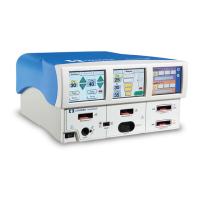
Details the physical layout and interfaces of the ForceTriad energy platform's front panel.
Provides a general introduction to the ForceTriad energy platform's capabilities and design.
Explains the conventions and symbols used throughout the user guide for clarity and understanding.
Describes the different power output modes available on the ForceTriad energy platform, including monopolar and bipolar.
Guides users on safely setting up the energy platform and covers general safety precautions during use.
Details potential fire and explosion risks associated with electrosurgery and precautions to mitigate them.
Outlines specific safety measures for the energy platform itself, including instrument connection and placement.
Discusses safety related to active instruments, pacemakers, and ICDs when using the electrosurgical system.
Provides essential guidance on patient return electrode placement and preventing inadvertent RF burns.
Addresses unique safety considerations and potential hazards specific to laparoscopic procedures.
Details the steps for initial system setup, including before startup and powering up the energy platform.
Explains how to adjust system functions like display brightness, activation log, language, and time/date.
Describes how to use the system in demo mode for demonstration purposes only.
Identifies and describes the front and rear panel components relevant to monopolar function.
Provides a streamlined procedure for setting up the system for monopolar surgery.
Offers a general overview of the monopolar modes and footswitch functionality.
Explains the importance of patient return electrodes and the REM contact quality monitoring system.
Details the use of active electrodes, including standard and Valleylab modes, manual control, and accessory ports.
Details the front and rear panel components specific to bipolar surgery operations.
Covers the quick setup process and provides an overview of bipolar surgery functions and modes.
Explains how to connect and operate bipolar electrodes and footswitches for effective use.
Describes the autobipolar feature for automatic activation and cessation of bipolar energy delivery.
Identifies and describes the front and rear panel components for LigaSure tissue fusion.
Provides a quick setup guide and an overview of the LigaSure tissue fusion function.
Covers instrument assembly, connection, settings, activation, and operation for LigaSure procedures.
Explains alert situations during LigaSure activation and procedures for disconnecting and reprocessing instruments.
Provides general guidelines for troubleshooting malfunctions and specific steps for correcting REM alarms.
Offers a table to help identify and correct various system malfunctions and issues.
Lists common system alarms and provides solutions for correcting them.
Defines the manufacturer's responsibilities and outlines routine checks and maintenance for the energy platform.
Details procedures for cleaning the energy platform and information on product service options.
Covers procedures for calibration, software upgrades, and locating service centers for support.
Lists key performance characteristics of the ForceTriad energy platform, including general, dimensional, and weight specifications.
Outlines the environmental and storage parameters for the energy platform, including temperature, humidity, and memory.
Details the specifications for activation tones and alarm tones, including volume and frequency.
Provides technical specifications for system components like the REM system, Autobipolar, and electrical parameters.
Lists relevant standards, defines symbols, and covers electromagnetic compatibility requirements.
Presents detailed output characteristics, power settings, waveforms, and graphical representations of performance.
 General
| Model | ForceTriad |
|---|---|
| TissueFect sensing technology | Yes |
| Automatic Tissue Impedance Measurement | Yes |
| Manufacturer | Medtronic |
| Display | Touchscreen |
| Safety Features | REM |

 To Next Page