I/O: it is a kind of synchronous telegram dedicated to the movement of priority data between one producer
and one or more consumers. They are divided according to the data exchange method. The main types
are:
Polled:
it is a communication method where the master sends one telegram to each of the slaves of its
list (scan list). As soon as receiving the request, the slave responds promptly to the request from the
master. This process is repeated until all be consulted, restarting the cycle.
Bit-strobe:
it is a communication method where the master sends to the network a telegram containing
8 data bytes. Each bit from those 8 bytes represents a slave that, if addressed, responds according to
the programmed.
Change of State:
it is a communication method where the data exchange between master and slave
occurs only when changes in the monitored/controlled values happened, until a certain time limit. When
this limit is reached, the transmission and reception will occur even if there were no changes. The
configuration of this time variable is done in the network configuration program.
Cyclic:
it is another communication method very similar to the previous one. The only difference stays in
the production and consume of messages. In this type, every data exchange occurs in regular time
intervals, whether or not they had been changed. This time period is also adjusted in the network
configuration software.
Explicit: it is a kind of general purpose telegram and without priority. It is mainly used for asynchronous
tasks like the parameter settings and the configuration of the equipment.
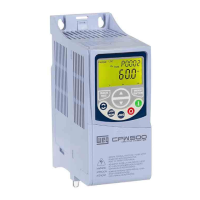
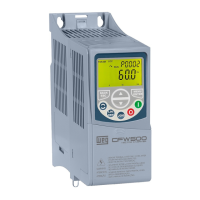
The CFW500 frequency converter does not provide the bit-strobe communication method.
1.3.6 Set of Predefined Master/Slave Connections
DeviceNet uses fundamentally a point-to-point message model. However, it is quite common to use a
predefined communication model based on the master/slave mechanism.
This model uses a simplified message movement of the I/O type, very common in control applications. An
advantage of this method is that the necessary requests to run it are generally less than for the UCMM. Even
simple devices with limited resources (memory, 8 bit processor) are capable of executing the protocol.


 To Next Page