1-3
FEATURES
Wheel slip and hydraulic control
The ABS ECU calculates the wheel speed of each wheel according to the rotation signal received from
the
front and rear wheel sensors. In addition, the ABS ECU calculates the vehicle chassis speed and
the rate of speed reduction based on the wheel speed values.
The difference between the chassis speed and the wheel speed calculated in the slip ratio formula is
equal to the wheel slip. When the wheel speed is suddenly reduced, the wheel has a tendency to lock.
When the wheel slip and the wheel speed reduction rate exceed the preset values, the ABS ECU de-
termines that the wheel has a tendency to lock.
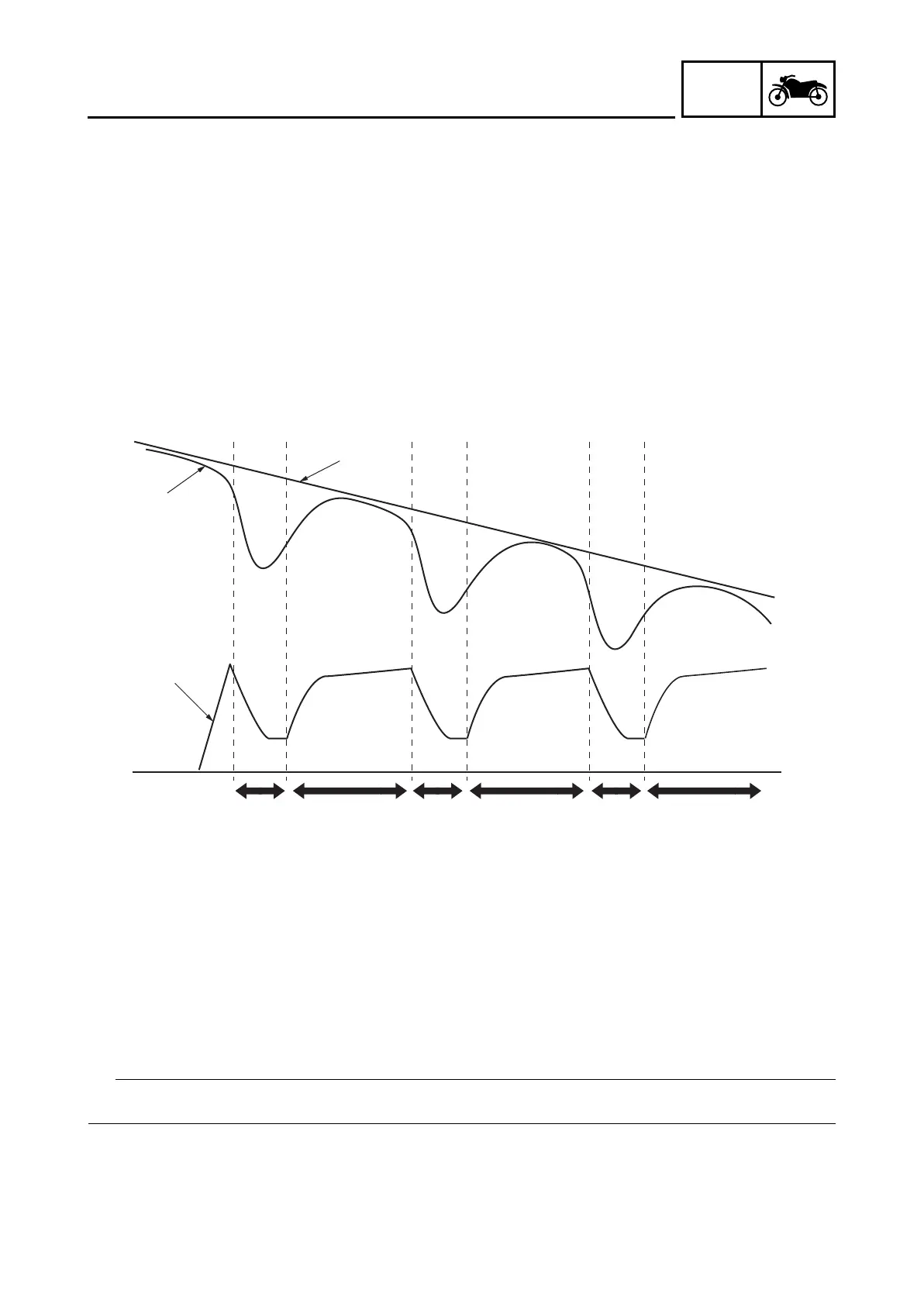
If the slip is large and the wheel has a tendency to lock (point “A” in the following figure), the ABS ECU
reduces the hydraulic pressure in the brake caliper. Once the ABS ECU determines that the tendency
of the wheel to lock has diminished after the hydraulic pressure is reduced, it increases the hydraulic
pressure (point “B” in the following figure). The hydraulic pressure is initially increased quickly, and then
it is increased gradually.
ABS oper
ation and vehicle control
If the ABS starts operating, there is a tendency of the wheel to lock, and the vehicle is approaching the
limit of control. To make the rider aware of this condition, the ABS has been designed to generate a
reaction-force pulsating action in the brake lever and brake pedal independently.
When the ABS is activated, a pulsating action may be felt at the brake lever or brake pedal, but this
does not indicate a malfunction.
a. Chassis speed
b. Wheel speed
c. Brake force
d. Depressurizing phase
e. Pressurizing phase
B9X-F8197-E0.book Page 3 Thursday, July 16, 2020 2:28 PM


 To Next Page