fåëíêìÅíáçå=j~åì~ä=_paQ=ÇÉíÉÅíçê=ÉåMN =NR=çÑ=QQ
PK=aÉëÅêáéíáçå
3.2.1. BSD modes
The BSD4 detector offers two main operation (BSD) modes:
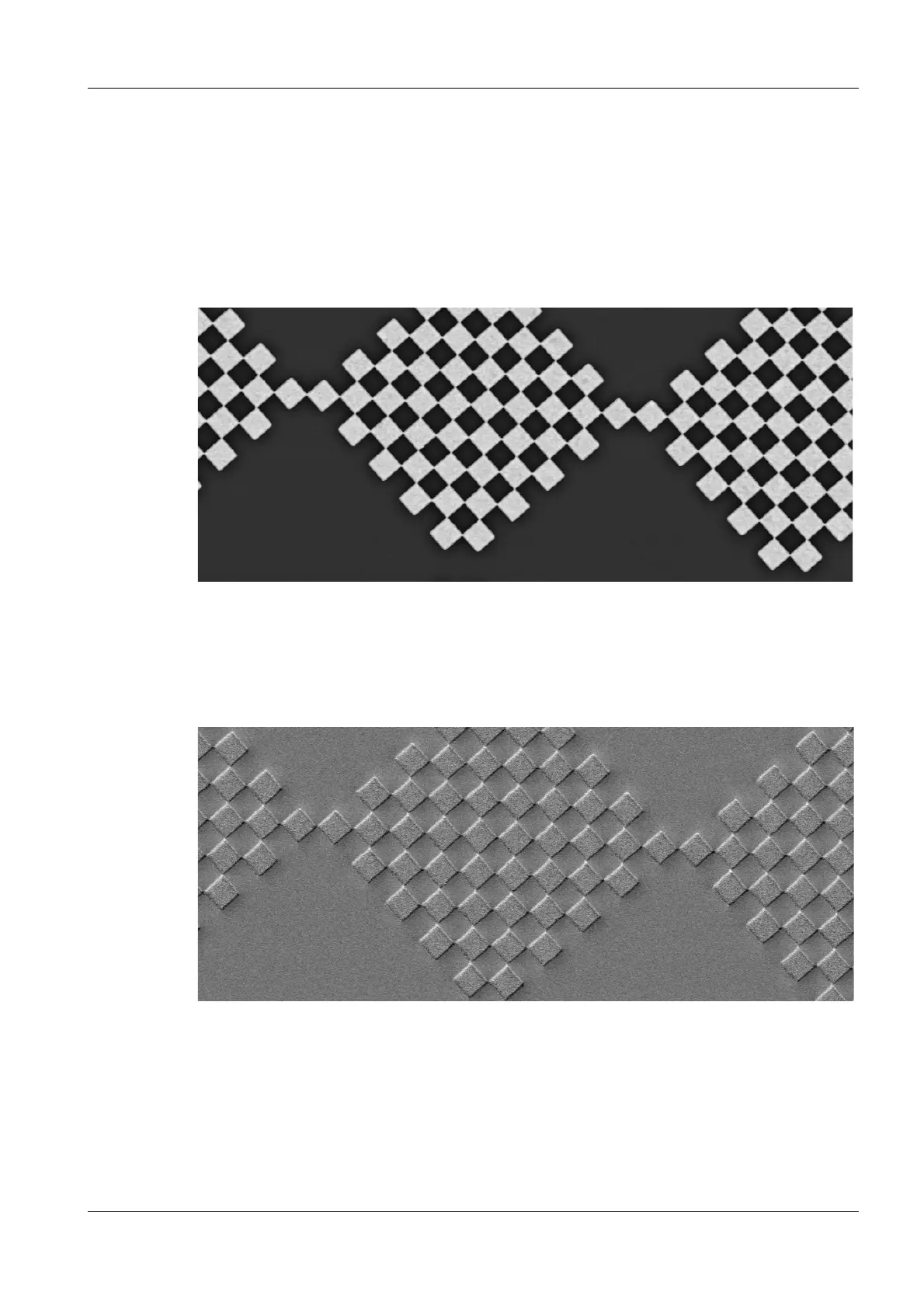
• Composition (BSD:COMPO):
Electrons from heavy elements (high atomic number) are backscattered more strongly than
light elements (low atomic number). Therefore, they appear brighter in the image.
Thus, backscattered electrons can be used to detect contrast between areas with different
chemical compositions.
Fig. 1.4: Material contrast
• Surface topography (BSD:TOPO):
Highlights changes of the specimen surface angle. Topographic contrast arises because the
number and trajectories of backscattered electrons and the number of secondary electrons
depend on the angle of incidence between the beam and the specimen surface.
Fig. 1.5: Topographic contrast



 To Next Page