6
NOTE: For optimal results, keep stored cartons closed and sealed until material cartridges are ready for use.
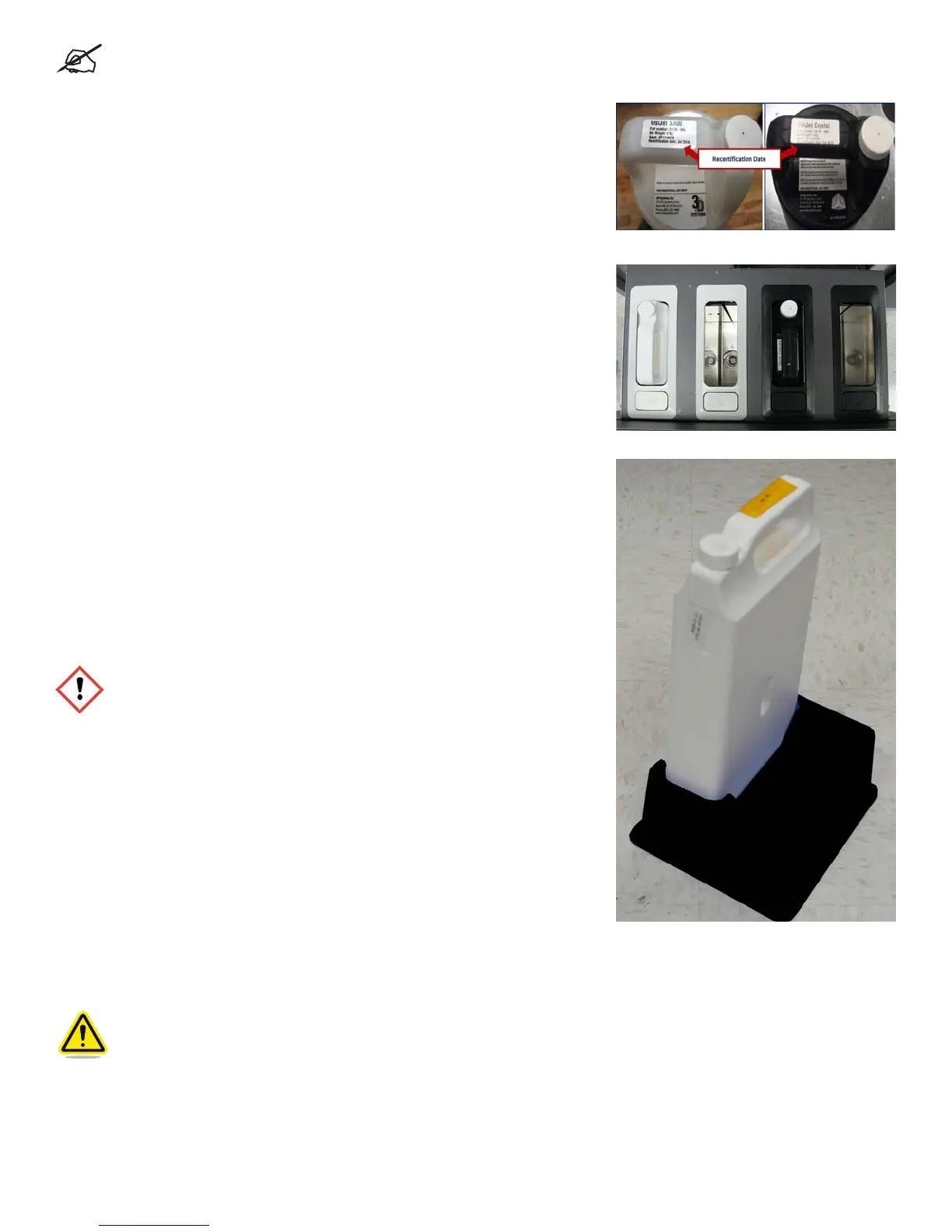
Always check material “Recertication Date” before use. Do not load material cartridges
into 3D printer system if cartridge date has expired. When printer detects an expired
cartridge, it aborts the build and rejects the cartridge. If a job is printing when the
cartridge expires, it will try to continue to complete the job. If the next cartridge is expired,
it won’t use it.
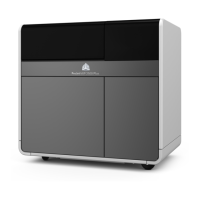
Support (white) material must be loaded in the left side of material drawer. Part (black)
material cartridges must be loaded in the right side of material drawer. Before loading
cartridges into 3D printer system, inspect the cartridges for signs of damage or leakage.
Do not load a damaged or leaking cartridge. Dispose of material cartridge according
to local regulations.
Storing a Partially Used Material Cartridge
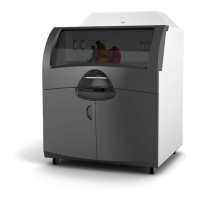
It is important not to lay material cartridges that are partially used on their side. Doing so
will cause material to seep through the vent cap and clog cap. This will cause damage
to the material cartridge if used for a later print.
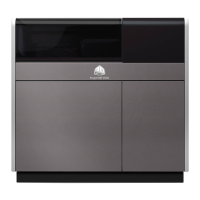
To store a partially used Material Cartridge, place it in a ProJet 2500 Cartridge Holder
and tighten the vent cap.
CHEMICAL SAFETY
Irritant! Always wear chemical-resistant gloves, goggles, and protective
clothing when handling material. Avoid skin contact. Avoid breathing
material fumes.
• Always wear approved goggles, nitrile gloves and protective clothing when working
near materials or with partially cured parts.
• Wearing contact lenses when working with materials is not recommended.
• Always wear chemical-resistant nitrile gloves whenever handling materials or
partially cured parts. Recommended gloves are 100% Nitrile. Latex gloves are not
chemical-resistant and are not recommended.
• Always work in a well ventilated area when using materials. Avoid breathing vapors.
• Always wash skin thoroughly with abrasive soap and COLD water after working
with materials. DO NOT USE HOT WATER OR SOLVENTS to wash hands, as it
will result in absorption through the skin.
• Use extreme care when handling solvents used to remove excess material from uncured parts. These solvents (e.g., denatured
alcohol, isopropyl alcohol) are very ammable.
• Keep all materials away from heat, sparks and ame. Material containers may rupture when exposed to extreme heat.
Use National Fire Protection Association Class B extinguishers such as carbon dioxide, dry chemical, or foam.




 To Next Page