Introduction
8AL90627ENAA ed02 3 /45
1 Getting to know your telephone 5
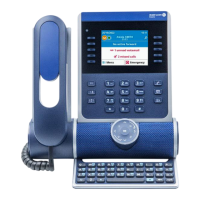
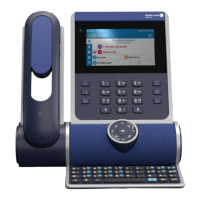
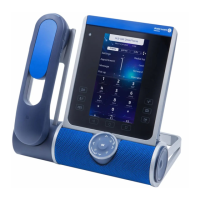
1.1 ALE-300 Enterprise DeskPhone 5
1.1.1 Keys specific to the Enterprise DeskPhone 5
1.1.2 ALE-120 Key Expansion Module 7
1.2 Permanent features keys 12
1.3 Welcome screens 13
1.3.1 Choose the page displayed by default on the telephone 13
1.4 Status icons/ Call icons 14
1.4.1 Status icons 14
1.4.2 Specific status icons for attendant set 14
1.4.3 Call icons 15
1.5 Magnetic alphabetic keyboard 15
1.6 Alphanumeric keyboard 16
1.7 Programming keys for call numbers and functions (Perso page/F1 and F2 keys/Add-on
keys) 17
1.7.1 Program a key 18
1.7.2 LED management 19
2 Operator station (OS) Basic features 20
2.1 Putting the Attendant set in Service 20
2.2 Making a call 20
2.2.1 Direct dialing 20
2.2.2 Calling using your personal directory 20
2.2.3 Calling by name 21
2.2.4 Call by Speed Dialing 21
2.3 Calling an internal User 21
2.3.1 The called set is free 22
2.3.2 The called set is busy 22
2.3.3 The called set is in “Do Not Disturb” state 22
2.3.4 The called set is forwarded to another set 23
2.4 Calling an external user 24
2.5 Answering calls 25
2.5.1 Automatic/Manual Answer 25
2.5.2 Answering an internal call 25
2.5.3 Answering an external call 25
2.5.4 Answering a Call to the Attendant Group 25
2.5.5 The attendant does not answer immediately 26
2.5.6 Answering a call back request 26
2.6 Putting a call on hold 26
2.7 Consultation call 27
2.7.1 Consultation call to an internal user 27
2.7.2 Consultation call to an external user 28
2.7.3 Initializing a three-party conference 28
2.8 Call Routing (call transfer) 29
2.8.1 Automatic/Manual transfer 29
2.8.2 Transfer to a Busy Set 29
2.9 Routing participants to a Meet-Me conference 30
2.9.1 The Conference Circuit is Free 30
2.9.2 The Conference is In Progress 30


 To Next Page