30
Page 6 of
11
-
LP
GAS SYSTEM
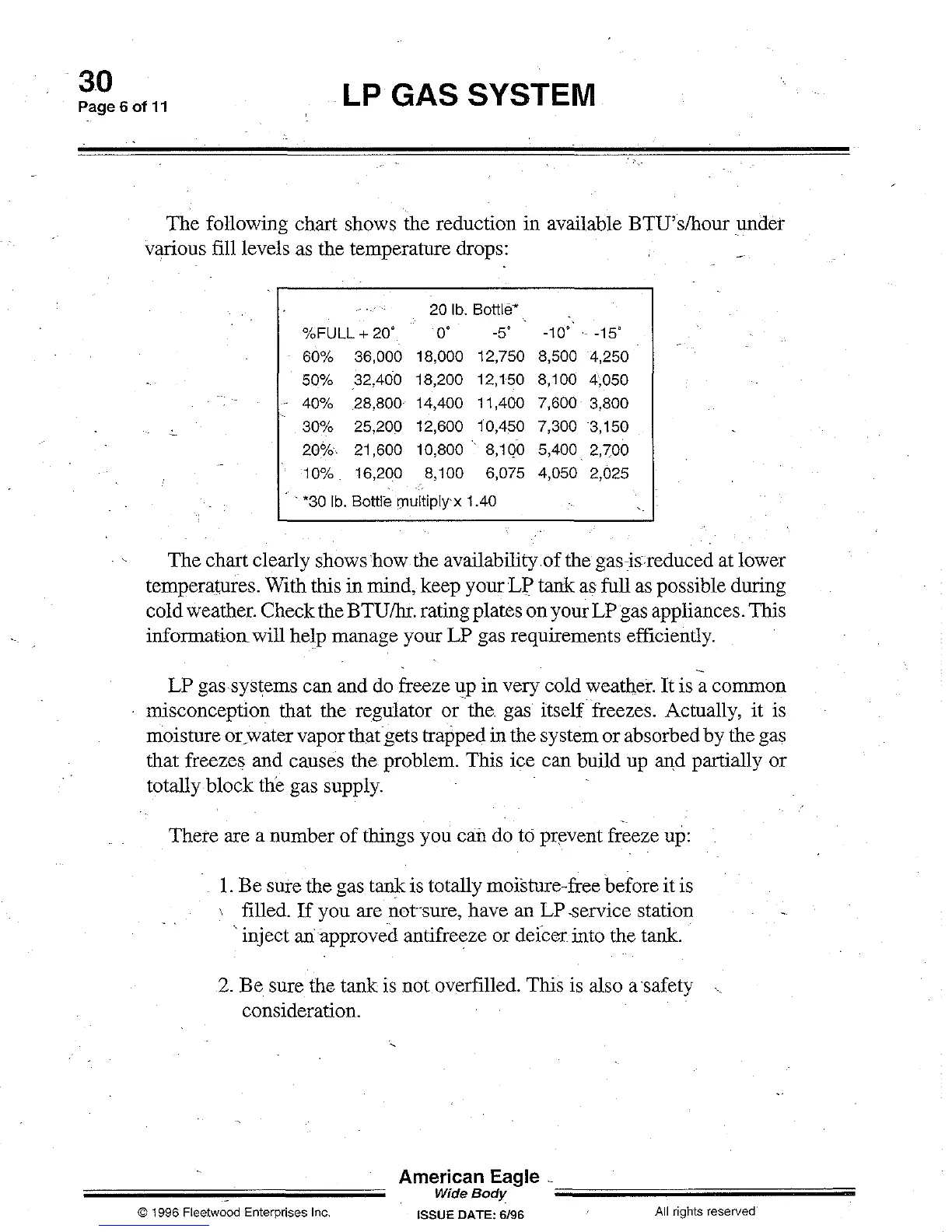
The following chart shows the reduction in available BTU's!hour under
various fill1evels as the temperature drops:
20 lb. Bottle*
%FULL+
20·
O·
-5·
-10·
--
-15·
60%
36,000 18,000
12,750 8,500 4,250
50%
32,400 18,200
12,150 8,100 4,050
40% 28,800 14,400 11,400 7,600 3,800
30% 25,200 12,600 10,450
7,3003,150
20%-.
21,600 10,800
8,1QO
5,4002,700
10% 16,200 8,100 6,075 4,050 2,025
. *30 lb. Bottle O1ultiplyx 1.40
The chart clearly shows how the availability.of the
gas~isreduced
at lower
temperatures. With this in mind, keep your
LP
tank as full as possible during
cold weather. Check the
BTUIhr. rating plates on your LP gas appliances. This
information. will help manage your
LP
gas requirements efficiently.
-
LP
gas systems can and do freeze up in very cold
weat:h,er.
It
is a common
misconception that the regulator or
the.
gas itself freezes. Actually, it is
moisture or ,water vapor that
gets
trapped in the system or absorbed by the gas
that freezes and causes the problem. This ice can build up
an,d
partially or
totally block the gas supply.
There are a number
of
things you cail do to prevent freeze up:
1.
Be sure the gas tank is totally moisture-free before it is
\ filled.
If
you are not'sure, have an LP .service station
'.
inject an approved antifreeze or deIcer into the tank.
2. Be sure the tank is
not
overfilled. This is also a safety
consideration.
American Eagle '
.......
============
Wide
Body
-
© 1996
Fleetwood
Enterprises
Inc,
ISSUE
DATE:
6/96
All
rights
reserved·



 To Next Page