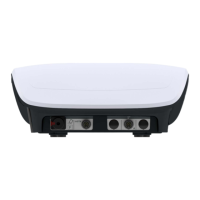
The PhysioGo 700C / 701C is a versatile, non-invasive therapeutic device designed for various treatment procedures. It is available in two models: the 700C (non-battery unit) and the 701C (battery unit), making it suitable for both stationary use and mobile applications, such as in sports medicine or areas with unreliable power supply.
Function Description
The unit is equipped with three fully independent treatment channels, allowing for a wide range of therapies:
- Channel 1: Supports single-circuit electrotherapy (A or B) and dual-circuit electrotherapy (A+B).
- Channel 2: Offers combined therapy (ultrasound therapy and electrotherapy) and laser therapy.
- Channel 3: Dedicated to ultrasound therapy.
The PhysioGo 700C / 701C can perform treatments using:
- Electrotherapy: Bipolar (bidirectional) and unipolar (unidirectional) low-frequency currents, as well as bipolar (bidirectional) and unipolar (unidirectional) medium-frequency currents modulated by low-frequency waveforms. This includes interferential currents (dynamic and isoplanar), one-channel sine wave current (AMF), Kotz' (Russian stimulation), TENS, BURST, SP-TENS currents, tonolysis, ionophoresis, galvanization (continuous and interrupted mode), triangular or rectangular pulses (continuous and interrupted mode), Träbert (Ultra Reiz), Leduc', neofaradic (continuous and interrupted mode), diadynamic currents (MF, DF, CP, CP-ISO, LP in continuous and interrupted mode), USS (Unipolar Sine Surge current), and microcurrents. It also supports qualitative and quantitative electrodiagnostics of the nervous-muscle system.
- Laser Therapy: Utilizes laser radiation in the visible (660 nm) and invisible (808 nm) ranges, in both continuous and pulse modes. It is classified as a small power output laser device, often referred to as "cold," "soft," or biostimulating.
- Ultrasound Therapy: Provides ultrasound and phonophoresis in continuous and pulse modes.
- Combined Therapy: A method combining electrotherapy and ultrasound therapy.
The device includes a database of preset treatment procedures and a therapeutic encyclopedia, enhancing ease of operation. Users can also create custom programs for all therapies and sequences for electrotherapy.
Important Technical Specifications
- Power Input: 230V, 50/60Hz, max 75W, 90VA.
- Safety Class: Class I, requiring connection to a socket with a protective earth pin.
- Laser Radiation:
- Maximum output power: 450 mW for 808 nm wavelength, 100 mW for 660 nm wavelength.
- Laser therapy device class: 3B.
- Applicator types: Point probes (Red light: 40RDV2, 80RDV2, 80RDV3; Infrared light: 200IRV2, 400IRV2, 400IRV3), scanning laser applicators (SKW2-400/SK2-400, SKW2-450/SK2-450), and cluster laser applicators (CL1800WH/CL1800).
- Ultrasound Therapy:
- Compatible ultrasound heads: 4 cm² effective radiation area (1 MHz or 3.5 MHz frequency) and 1 cm² effective radiation area (1 MHz or 3.5 MHz frequency).
- Power density in combined therapy: 0.5 to 1.5 W/cm².
- 0.5 W/cm²: Face and neck, active trigger points, painful conditions.
- 0.5 to 1.0 W/cm²: Paraspinal area, active trigger points, painful conditions of medium intensity, slim patients.
- 1.0 to 1.5 W/cm²: Limbs, hips, buttocks, stout patients, painful conditions of low intensity.
- Impulse emission: Often applied with a duty factor of 20-75%.
- Electrotherapy Electrodes: Standard elastomer-carbon electrodes are provided. Self-adhesive electrodes are available as optional accessories, suitable for bipolar currents (especially TENS) but not for unipolar currents.
- Patient Stop Switch: Connects to a dedicated "STOP" socket for patient safety.
- DOOR Remote Connector: Required for laser treatment procedures, connects to the "DOOR" socket on the rear panel.
- Battery (Model 701C): Allows for mobile operation.
Usage Features
Installation and Setup:
- Initial installation should be performed by a qualified representative.
- After unpacking, allow two hours for the unit to adapt to room conditions.
- Place the unit on a stable surface near a grounded mains socket at a convenient height for operation. Avoid direct sunlight.
- Accessory holders are mounted as per the technical description.
- All connectors are protected against accidental pulling out, with protection rings for securing plugs.
- Electrotherapy cables (red and black banana plugs) connect to sockets marked A and B. Red plugs connect to the positive pole, black to the negative pole, important for galvanic and unipolar currents.
- Laser applicators connect to specific laser therapy sockets.
- For scanning laser applicators on a stand, ensure the stand is placed near a mains socket to avoid cable limitations. Handwheels allow adjustment of the scanner arm and position. Wheel brakes should be locked to prevent unintentional movement.
- Ultrasound heads connect to the socket marked with the ultrasound symbol.
- For combined therapy, the ultrasound head and electrotherapy patient's cable connect to socket B. The ultrasound head is connected to a negative pole, and a red plug in channel B to a positive pole. The black plug in channel B is inactive.
Operation Modes:
- Program Mode: Utilizes preset treatment programs and sequences, as well as user-defined programs and sequences. Parameters of preset programs cannot be edited directly but can be copied to manual mode for modification.
- Manual Mode: Allows for full control and adjustment of all treatment parameters.
- User Programs and Sequences: Users can save custom treatment parameters and sequences in the device memory.
Patient Preparation and Treatment Performance:
- Always check for contraindications before treatment.
- Position the patient comfortably, ensuring tissue relaxation in the treatment area. Lying position is recommended for treatments near the head.
- For patients with respiratory disorders, sitting or reclining positions should be used.
- Inform the patient about potential sensations during the procedure.
- Continuously observe and assess the patient's condition before, during, and after therapy to adjust parameters as needed.
- Maintain treatment records, including parameters, area, technique, dose, and post-therapy symptoms.
- Continuously update knowledge and follow literary activities in the scope of therapy.
Specific Therapy Guidelines:
- Electrotherapy:
- Verify device and cable/electrode functionality using a tester or built-in function (3.2.5.1).
- Use only disinfected, good-condition electrodes.
- Improper electrode selection can cause skin irritation/burns.
- For direct and unidirectional pulse currents of long duration, use tin electrodes.
- Use properly moistened pads (viscose or fine mesh gauze) for electrodes; water should not drip. Use warm tap water to avoid vasoconstriction.
- Apply gel (e.g., aloe vera) if not using pads.
- Securely attach electrodes with pads using Velcro belts, elastic bandages, or sandbags.
- Assess skin continuity and sensation in the electrode placement area.
- Decrease resistance by cleaning skin with alcohol/water and removing hair.
- For treatments with galvanic currents, electrode polarity matters (red to positive, black to negative).
- Monitor skin for irritation/burns, especially with direct current.
- Adjust intensity based on sensory threshold and patient comfort.
- The electrodes should be replaced periodically due to wear.
- Ultrasound Therapy:
- Check equipment and ultrasound head efficiency before treatment.
- Explain the procedure to the patient.
- Clean the skin with alcohol/water.
- Apply coupling gel to the treatment area.
- Maintain full contact between the head and skin; the control system reduces power if contact is inadequate.
- Use continuous or pulse mode as appropriate.
- Move the head continuously and slowly (4 cm/s) to avoid overheating and ensure even energy distribution.
- The choice of movement pattern (circular, linear, or combined) depends on the treatment area and goal.
- For smaller areas, point application with short treatment times is possible.
- The head should be switched off if not in direct contact with skin.
- Combined Therapy:
- Simultaneous application of ultrasounds and pulsed currents.
- Ultrasounds increase skin permeability, allowing lower current doses.
- Precise localization of application possible due to increased nerve fiber sensitivity.
- Ultrasounds reduce habituation to electric stimulus.
- Useful for diagnostics (trigger points, hyperacusis zones) and treatment.
- Uses bidirectional pulsed currents (TENS, HVS, average frequency) to limit electrochemical reactions.
- Ultrasound frequency depends on trigger point localization (0.8-1MHz for myofascial trigger points, connective tissue; 3.5 MHz for surface points).
- Power density ranges from 0.5 to 1.5 W/cm².
- Active electrode is the ultrasound head, placed over the pain location. Passive electrode placement options include outside the treatment area, above the nerve, above referenced pain, or within a dermatome.
- Laser Therapy:
- Explain safety rules to the patient.
- Patient must wear protective goggles.
- Check equipment and applicator efficiency, and measure output power (3.2.5.4).
- Dose of radiation (energy density in J/cm²) must be adapted to therapy goals.
- Technical parameters (wavelength, applicator surface) impact dose.
- Application methods: point (contact), cluster (contact/contactless), scanning (contactless) depending on area size and therapy goal.
Screen Configuration:
- The display shows date, time, battery status, mains cable connection, therapy selection menu, program mode, manual mode, user-defined programs/sequences editor, information, and setup mode.
- Channel selection tabs indicate selected therapy, treatment time, and channel operating status. The active tab's background is the color of the edition field, while inactive tabs are black.
Limitations:
- Treatment channel 1, electrotherapy A+B: Only ultrasound therapy can be set in channel 2, and it is possible to end performed treatment in channel 1 and escape from edition mode.
- Treatment channel 2, electrotherapy B or combined therapy: Only electrotherapy A is possible in channel 1.
- Treatment channel 3, combined therapy: Ultrasound therapy is not available in channel 3.
- Treatment channel 3, ultrasound therapy: Combined therapy is not available in channel 2.
- I/t curve: Only available in channel 1 for electrotherapy A.
I/t Curve Measurement:
- Allows for electrotherapy treatment programs that are exclusively executed with the PhysioGo units.
- Requires connecting the patient's cable, selecting the appropriate tab, and confirming manual mode.
- The patient is prepared according to point 4.1, with the black plug as the active electrode.
- The unit stimulates at 2-second intervals.
- The user adjusts current output until minimum muscle contraction occurs, then marks it on the diagram.
- This process is repeated for all rectangular and triangular pulse duration values.
- The display shows rheobase, chronaxie, accommodation threshold, accommodation factor, and quotient accommodation value.
- The curve can be saved and loaded.
- The muscle reaction should not be observed for triangular pulses of 1000 ms and 700 ms pulse duration. If so, repeat the procedure and start again from 500 ms pulse duration. For 1000 ms and 700 ms, the output should be 0 mA.
Maintenance Features
Setup Mode:
- Basic Information: Displays unit details.
- Language: Allows selection of interface language.
- Global Settings:
- Date and Time: Set date and time.
- Sounds: Configure key sound, sound during treatment, warning sounds, and initial sounds.
- Volume: Adjust sound volume.
- Display: Adjust display brightness.
- Functional Settings:
- Channel Operation Mode Selection: Choose between manual mode (unit sets parameters), program mode (unit sets parameters from preset programs), and mode selection pop-up (unit displays a window with a list of operation mode selection options).
- Program Groups / Medical Fields: Filters preset programs and sequences by medical fields (e.g., Orthopedics, Sports medicine, Rheumatology, Neurology, Urology, Dermatology, Angiology).
- US Units: Selects units for ultrasound therapy (Power – watts [W], Power density – Watt per square centimeter [W/cm²]).
- US Head Sensitivity: Adjusts sensitivity of ultrasound heads to no-contact detection (Default, High, Low). High sensitivity improves detection on low load, but treatment timer stops more frequently. Low sensitivity reduces detection on low load, facilitates treatment on small body parts, improves comfort, but may cause overheating.
- US Head Bad Contact Signaling: Configures when treatment is interrupted due to weak US head contact (Default after 5 sec, Delayed after 10 sec).
- Battery (Model 701C): Sets battery charging mode (Charge battery up to 80% to extend lifetime, or Charge battery up to 100% for maximum working hours).
- Service:
- Electrodes Test: Checks the continuity status of electrodes for electrotherapy treatments.
- US Head Calibration: Adjusts ultrasound head parameters to compensate for frequency changes of ultrasound transducers.
- Miscellaneous: Additional service options.
- Laser Applicators Output Power Test: Checks if the output power of laser radiation is correct. This test is only possible if the applicator is not currently selected in a laser therapy channel. Point probes and scanning applicators are measured automatically; cluster applicators require an external radiation sensor. If power differs by more than ±20% from nominal, repeat the measurement. If five consecutive measurements are incorrect, contact authorized service.
- Statistics:
- Info: Provides unit version, software, interface, and build date information.
- Unit Statistics: Shows the number of treatment procedures performed. Statistics can be deleted.
- Accessories Statistics: Provides information about connected accessories.
Transport Position:
- To prepare the unit for transport, end any treatment, switch off the unit, disconnect mains cable and applicators (except the scanner from the device), unlock and transport the stand.
- At the destination, arrange the stand, lock the brakes, and reconnect the mains cable and applicators.
Favourite Programs:
- Allows quick access to frequently used preset programs and sequences. Users can add or remove programs from a favorite list. This option is not available when viewing preset programs/sequences by medical fields.
User Programs and Sequences:
- Users can save, edit, remove, and view parameters of custom programs and sequences.
- Sequence editor allows adding, deleting, moving up/down steps, and saving sequences.
Safety:
- Read the user guide carefully and follow recommendations.
- The device is intended for adult patients only and not for home healthcare.
- Only qualified personnel should operate the device.
- No modification of the equipment is allowed.
- In case of display issues or no light indicator after switching on, check mains fuse/cable and contact authorized service if necessary.
- The patient stop switch and DOOR remote connector are crucial for safety during laser treatments.
- Warnings and important information are indicated by specific symbols in the manual.

 Need help?
 General

 To Next Page