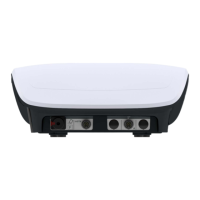
The PhysioGo.Lite Electro is an active, non-invasive therapeutic device designed for electrotherapy treatments, based on a modern microprocessor platform. It is equipped with a color touch LCD display with a diagonal of 12.7 cm (5 inches) and two fully independent treatment channels.
Function Description
The unit performs treatments using bipolar (bidirectional) and unipolar (unidirectional) low and medium frequency currents. It comes with a database of preset treatment procedures and a therapeutic encyclopedia, enhancing ease of operation. Users can also create their own custom programs and sequences.
The device supports a wide range of currents and therapies, including:
- TENS, BURST, and SP-TENS currents for spastic paralysis.
- Interferential currents (dynamic and isoplanar).
- One-channel sine wave current (AMF).
- Kotz' - Russian stimulation.
- Diadynamic currents (MF, DF, CP, CP-ISO, LP, RS, MM in continuous and interrupted modes).
- Ionophoresis and galvanization of constant current (continuous and interrupted modes).
- Träbert (Ultra Reiz), Leduc', and neofaradic currents (continuous and interrupted modes).
- Medium frequency current.
- Unipolar and bipolar sine surge currents.
- Triangular or rectangular pulses (continuous and interrupted modes).
- Microcurrents.
- IG pulses.
- EMS currents.
- H-waves.
- Exponential pulses.
- Tonolysis and Hufschmidt stimulation for spastic paralysis.
- Qualitative and quantitative electrodiagnostic of the nervous-muscle system.
The unit can operate in two modes:
- CC mode (constant current): Output current is stabilized, independent of patient circuit resistance within certain limits.
- CV mode (constant voltage): Output voltage is stabilized, with the voltage in the patient's circuit depending on the ratio of the unit's output resistance to the load resistance. CV mode is recommended for non-stationary treatments like combination therapy or point electrodes, as momentary loss of contact does not interrupt the procedure.
The device includes a detection system for high resistance in the patient circuit, which activates when the current exceeds 2.5 mA or voltage is above 15 V. This system signals issues like incorrect electrode connection, poor contact, worn electrodes, or damaged cables.
Important Technical Specifications
Classifications:
- Medical device class: IIa (according to MDD 93/42 / EEC and REGULATION (EU) 2017/745)
- Electrical safety class: II
- Applied part type: BF
- Degree of protection provided by unit enclosure: IP20
- Mode of operation: Continuous operation
Treatment Parameters:
- Nominal load resistance: 500 - 750 Ω
- Output current and voltage amplitude accuracy: ±20% for 500 Ω load resistance; for 22 kΩ resistance, microcurrents calibration is ±20%.
- Pulse repetition frequency accuracy: ±20%
- Pulse duration accuracy: ±20%
- Accuracy of times of individual phases for AM and FM: ±20%
Programs and Sequences:
- Preset programs: 71
- Preset sequences: 44
- Total: 115
- User-defined programs: 50
- User-defined sequences: 10
Treatment Timer:
- Ranges and resolutions: Defined in chapter 8
- Time accuracy: 10%
General:
- Mains supply: 100-240 V; 50/60 Hz
- PhysioGo.Lite Electro controller supply: 24VDC; 2.5A
- Mains fuses: size 5x20mm, T3.15L250V; 3.15 A, 250 V
- Type of memory backup battery: CR2032
- Unit weight: max. 3 kg
- Unit dimensions (WxDxH): 25x27x16.5 cm
Switched-mode power supply (HPU63B-108 by Sinpro):
- Mains supply – input: 100-240 VAC; 1.62-0.72A; 47-63 Hz
- Output: max. 24VDC; 2.62A
- Weight: max. 0.38 kg
- Dimensions (WxDxH): 13.2x5.6x3.7 cm
Optional Battery (Li-Ion):
- Voltage: 18 V
- Capacity: 2.1 Ah
- Charging time: max. 6.5 h
- Durability: > 700 cycles
- Weight: max. 0.45 kg
- Dimensions (WxDxH): 15x8x3.3 cm
Environmental Conditions:
- Storage temperature range: +5°C to +45°C
- Storage relative humidity: 30% to 75%
- Storage pressure range: 700-1060 hPa (70-106 kPa)
- Operation temperature range: +15°C to +30°C
- Operation relative humidity: 30% to 75%
- Operation pressure range: 700-1060 hPa (70-106 kPa)
- Transport temperature range: -10°C to +45°C
- Transport relative humidity: 20% to 95%
- Transport pressure range: 700-1060 hPa (70-106 kPa)
Usage Features
User Interface:
The unit features a touch-sensitive display and edit keys for parameter adjustment. A START/STOP key initiates and terminates treatment procedures. Operation status and battery level are indicated by LEDs.
Battery Operation (Optional):
The PhysioGo.Lite Electro can be optionally fitted with a battery, making it suitable for use in sports medicine (training camps) or areas with unreliable power supply. The battery installation method is user-friendly, involving unscrewing a cover, connecting the battery cable, and reassembling.
Safety Features:
- Explosion-proof environment: Not designed for use in rooms with combustible gases or vapors.
- Electromagnetic environment: Designed to meet electromagnetic interference emission and immunity standards. Simultaneous operation with devices generating strong electromagnetic fields (e.g., shortwave diathermy, MRI) should be avoided or appropriate distances maintained.
- Patient safety: Recommendations include proper electrode placement (avoiding carotid artery, reproductive organs, chest area), using disinfected electrodes, and adjusting current density based on electrode size.
- High resistance detection: The device pauses treatment and displays messages if high resistance is detected in the patient circuit, prompting checks of electrode connection, contact, and cables.
Program and Sequence Management:
- Preset programs/sequences: The unit offers a database of pre-defined treatments for common disorders, with suggested parameters. These parameters are based on literature and should be treated as indications.
- Manual mode: Allows users to set individual treatment parameters. Preset programs can be "copied" to manual mode for editing.
- Favorite programs: Users can add frequently used programs and sequences to a "favorite" list for quick access.
- User programs/sequences: An advanced editor allows creation of custom electrotherapy programs and sequences, which can consist of up to four stages.
I/t Curve Determination:
The unit can determine I/t curves for flaccid muscles, which is recommended for creating electrostimulation programs. This involves setting pulse durations and increasing current until minimum muscle contraction is observed. The device automatically displays rheobase, chronaxie, accommodation threshold, and accommodation factor.
Safe Shutdown Procedure:
A clear procedure is provided for safely turning off the unit, including disconnecting from the mains and, if applicable, removing the battery.
Maintenance Features
Cleaning and Disinfection:
- Unit casing: Should be cleaned and disinfected with a microfiber cloth moistened with a mild detergent or disinfectant.
- Electrotherapy accessories (leads, electrodes): Leads and electrodes should be cleaned with water and gentle soap, then wiped dry. Electrodes must be disinfected after each session using 70% alcohol solution or ethanol/isopropyl alcohol-based agents.
- Viscose electrode pads: Should be rinsed in clean water, with vinegar added if necessary to remove calcareous deposits, then rinsed again. They can also be washed in boiling water for 1 minute, then soaked in saline solution to improve conductivity.
- Replacement: Worn or damaged viscose covers and electrodes should be replaced. Used electrodes and viscose pads should be disposed of as hospital waste.
Cable Condition Control:
The unit has a built-in "Electrodes test" function in setup mode to check cable condition. This test involves connecting the patient cable and observing signal level indications on the display; a reduced signal level indicates cable damage.
Verification of Electrodes Condition:
The "Electrodes test" function also allows checking the usage status of electrodes. The unit measures current flow to determine the level of electrode wear; less current indicates a more consumed electrode.
Troubleshooting:
The manual provides a troubleshooting guide for common issues, including:
- Unit not responding to mains supply (check fuse, mains cable).
- Unit not starting, acoustic sounds heard (turn off/on, contact service if persistent).
- Unit error indication (note error number, contact service).
- Frequent high resistance messages (check cables and electrodes).
- Keys not responding (turn off/on, contact service).
- Touch panel issues (calibrate display, avoid touching during start-up, contact service if persistent).
- Incomprehensible messages (switch on, enter setup, select language).
- Unclear display (switch on, enter setup, adjust brightness).
- Lack or low buzzer signals (switch on, enter setup, check buzzer volume).
- Battery not discharging (contact service).
- Date and time settings cancel (battery discharged, memory backup battery needs replacement).
Fuse Replacement:
Instructions are provided for safely replacing the mains fuse, emphasizing disconnecting the unit from the mains and using the correct fuse type as specified on the nameplate.

 Need help?
 General

 To Next Page