41
Maintenance and service
be repaired by the manufacturer, by a certied ATMOS partner or an ATMOS
authorised, specialised dealer. Subsequently the device may be operated again.
When is a suction device oversuctioned?
A suction device is oversuctioned if suction material has penetrated into the interior of
the device.
How can I see whether my suction device is oversuctioned?
Reduced suction capacity is usually a sign of potential oversuction. The ATMOS C 161
Aspirator, ATMOS C 261 Aspirator or ATMOS C 161 Battery also has a condensate
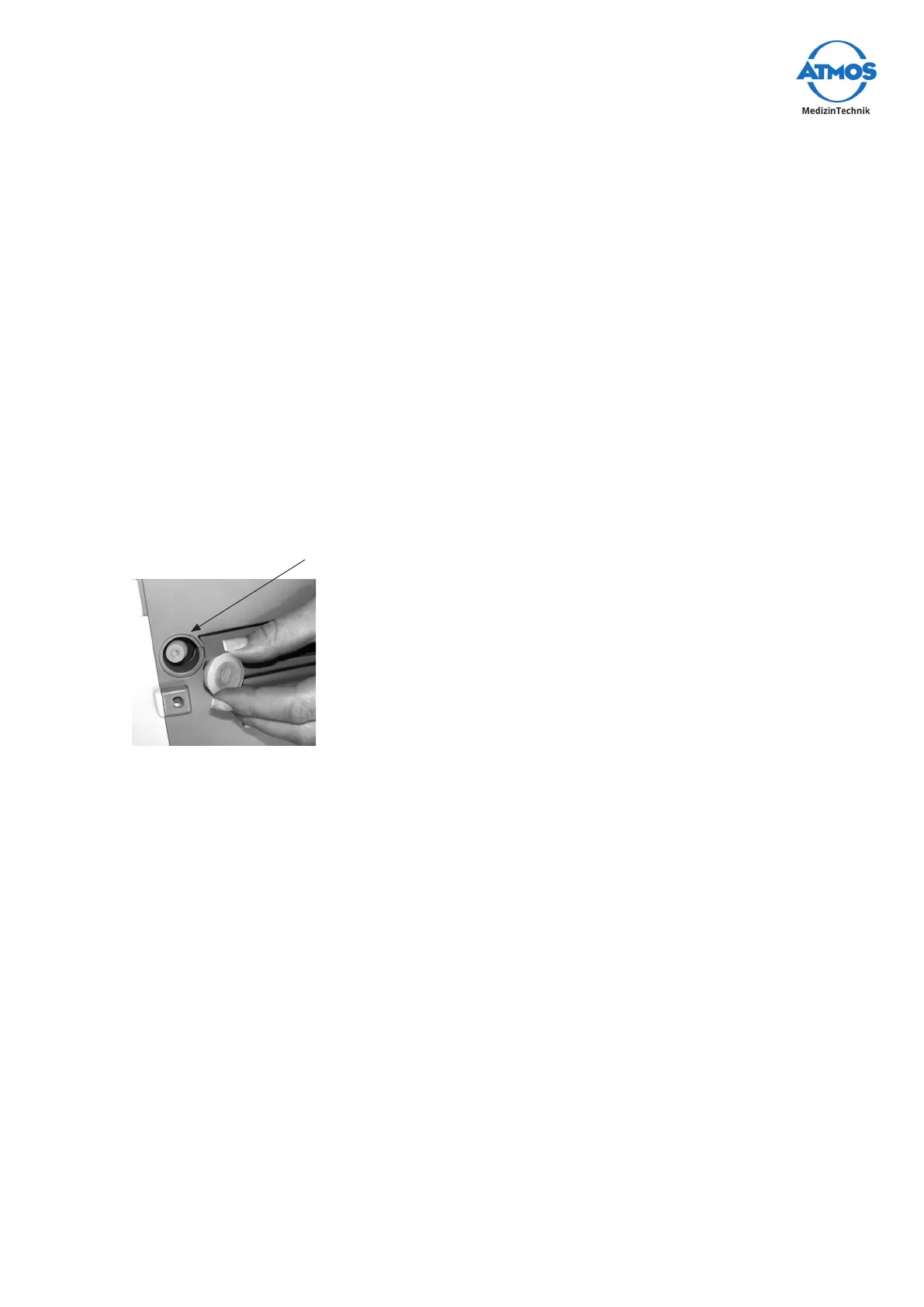
collector at the bottom of the device. Please remove the cover cap when performing a
visual inspection. The device is oversuctioned and contaminated if humidity or contami-
nation is visible in the condensate collector.
Measures
In case of oversuction or if there are any reservations regarding its hygienic condition,
thesuctiondevicemustbere-sterilisedbythemanufactureroracertiedATMOS
partner. A contaminated suction device constitutes a risk to both the patient and the
caregiver. As such, we recommend checking the condensate collector regularly.
Quick visual inspection of condensate collector to
check for potential contamination.
6.3 Handling batteries
• Thebatterymustbefullychargedbeforestartingupthedeviceforthersttime.
• Allowing the batteries to discharge completely will damage them irreparably. As
such, make sure that you charge the batteries fully every three months, even when
the ATMOS C 161 Battery is not in use.
• Always ensure that your battery-powered devices are charged before putting them
into storage.
• If the device has not been used for a prolonged period of time, the full capacity of
the battery will not be available until it has been through approximately 4 full
charging and discharging cycles.
• Always contact Customer Service as soon as possible to replace used batteries.
Operating the device using mains power when its battery has been used up can
irreparablydamagetheelectronicchargingsystemorleadtosuddenshut-oofthe
device due to high current consumption.
• Heat will irreparably damage the battery. As such, batteries must be kept out of
direct sunlight and away from heat sources. The ideal storage temperature is
between 8 and 15 °C.
• Once the available capacity (running time) of the battery drops to less than 80% of
that of a new battery, it needs to be exchanged by our Service team.
• The capacity of the batteries will be exhausted after min. 500 charging cycles.


 To Next Page