76
1 User agent A - door station. SIP address: sip:192.168.1.101
2 User agent B - SIP-enabled phone. SIP address: sip:192.168.1.100
You can set up the Axis door station to call for example a SIP-enabled phone on the same network using a peer-
to-peer SIP setup.
Private Branch Exchange (PBX)
When you make SIP calls outside your local IP network, a Private Branch Exchange (PBX) can act as a central
hub. The main component of a PBX is a SIP server, which is also referred to as a SIP proxy or a registrar. A PBX
works like a traditional switchboard, showing the client's current status and allowing for example call transfers,
voicemail, and redirections.
The PBX SIP server can be set up as a local entity or offsite. It can be hosted on an intranet or by a third party
provider. When you make SIP calls between networks, calls are routed through a set of PBXs, that query the
location of the SIP address to be reached.
Each SIP user agent registers with the PBX, and can then reach the others by dialing the correct extension. A
typical SIP address in this case would be sip:<user>@<domain> or sip:<user>@<registrar-ip>.
The SIP address is independent of its IP address and the PBX makes the device accessible as long as it is
registered to the PBX.
Example:
1 sip:mydoor@company.com
2 sip:myspeaker@company.com
3 PPBBXX sip.company.com
4 sip:office@company.com
When you press the call button on an Axis door station, the call is forwarded through one or more PBXs to a SIP
address either on the local IP network or over the internet.
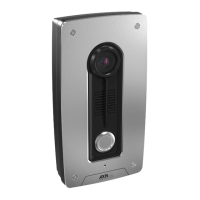
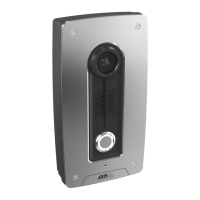
AXIS A8207-VE Mk II Network Video Door Station



 To Next Page
 Loading...