MAINTENANCE
~ 71 ~
14.9 Checking for Tread Depth
Maintain re tread depth at 1/8” (0.125” or 3 mm) or more. Tires that have worn to less than 1/8”
(3 mm) should be replaced as soon as possible. Worn res are more likely to skid, reducing
effecve stopping distance. Also, worn res hydroplane and slide on wet pavement more than
res with sufficient tread depth.
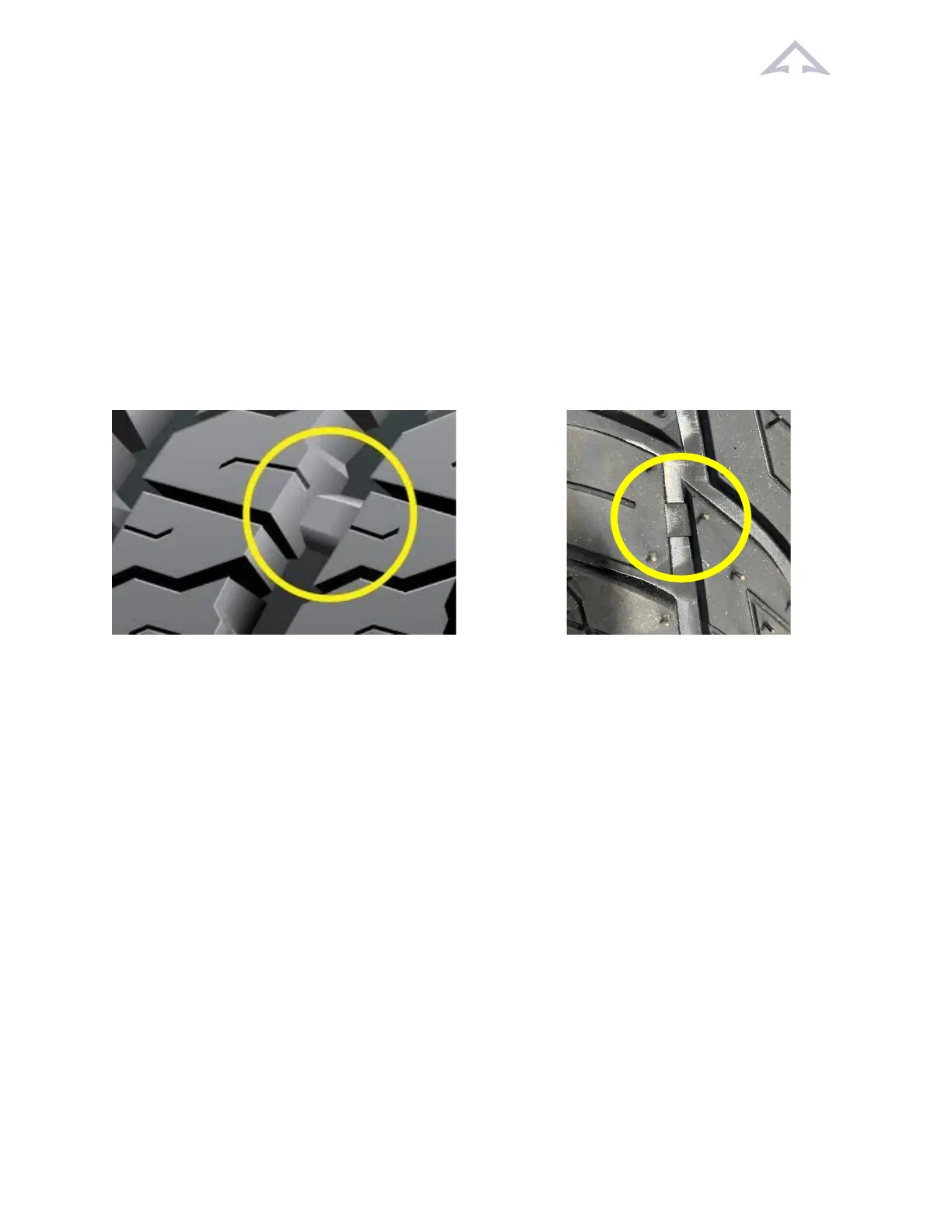
14.10 Tread Wear Indicator Bar
Tread wear indicator bars are molded into the surface of the re for the purpose of indicang
replacement due to wear. These bars are typically molded to a depth of 2/32”, which means that
if the wear has reached the indicator bars, the res are too worn and must be replaced.
Figure 29 Tread Depth Indicator Bars
14.11 Wheel Nut Torque: 83 lbf- or 113 N-m
Inspect the wheel nuts occasionally for ghtness, and if they have been loosened for
maintenance service. Do not lubricate the stud or the lug nut. Clean dirty or rusted threads
before ghtening.
Use a properly calibrated torque wrench to prevent over- or under-ghtening.
It is good pracce to ghten nuts in two increments, first to half-torque-level, about 40 lbf- or
54 N-m, then to the final torque of 83 lbf- or 113 N-m.
14.12 Wheel Removal
14.12.1 Jack Points
• Always set the park brake and chock the wheels. Use a proper jack, along with
automove jack stands if needed for the work.
• The jack points under the front end of the vehicle are along the subframe near the lower
control arm aachment point, just behind the front wheels.



 To Next Page