Page 35
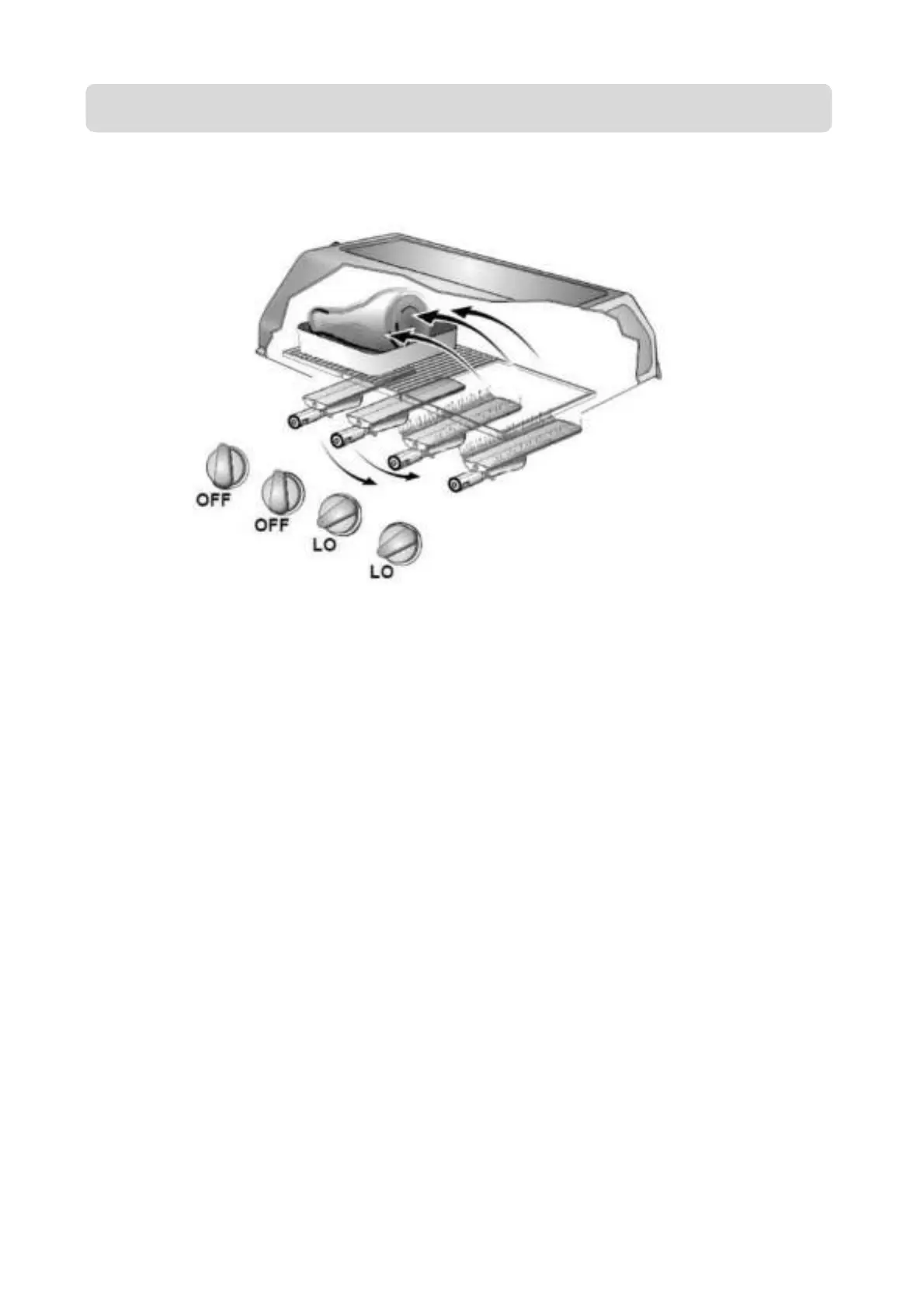
(B) Indirect Cooking Method:
This is when you place the food only above burners that are OFF. The other burners are
adjusted in combinations of LO and OFF to maintain constant lower roasting temperatures.
This method is ideal for thicker cuts of meat, legs of lamb, pork, shoulders of beef, whole
chickens and whole fish. Moist, hot air rises from the lit burners and circulates around the
food, trapping juices and flavour. Even cakes and breads can be cooked in your barbeque
this way. Cooking low and slow allows the food to cook completely through without burning
on the outside, yet remaining juicy and tender on the inside. Best results are achieved by
placing your roast in a rack and that rack in the drip pan. The roast is elevated to allow heat
to circulate all the way around, and water, wine, juices, herbs can be added to the drip pan
to help flavour the roast and make a baste or gravy. The side of the warming rack away
from the flames is also great for indirect cooking.
Preheat the barbeque with all burners on HI and the hood closed for 5 minutes. lmportantly,
once the barbeque is pre-heated and the hood is closed, heat is trapped around the food,
so normally half of the burners need to be turned OFF. The other burner(s) may need to be
turned to LO. Heat from the lit burners will circulate all through the hood cooking quite
evenly.
On a 2 burner barbeque, the burner under the grill on LO or HI and the burner under the
hotplate OFF is usually the best setting for roasting. The roast may need to have a half turn
during cooking for even browning. Place the roast rack in the drip pan onto the hotplate.
On a 4 burner barbeque, two burners under the grills on LO and two burners under the
hotplate OFF is usually the best setting for roasting. The hotplate can be positioned left or
right in the barbeque. The roast may need to have a half turn during cooking for even
browning. Place the roast rack in the drip pan onto the hotplate.
Covered cooking (continued)


 To Next Page