Maintenance
119
C3M2-OM-EN-02
6.14 Battery Maintenance
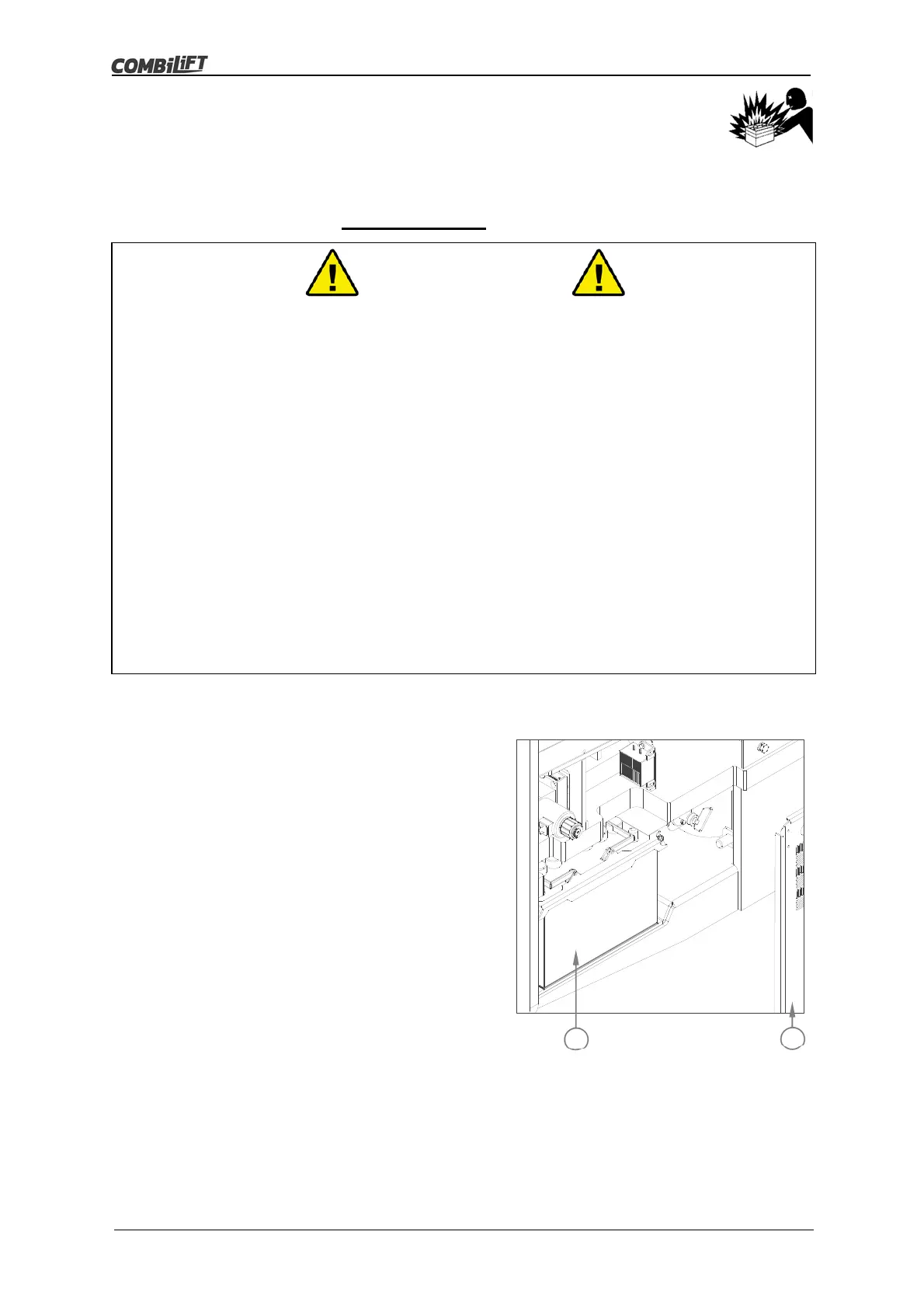
The battery is located behind the large access panel to the right hand side of the
truck.
The truck is supplied with a 12V 105Ah 735A battery.
6.14.1 Checking the Battery Electrolyte Level
1. Stop the truck in a designated service
area.
2. Lower the forks fully and tilt the mast
forward fully.
3. Turn the ignition key switch to the ‘0’ off
position, then remove the key.
4. Remove the large access panel (A)
from the right hand side of the truck
(pull out firmly at the top then lift up
and out) to gain access to the battery
(B).
5. Check the electrolyte level in each cell
by removing each of the caps and
inspecting inside (clean the top of the
battery before removing the caps).
6. The electrolyte should be just above the tops of the separators.
7. If required top up each cell with distilled or deionised water and refit the cap
securely.
8. Refit the large access panel securely to the right hand side of the truck.
Caution
Protective clothing and goggles should be worn and particular care taken
not to come into contact with or spill battery electrolyte.
Batteries contain sulphuric acid which may leak for various reasons.
Sulphuric acid is a corrosive and poisonous liquid that will cause burns and
irritation to the skin and eyes.
Batteries generate explosive gases when being charged. Charge in a well-
ventilated area and follow the instructions for the charger being used.
Never connect the positive terminal to the negative terminal on the same
battery with a conductive object such as a metal tool.
The temperature of the battery must not exceed of 50° C (122° F) during
charging.
Smoking and the use of naked flames in the charging area is prohibited.
Clean the battery and terminals with a damp cloth. Using a dry cloth can
lead to a build-up of static electricity that may discharge and cause an
explosion.
B
A



 To Next Page