The Cursor
Notice
the
small flashing symbol
on
the
screen, just
to
the
right
of
the
last
item
of
information
on
the
screen. This symbol is called
the
cursor.
The
cursor
marks
your
position
on
the
screen.
When
you
type
in
something
or
when
the
computer
responds
to
something
you
have
typed
in,
the
cursor
moves accordingly.
Adjusting The Screen Display
If
the
screen
display is
not
clear,
use
the
screen
controls
on
your
monitor
to
adjust
the
display.
If
you
don't
get a
picture
at all,
check
your
connections.
Setting The Date And Time
When
the
computer
finishes loading
MS-DOS
from
the
System Disk,
several messages are displayed
on
the
screen, as
shown
in Figure
11.
The
first messages give system information and copyright notices.
Then
a message like "Current
date
is Tue 1-01-1986" is displayed,
followed
by
the
prompt
"Enter
new
date:",
with
the
cursor
blinking
to
the
right
of
the
message. You
can
then
either
set
the
date
and
time,
or
you
can
ignore
these
messages
by
just pressing
RE11JRN
when
the
date
and time
prompts
appear.
For
complete
instructions
on
setting
the
date
and time, refer
to
Chapter
3, page 18
of
the
MS-DOS
User's Guide,
which
is
the
next
major
part
of
this volume.
If
You
Make A Mistake
...
If
you
make a mistake
when
you
are typing,
you
can simply
backspace
over
the
mistake and retype.
As
you use
the
Backspace
Key,
you will notice that
the
characters disappear.
If
you just
want
to
start again from
the
beginning, press
the
Ctrl,
the
Alt and
the
Del keys simultaneously. This
reboots
(i.e., restarts)
MS-DOS.
Using The Keyboard
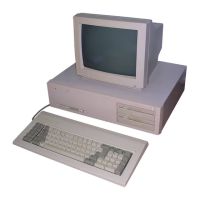
For detailed information
on
using
the
Commodore
PC Keyboard,
see Chapter 1
and
Appendix C in
the
MS-DOS
User's Guide,
and
Chapter 5 in
the
MS-DOS
User's Reference.
The
First Steps 17



 To Next Page