EasyManua.ls Logo

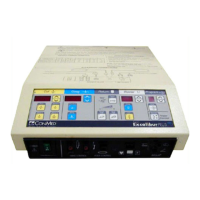
ConMed ExcaliburPLUS PC - Patient Preparation Cautions

ConMed ExcaliburPLUS PC
98 pages
Print Icon
To Next Page IconTo Next Page
To Previous Page IconTo Previous Page
Loading...
rs
ec
ME
*
Use
only
a
hospital
grade,
3-prong,
power
cord
rated
to
meet
the
specifications
in
Section
1.2
and
all
of
the
requirements
for safe
grounding
of
the
unit.
The
user
should
veri-
fy
that
the
power
receptacle
with
which
this
unit
is
used
is
properly
grounded
and
correct-
ly
polarized,
and
of
the
proper
frequency
per
Section
1.2.
Do
not
use
ground
cheater
plugs
or
extension
cords.
*
Do
not
place
liquid
containers
on
top
of
the
unit.
Wipe
spilled
liquids
off
the
unit
immedi-
ately.
To
preclude
inadvertent
entry
of
liquids,
do
not
operate
this
unit
except
in
its
normal
position.
*
Confirm
that
all
accessories
are
properly
connected
to
the
appropriate
jacks.
*
Potentially
hazardous
conditions
may
exist
when
accessories
of
similar
connector
types
are
combined.
Be
certain
that
accessories
are
appropriate
for
the
type
of
generator
output
used.
Use
only
CONMED/Aspen
Labs
foot-
switches.
Confirm
bipolar
leads
are
connected
only
to
the
bipolar
jacks.
Connecting
bipolar
accessories
to
monopolar
outputs
may
result
in
patient
injury.
*
Do
not reuse
disposable
(single
use)
acces-
sories.
*
Do
not
use
cords
as
handles;
damage
to
the
insulation
and
increased
risk
of
burns
or
other
injury
may
result.
1.1.2
CAUTIONS
For
Patient
Preparation
*
Electrosurgery
should
NEVER
be
per-
formed
in
the
presence
of
flammable
anesthet-
ics,
flammable
prep
solutions
or
drapes,
oxi-
dizing
gases
such
as
Nitrous
Oxide
(N70),
or
in
oxygen-enriched
environments.
The
risk
of
igniting
flammable
gases
or
other
materials
is
inherent
in
electrosurgery
and
cannot
be
elim-
inated
by
device
design.
Precautions
must
be
taken
to
restrict
flammable
materials and
sub-
stances
from
the
electrosurgical
site,
whether
they
are
present
in
the
form
of an
anesthetic,
life
support,
skin
preparation
agent,
or
are
produced
by
natural
processes
within
body
cavities,
or
originate
in
surgical
drapes,
tra-
cheal
tubes,
or
other
materials.
There
is
a
risk
of
pooling
of
flammable
solutions
in
body
depressions
such
as
the
umbilicus
and
in
body
cavities,
such
as
the
vagina.
Any
fluid
pooled
in
these
areas
should
be
removed
before
the
high
frequency
surgical
equipment
is
used.
Due
to
the
danger
of
ignition
of
endogenous
gases,
the
bowel
should
be
purged
and
filled
with
nonflammable
gas
prior
to
abdominal
surgery. To
avoid
the
risk
of
tracheal
fires,
never
use
electrosurgery
to
enter
the
trachea
during
tracheotomy
procedures.
*
Only
non-flammable
agents
should
be
used
for
cleaning
and
disinfection
wherever
possi-
ble.
*
This
unit
is
equipped
with
the
Aspen
Return
Monitor
(A.R.M.)
which
verifies
that
the
return
electrode
cable
is
unbroken
and
con-
nected
to
the
return
electrode
and
to
the
elec-
trosurgical
unit
when
in
Single
Pad
mode.
It
DOES
NOT
verify
that
a
single
pad
return
electrode
is
in
contact
with
the
patient.
When
in
Dual
Pad
mode,
the
A.R.M.
confirms
that
the
total
resistance
is
in
the
preset
safety
range.
Proper
application
and
visual
inspection
of
the
return
electrode
are
required
for
safe
operation.
*
The
use
and
proper
placement
of
a
return
electrode
is
a
key
element
in
safe
and
effective
electrosurgery.
Follow
manufacturer's
directions
and
recommended
practices
for
the
preparation,
placement,
use,
surveillance,
and
removal
of
any
return
electrode
supplied
for
use
with
this
electrosurgical
unit.
*
Apply
the
return
electrode
over
a
well
vascu-
larized
muscle
mass
that
is
thoroughly
clean
and
dry.
Clean
and
shave
site
as
necessary
to
provide
adequate
electrical
connection
and
per
hospital
policy.
Avoid
placement
over
scar
tis-
sue,
bony
prominences
or
other
areas
where
pressure
points
on
small
areas
might
develop.
*
Because
of
the
risk of
burns,
needles
should
never
be
used
as
return
electrodes
for
electro-
surgery.
The
entire
area
of
the
return
electrode
should
be
placed
so
that
the
entire
conductive
area
is
in
firm
contact
with
an
area
of
the
patient’s
body
that
has
a
good
blood
supply
and
is
as
close
to
the
operative
site
as
is
possi-
A
©

Related product manuals