30 Issue Number: 3
The following example telegrams show how to write a value of 120.0 Hz
(0x04B0) to #1.21 in the Unidrive.
TELEGRAM 1
The first telegram from the master indicates a WRITE cycle by setting
the R/W bit to 0. The stamp number is set to 1. The data byte contains
the menu number for the parameter that is to be written to.
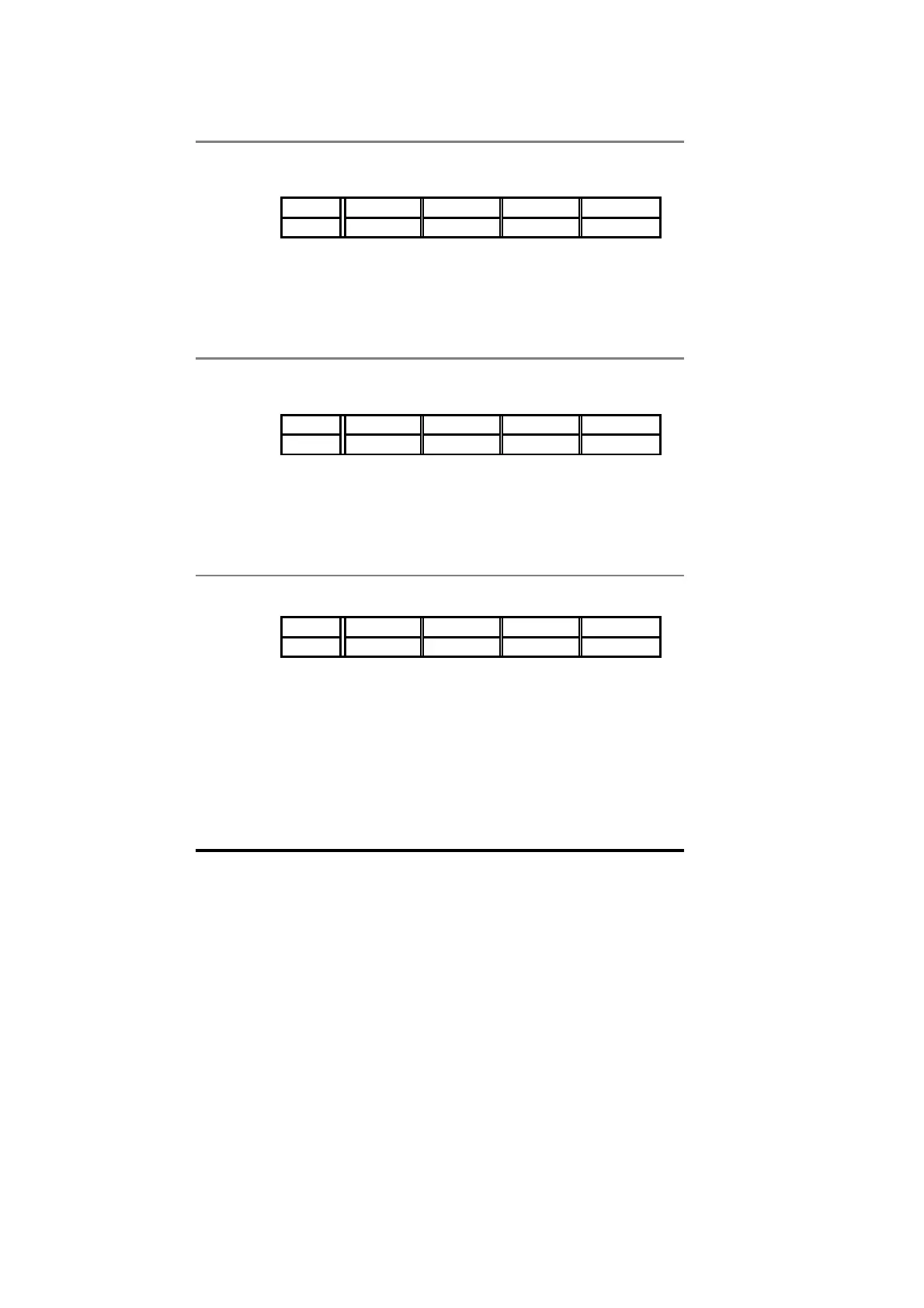
Bit b15-b12 b11-b8 b7-b4 b3-b0
Value 0XXX 0001 0000 0001
Data word = 0x0101 Stamp number = 1 Menu = 1
When the first telegram has been received and processed in the slave
node, it is mirrored in the non-cyclic IN word. This is the signal to the
master controller program that the first telegram of the message has
been received and understood, and the second telegram can be
transmitted.
TELEGRAM 2
The second telegram from the master also indicates a WRITE cycle, but
the stamp number is now set to 2. The data byte contains the
parameter number for the parameter that is to be written to.
Bit b15-b12 b11-b8 b7-b4 b3-b0
Value 0XXX 0010 0001 0101
Data word = 0x0215 Stamp number = 2 Parameter = 21
When the second telegram has been received and processed in the
slave node, it is mirrored in the non-cyclic IN word. This is the signal to
the master controller program that the second telegram of the message
has been received and understood, and the third telegram can be
transmitted.
TELEGRAM 3
The third telegram from the master has the stamp number set to 3. The
data bits contain the data high byte for the parameter being written to.
Bit b15-b12 b11-b8 b7-b4 b3-b0
Value 0XXX 0011 0000 0100
Data word = 0x0304 Stamp number = 3 High data byte = 0x04
When the third telegram has been received and processed in the slave
node, it is mirrored in the non-cyclic IN word. This is the signal to the
master controller program that the third telegram of the message has
been received and understood, and the fourth telegram can be
transmitted.


 To Next Page