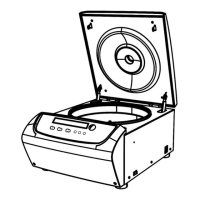
(1) Centrifuge
◼ The color of housing might change and the label thereon might fall OFF if the centrifuge is
exposed to ultraviolet for a prolonged period of time and hence cover the centrifuge with cloth to
avoid exposure to light.
◼ Clean the centrifuge using a cloth/ sponge soaked with neutral cleansing agent in case if it is dirty
after use.
◼ The centrifuge can be sterilized using cloth soaked with 70% alcohol solvent.
(2) Centrifugal chamber
Caution
⚫ Never pour water or other solvents directly into the centrifugal chamber as they might
enter the drive unit and cause corrosion or damage to the bearings.
(3) Drive shaft
◼ It is suggested that the drive shaft be subjected to periodical maintenance by wiping it using soft
cloth and applying a thin layer of silicone grease on it.
(4) Outer Lid
◼ Clean or sterilize the outer lid in the same manner as mentioned under subsection (1) centrifuge.
(5) Rotor
◼ If the rotor is left unused for a prolonged period of time, remove the rotor and its lid (if there is
any rotor lid) from the centrifugal chamber, and place the rotor upside down to dry the rotor hole
and prevent corrosion.
◼ Use clean water to rinse the rotor cavities if there is sample leakage from the centrifuge tubes.
Dry the rotor thoroughly and apply a thin layer of silicone grease on it.
◼ Clean the rotor regularly (every 3 months recommended). Ensure the cavities and the drive shaft
hole are clean. Apply a thin layer of silicone grease.
10. Common failures and solutions
10.1. List of common failures
This centrifuge is capable of onboard diagnosis. When the centrifuge fails, the time display window



 To Next Page