G643(E) Service Manual Chapter 5. Engine Management System (EMS) 153
MI-07 Fuel Lock-Off (Electric)
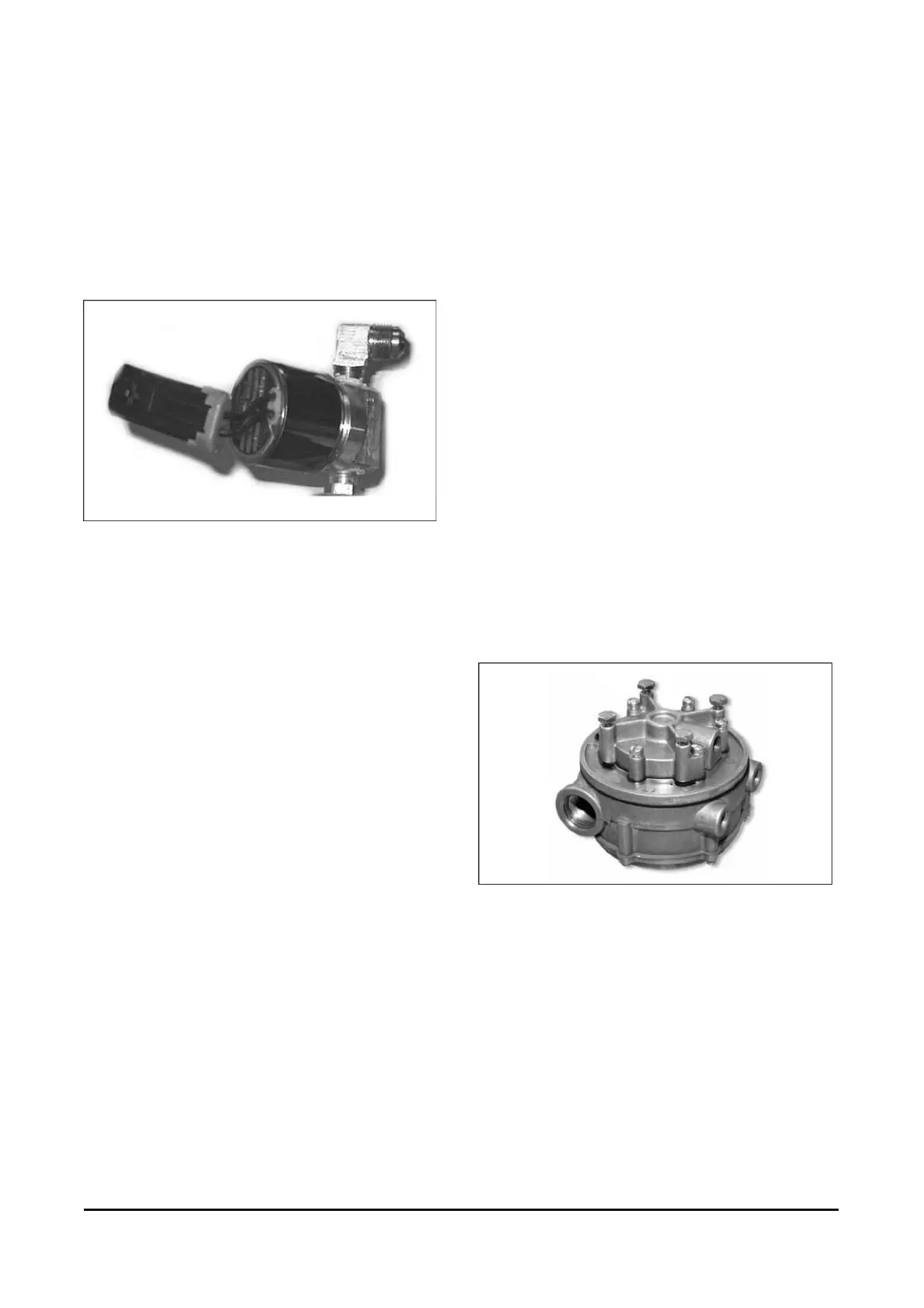
The fuel lock-off is a safety shutoff valve, normally
held closed by spring pressure, which is operated by
an electric solenoid and prevents fuel flow to the
regulator/ converter when the engine is not in
operation. This is the first of three safety locks in the
MI-07 system.
Figure 4. Electric Fuel Lock Assembly
In the MI-07 design, power is supplied to the fuel
lock-off via the main power relay with the SECM
controlling the lock-off ground (earth) connection.
The lock-off remains in a normally closed (NC)
position until the key switch is activated.
This supplies power to the lock-off and the SECM,
but will not open the lock-off via the main power
relay until the SECM provides the lock-off ground
connection. This design gives the SECM full control
of the lock-off while providing additional safety by
closing the fuel lock-off in the unlikely event of a
power failure, wiring failure or module failure.
When the liquid service valve in the fuel container is
opened, liquid propane flows through the LP filter
and through the service line to the fuel lock-off.
Liquid propane enters the lock-off through the 1/4”
NPT liquid inlet port and stops with the lock-off in the
normally closed position. When the engine is
cranked over the main power relay applies power to
the lock-off and the SECM provides the lock-off
ground causing current to flow through the windings
of the solenoid creating a magnetic field. The
strength of this magnetic field is sufficient to lift the
lock-off valve off of its seat against spring pressure.
When the valve is open liquid propane, at tank
pressure, flows through the lock-off outlet to the
pressure regulator/converter. A stall safety shutoff
feature is built into the SECM to close the lock-off in
case of a stall condition. The SECM monitors three
engine states: Crank, when the crankshaft position
sensor detects any engine revolutions; Stall, when
the key is in the ON position but the crankshaft
position sensor detects no engine revolutions; and
the Run state, when the engine reaches pre-idle rpm.
When an operator turns on the key switch the lock-
off is opened, but if the operator fails to crank the
engine the SECM will close the lock-off after 5
seconds.
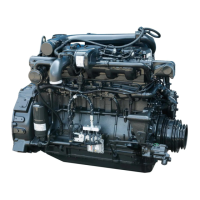
N-2007 Pressure Regulator/Vaporizer
The pressure regulator/vaporizer receives liquid
LPG from the fuel storage tank, drops the pressure,
changes the LPG phase from liquid to vapor, and
provides vapor phase LPG at a regulated outlet
pressure to the mixer. To offset the refrigeration
effect of the vaporization process, the regulator will
be supplied with engine coolant flow sufficient to
offset the latent heat of vaporization of the LPG.
A thermostat provided in the coolant supply line to
maintain regulator outlet coolant temperature at or
below 140oF (60°C) will minimize the deposit of fuel
contaminants and heavy ends in the regulator and
assure a more controlled vaporization process with
reduced pressure pulsations.
A higher flow pressure regulator is required on
larger engines.
Figure 5. N-2007 Regulator
The regulator is normally closed, requiring a vacuum
signal (negative pressure) to allow fuel to flow. This
is the second of three safety locks in the MI-07
system. If the engine stops, vacuum signal stops
and fuel flow will automatically stop when both the
secondary (2nd stage) valve and the primary (1st
stage) valve closes. Unlike most other
regulator/converters, the N-2007 primary valve
closes with fuel pressure rather than against
pressure, extending primary seat life and adding
additional safety.



 To Next Page