IP Series Installation Manual Function 3: Extension programming
F.3
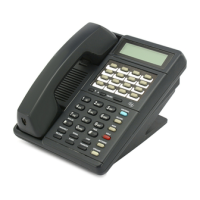
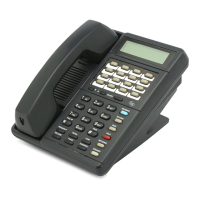
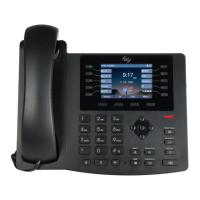
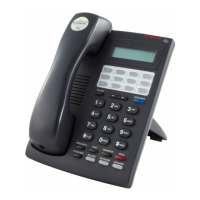
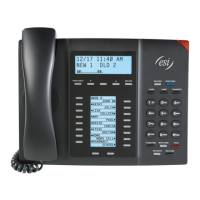
Remote IP Feature Phones
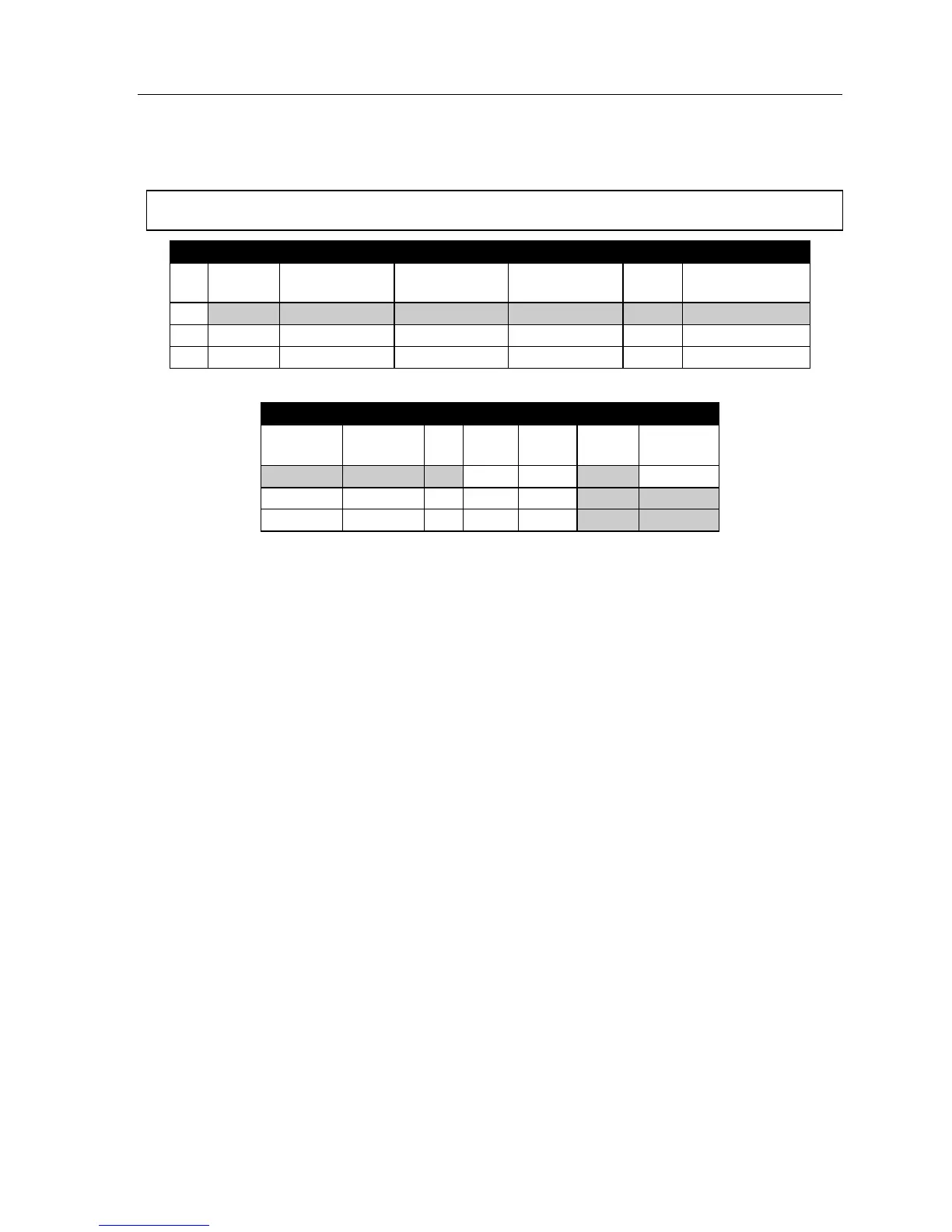
Below is an example of the portion of a completed programming worksheet (Appendix II) for
Remote IP Feature Phones.
Important: Never reprogram a Remote IP Feature Phone from the Remote Phone itself.
1. 2. 3. 4. 5. 6. 7.
Ext.
Type
IP address
MAC
Gateway IP
UDP
port
Remote-access
IP address
0
101 Remote IP 192.168.1.3 00304D135661 192.168.1.1 59101 221.46.197.104
102 Remote IP 192.168.210.5 00304D135F2F 192.168.210.1 59102 221.46.197.104
(Table continued)
1.
8. 9. 10. 11. 12. 13.
Ext.
Name
CO
CF
day
CF
night
Paging
zone
Operator
translation
0 Operator X100 X100 X100
101 Roger 9 MB101 MB101
102 Sally 9,8 MB102 MB100
1. Extension number
Extension numbers for IP phones, whether remote or local, range from 100 to 195. IP extensions
may be assigned at random within that range.
2. Type
Based on the port card installed and the extension number entered, the IP Series makes default
selections — IP station or analog device. If it is an IP station, use the scroll keys to choose whether
it is to be a remote station or a local station.
3. IP address
Enter the IP address that the remote phone will be using at its remote site. (Note: this information
will have to be obtained in advance of programming the remote phone.) Enter this address in
dotted-quad notation (for example, 192.168.1.3) using the # key as the period between octets. The
phone must be on the same subnet as the LAN interface of the gateway device (cable modem,
router, etc). For instance, if the LAN interface’s IP address is 192.168.210.1, and its subnet mask is
255.255.255.128, the first three octets of the phone’s address must be 192.168.210, and its last
octet between 2 and 127.



 To Next Page