EasyManua.ls Logo

Everglades 435 CC - User Manual

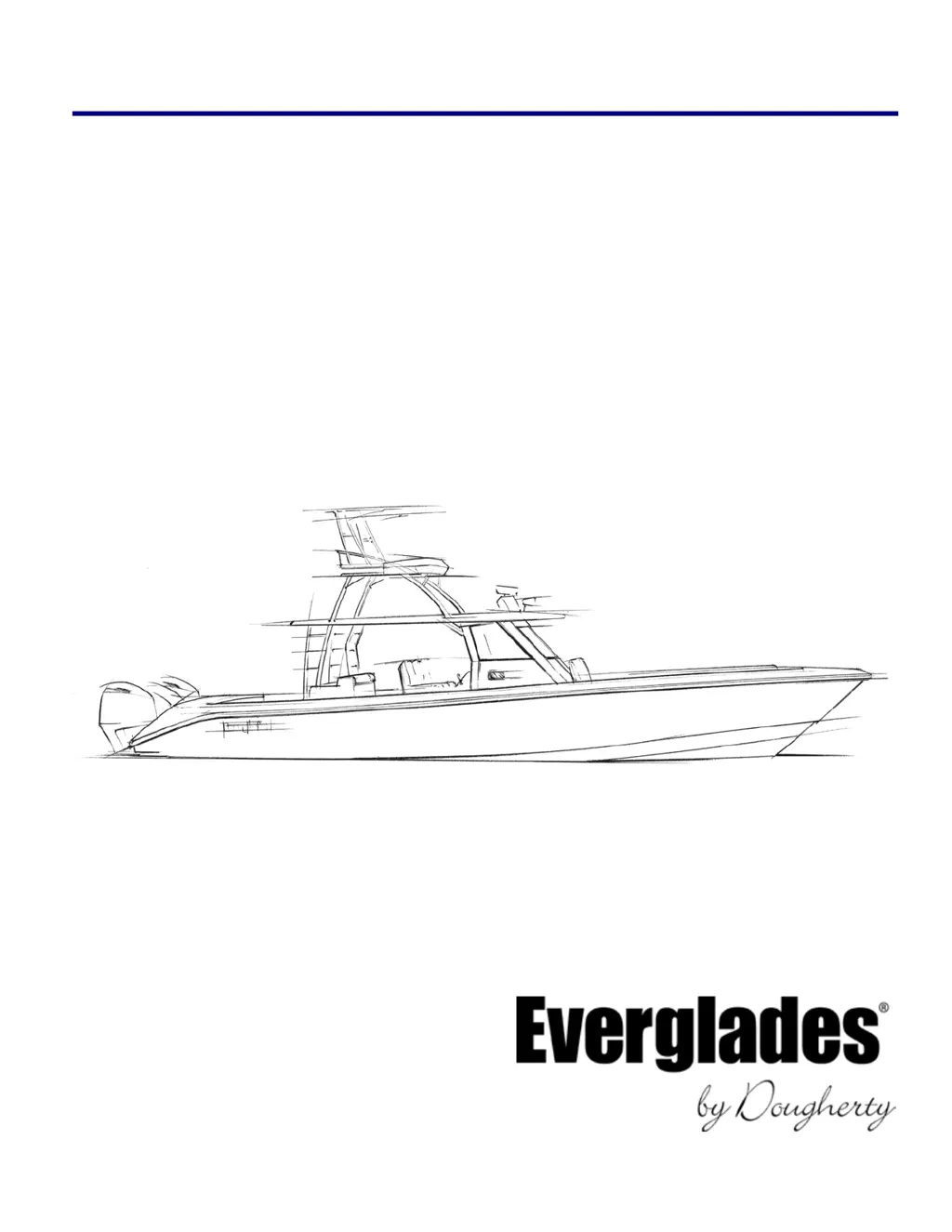
Everglades 435 CC
168 pages
Print Icon
To Next Page IconTo Next Page
Loading...
OWNER’S MANUAL
435 CC

Table of Contents

Questions and Answers

  • L
    Laura SmithSep 12, 2025
    Why does the washdown pump run but not pump water on my Everglades Boat?
    • E
      eandersonSep 12, 2025
      If the washdown pump runs but doesn't pump water on your Everglades Boat, check: * That the thru-hull valve is open. Open the valve. * For an air leak in the intake line. Repair the air leak. * If the intake scoop strainer for the raw water system is clogged with weeds or debris. Back down the boat to clear debris or clean the scoop strainer. * If the in-line sea strainer for the pump is clogged. Clean the sea strainer.
  • M
    Mark TravisSep 12, 2025
    Why won't the washdown or fresh water pump turn off on my Everglades Boat?
    • A
      Amber PattersonSep 12, 2025
      If the washdown or fresh water pump fails to turn off after all outlets are closed on your Everglades Boat, check for: * A damaged intake hose sucking air. Replace the hose. * A defective pump. Repair or replace the pump. * A leak in a pressure line or outlet. Repair the leak. * An air leak in the intake line. Repair the air leak. * A defective pressure switch. Replace the pressure switch. * Low voltage to the pump. Check for corroded or loose wiring connections or a low battery.
  • D
    Diane KingSep 10, 2025
    What to check if my Everglades Boat engine alternator is not charging?
    • A
      Angela RichardSep 10, 2025
      If an engine alternator is not charging properly on your Everglades Boat, check the following: * The battery cable may be loose or corroded. Clean and tighten the battery cables. * The alternator is not charging and must be replaced. * The battery may be defective. Replace the battery. * A Voltage Sensitive Relay in the charging system may not be working properly. Replace the defective VSR.
  • J
    James HopkinsSep 9, 2025
    Why does my Everglades Boat air conditioner cut out after running briefly?
    • J
      Jennifer GravesSep 9, 2025
      If the air conditioner in your Everglades Boat runs briefly and then cuts out, it could be due to: * A clogged intake scoop strainer for the raw water system. Back down the boat to clear debris or clean the scoop strainer. * A clogged air conditioner pump sea strainer. Clean the strainer. * A closed raw water supply thru-hull valve. Open the valve. * An air-bound raw water system. Ensure the thru-hull valve is open and run the boat above 15 mph to force the air lock out of the system.
  • D
    danielphillipsSep 8, 2025
    Why is the water flow reduced from my Everglades Boat bilge pump?
    • M
      Michele PettySep 8, 2025
      If you notice a reduction in water flow from the bilge pump in your Everglades Boat, it might be due to: * A clogged pump strainer. Clean the strainer. * A defective pump. Repair or replace the pump. * A pinched or clogged discharge hose. Check the discharge hose and clean or repair it. * Low voltage to the pump. Check the battery and wire connections.
  • M
    michelehenryAug 23, 2025
    Why is my Everglades Boat sluggish and losing speed?
    • G
      garneradamAug 23, 2025
      Your Everglades Boat might be sluggish due to several reasons: * There might be weeds or line around the propellers. Clean the propellers. * The boat could be overloaded, so reduce the load. * There might be excessive water in the bilge. Pump out the bilge and correct the problem. * Marine growth may need to be cleaned from the hull and running gear. * The propellers may be damaged and need repair. If one of the throttles is not responding properly and the engine is not getting full throttle, have the throttle control system checked by a qualified marine technician.
  • H
    Hannah CastilloSep 6, 2025
    Why is there no AC power to my Everglades Boat cabin?
    • T
      Timothy MitchellSep 6, 2025
      If there's no AC power to the cabin breaker panel in your Everglades Boat, and the shore cord is properly connected, check the following: * Ensure the breaker at the shore outlet is on. Activate the breaker if it's off. * Inspect the shore power cord for damage or defects. Replace the cord if necessary. * The ELCI at the inlet connection may have detected a fault and tripped. Contact a qualified marine electrician to find and correct the problem.
  • E
    emilyodomSep 5, 2025
    Why is my Everglades Boat engine losing RPMs?
    • K
      Kathryn GomezSep 5, 2025
      If your Everglades Boat engine is losing RPM, and the boat isn't overloaded with a clean hull, consider these possibilities: * A sticky anti-siphon valve in the fuel line near the fuel tank may be restricting fuel flow. Remove and clean or replace the anti-siphon valve. * The remote gasoline fuel filter could be dirty. Inspect and replace the fuel filter. * The primary fuel filter on the engine may be dirty. Inspect and replace the fuel filter. * The electronic engine control system on the engine may be malfunctioning. Repair the engine control system. * The fuel injection system on the engine may be malfunctioning. Repair the fuel injection system.
  • J
    Justin RyanSep 4, 2025
    Why is my Everglades Boat vibrating at cruising speeds?
    • E
      Eric CampbellSep 4, 2025
      If your Everglades Boat vibrates at cruising speeds, consider the following: * Propellers may be damaged and need repair. * A propeller or propeller shaft may be bent. Repair or replace damaged components. * The running gear may be fouled by marine growth or rope. Clean running gear. * The engines may not be trimmed properly. Trim the engines.
  • D
    Deborah PerezSep 3, 2025
    Why won't the fresh water pump turn off on my Everglades Boat?
    • M
      Misty BurnsSep 3, 2025
      If the fresh water pump on your Everglades Boat fails to turn off after all outlets are closed, it could be caused by: * A leak in a pressure line or outlet. Repair the leak. * An air leak in the intake line. Repair the air leak. * A defective pressure switch. Replace the pressure switch. * Low voltage to the pump. Check for corroded or loose wiring connections or low battery. * A clogged strainer. Clean the strainer. * A defective pump. Repair or replace the pump.

Summary

Chapter 1: SAFETY EQUIPMENT

1.1 General

Overview of safety equipment required by USCG and local regulations.

1.2 Engine Alarms

Explains the boat's engine alarm system and response to alarms.

1.3 Neutral Safety Switch

Details the function of the neutral safety switch in preventing starting in gear.

1.4 Engine Stop Switch

Describes the operation and importance of the engine stop switch and lanyard.

1.5 Required Safety Equipment

Lists essential USCG-required safety equipment like PFDs and distress signals.

1.6 Bilge & Fuel Fires

Discusses the dangers of bilge and fuel fires and decision-making in emergencies.

1.7 Carbon Monoxide Monitoring System

Explains the CO detector, its function, and symptoms of CO poisoning.

1.8 First Aid

Covers basic first aid procedures and the importance of a marine first-aid kit.

1.9 Additional Safety Equipment

Suggests extra safety items to consider for offshore operation like EPIRBs and radios.

1.10 Caution & Warning Labels

Illustrates and explains the location and meaning of various warning labels on the boat.

Chapter 2: OPERATION

2.1 General

Emphasizes familiarization with boat systems and safety for proper operation.

2.2 Rules of the Road

Covers basic navigation rules for crossing, meeting, and overtaking vessels.

2.3 Pre-Cruise Check

Details essential checks before starting engines and leaving the dock for safe operation.

2.4 Operating Your Boat

Provides instructions for operating the boat after starting engines, including safety reminders.

2.5 Docking, Anchoring & Mooring

Explains techniques for docking, anchoring, and mooring in various conditions.

2.6 Controls, Steering or Propulsion System Failure

Outlines procedures for handling control, steering, or propulsion system failures.

2.7 Collision

Details immediate actions and inspection procedures following a boat collision.

2.8 Grounding, Towing & Rendering Assistance

Discusses actions for grounding, towing, and assisting other vessels safely.

2.9 Flooding or Capsizing

Provides procedures for dealing with flooding or capsizing situations and person overboard.

2.10 Fishing

Offers advice on safe operation while fishing, considering operator distraction.

2.11 Tower Operation (Optional)

Covers safety precautions and operation specific to the optional tower or upper helm station.

2.12 Man Overboard

Details procedures for recovering a person overboard quickly and safely.

2.13 Trash Disposal

Explains regulations and procedures for proper trash and waste disposal at sea.

2.14 Yacht Certification Plate

Describes the yacht certification plate and its significance.

2.15 Transporting Your Boat

Advises on proper procedures and professional help for transporting the boat.

Chapter 3: PROPULSION SYSTEM

3.1 General

Introduces the 4-cycle outboard engines, oil requirements, and engine manuals.

3.2 Drive System Corrosion

Explains marine growth and galvanic corrosion, and protection methods for drive systems.

3.3 Engine Lubrication

Details engine lubrication requirements and oil specifications for 4-cycle engines.

3.4 Engine Cooling System

Describes the raw water cooling system and checking water flow.

3.5 Propellers

Explains propeller sizing, identification, and the importance of repair.

3.6 Performance Issues & Propellers

Discusses how propeller choice affects performance and engine RPM.

3.7 Engine Instrumentation

Covers engine gauges, alarms, and the Yamaha Command Link Plus system.

Chapter 4: HELM CONTROL SYSTEMS

4.1 General

Overview of helm control systems: throttle, steering, and trim tabs.

4.2 Engine Throttle & Shift Controls

Explains electronic engine controls, binnacle operation, and engine selection.

4.3 Neutral Safety Switch

Describes the function and testing of the neutral safety switch for starting engines.

4.4 Engine Power Tilt & Trim

Covers the operation and adjustment of engine power tilt and trim features.

4.5 Engine Stop Switch

Details the engine stop switch, lanyard, and its proper use.

4.6 Steering System

Explains power assist hydraulic steering and electronic steering systems.

4.7 Joystick Controls

Covers the operation and engagement of joystick controls for maneuvering.

4.8 Trim Tabs

Explains the function and operation of trim tabs for hull attitude adjustment.

4.9 Bow Thruster (Optional)

Describes the optional bow thruster for enhanced maneuverability.

4.10 Control Systems Maintenance

Outlines maintenance for hydraulic and electronic steering and control systems.

Chapter 5: FUEL SYSTEM

5.1 General

Describes the fuel system design, safety, and maintenance responsibilities.

5.2 Outboard Engine Fuel System

Details the fuel supply to engines, including withdrawal tubes, filters, and anti-siphon valves.

5.3 Generator Fuel System

Explains the generator's fuel system, filters, and fuel withdrawal limitations.

5.4 Fueling Instructions

Provides critical safety instructions and procedures for fueling the boat.

5.5 Fuel System Maintenance

Covers periodic inspection and maintenance of fuel system components like bulbs and filters.

Chapter 6: ELECTRICAL SYSTEM

6.1 General

Overview of the boat's AC and DC electrical systems and wiring color coding.

6.2 DC System Overview

Explains the 12-volt DC system, battery layout, and power distribution.

6.3 Batteries & Battery Switches

Covers battery types, capacity considerations, and battery switch operation.

6.4 Ignition Switch Panels

Describes Yamaha ignition panels for starting and stopping engines.

6.5 12 Volt Helm Accessory Switch Panels

Details accessory switches at the helm, controlling lights, pumps, and other functions.

6.6 DC System Circuit Protection

Explains circuit breakers and fuses protecting the DC electrical system and accessories.

6.7 Cabin DC Panel

Describes accessories controlled by the cabin DC breaker panel.

6.8 120 Volt AC Electrical System

Covers AC power sources, shore power connection, and safety features like ELCI.

6.9 Generator

Details generator operation, cooling system, and electrical protection.

6.10 Bonding System & Galvanic Isolator

Explains the bonding system for corrosion protection and galvanic isolator function.

6.11 Electrical System Maintenance

Outlines routine maintenance for DC and AC electrical systems and generator.

6.12 AC Line Load Estimator

Provides a table to estimate electrical loads for AC accessories.

Chapter 7: FRESH WATER SYSTEM

7.1 General

Overview of the fresh water system components: tank, lines, and pump.

7.2 Fresh Water System Operation

Instructions for filling, priming, and operating the fresh water system.

7.3 Water Heater

Details the 120V AC water heater, its operation, and safety precautions.

7.4 Fresh Water System Maintenance

Covers routine maintenance for strainers, faucets, and the overall system.

Chapter 8: RAW WATER SYSTEM

8.1 General

Overview of the raw water manifold and pump system, including valve operation.

8.2 Raw Water System Operation

Describes how the saltwater pump operates on demand and strainer maintenance.

8.3 Livewells

Covers livewell water supply, pump activation, and recirculating features.

8.4 Air Conditioning Pump

Details the seawater pump for the air conditioning unit and its maintenance.

8.5 Generator Raw Water Supply

Explains the generator's seawater cooling system and sea strainer.

8.6 Raw Water System Maintenance

Routine maintenance for raw water hoses, strainers, pumps, and livewells.

Chapter 9: DRAINAGE SYSTEMS

9.1 General

Overview of gravity drainage to overboard thru-hull fittings and system checks.

9.2 Cockpit & Deck Drainage

Explains cockpit scupper drains, deck gutter systems, and sink drainage.

9.3 Hardtop & Tower Drains

Discusses drain holes in hardtop and tower legs for water management.

9.4 Bilge Drainage

Covers manual and automatic bilge pump operation and bilge water drainage.

9.5 Aft Fishbox & Baitwells

Explains drainage for aft fishboxes and baitwells.

9.6 Cabin Drainage

Details the cabin drain sump system, including shower and sink drainage.

9.7 Drainage System Maintenance

Covers cleaning and maintenance for various drains and pumps to ensure proper function.

Chapter 10: VENTILATION SYSTEM

10.1 Cabin Ventilation

Explains how cabin ventilation is provided through doors and windows.

10.2 Windshield;Helm Compartment Ventilation

Details the operation of the windshield for ventilation and visibility at the helm.

10.3 Carbon Monoxide & Proper Ventilation

Discusses CO hazards, proper ventilation practices, and station wagon effect.

10.4 Bilge & Mechanical Systems Compartment Ventilation

Covers ventilation for the bilge and mechanical compartments, including blower operation.

10.5 Maintenance

Outlines maintenance for ventilation components like hinges, tracks, and ducts.

Chapter 11: EXTERIOR EQUIPMENT

11.1 Deck

Covers deck hardware, rails, cleats, and important inspection points.

11.2 Rope Locker & Windlass

Details the bow roller, windlass, rope locker, and anchor handling.

11.3 Hull

Explains the engine mounting system, trim tabs, and underwater lights.

11.4 Cockpit Features All Models

Describes cockpit hatches, latches, access plates, rod lockers, and fishbox drainage.

11.5 Center Console & Cabin

Covers helm station layout, console access, windshield, and cabin door.

11.6 Hardtop

Details the hardtop construction, mounting of accessories, and optional sunshade.

11.7 Upper Station (Optional)

Explains the optional upper station, access, and folding procedures for transport.

11.8 Aftermarket Hardtop or Tower

Discourages aftermarket modifications and advises contacting the dealer.

Chapter 12: INTERIOR EQUIPMENT

12.1 Head Compartment

Describes the head compartment, shower, ventilation, and access hatches.

12.2 Marine Head System

Covers the marine toilet, holding tank, discharge pump, and odor control.

12.3 Main Cabin & Galley

Details cabin cabinetry, lighting, galley appliances, and lounge seating.

12.4 Air Conditioner

Explains the air conditioner's operation, water supply, condensation, and maintenance.

12.5 Cabin Woodwork

Provides cleaning and maintenance instructions for cabin floors, steps, walls, and trim.

Chapter 13: ROUTINE MAINTENANCE

13.1 Exterior Hull & Deck

Covers hull cleaning, bottom painting, anode inspection, and gel coat care.

13.2 Upholstery, Canvas & Enclosures

Details cleaning and maintenance for vinyl upholstery, canvas, and clear enclosures.

13.3 Interior

Provides cleaning advice for cabin interiors, countertops, and woodwork.

13.4 Windshield Hydraulic System

Outlines maintenance for the windshield hydraulic system, including fluid levels and hoses.

13.5 Engines & Fuel

Emphasizes engine maintenance, fuel quality, and system care for reliability.

13.6 Bilge, Pumps & Components

Covers cleaning and maintenance of the bilge, pumps, alarms, and connections.

13.7 Generator

Highlights generator maintenance for longevity, including cooling and fuel systems.

13.8 Drainage System

Lists periodic tasks to maintain proper drainage of all boat systems.

Chapter 14: SEASONAL MAINTENANCE

14.1 Storage & Lay-up

Details procedures before hauling, during storage, and proper boat support.

14.2 Winterizing

Provides step-by-step instructions for winterizing fresh water, raw water, and other systems.

14.3 Recommissioning

Outlines procedures for reactivating the boat after storage and checks after launching.

Appendix E: TROUBLESHOOTING GUIDE

CONTROL SYSTEMS

Troubleshooting for hydraulic steering and engine control system issues.

PERFORMANCE PROBLEMS

Addresses issues like sluggish performance, loss of speed, and vibrations.

ENGINE PROBLEMS

Solutions for engine overheating, charging problems, and RPM issues.

ACCESSORY PROBLEMS

Troubleshooting for pumps, generator, AC, and electrical system issues.

Everglades 435 CC Specifications

General IconGeneral
Beam12 ft 6 in (3.8 m)
Weight17, 900 lb (8, 119 kg)
Fuel Capacity600 gal (2, 271 L)
Water Capacity60 gal (227 L)
Length Overall43 ft 5 in (13.2 m)
Length Overall (LOA)43 ft 5 in (13.2 m)
Length43 ft 5 in (13.2 m)
Draft28 in (0.7 m)
Draft (Hull)28 in (0.7 m)
Engine OptionsQuad Outboard
Max Speed60 mph
Deadrise24 degrees
Maximum Horsepower1800 HP
Max Horsepower1800 HP

Related product manuals