Washer fluid reservoir. See Washer Fluid Check (page 149).A
Brake and clutch fluid reservoir (right-hand drive). See Brake and Clutch Fluid
Check (page 148).
B
Brake and clutch fluid reservoir (left-hand drive). See Brake and Clutch Fluid
Check (page 148).
C
Engine junction box. See Fuses (page 134).D
Engine coolant reservoir. See Engine Coolant Check (page 148).E
Battery positive connection (for connecting booster cables). See
Jump-Starting the Vehicle (page 131).
F
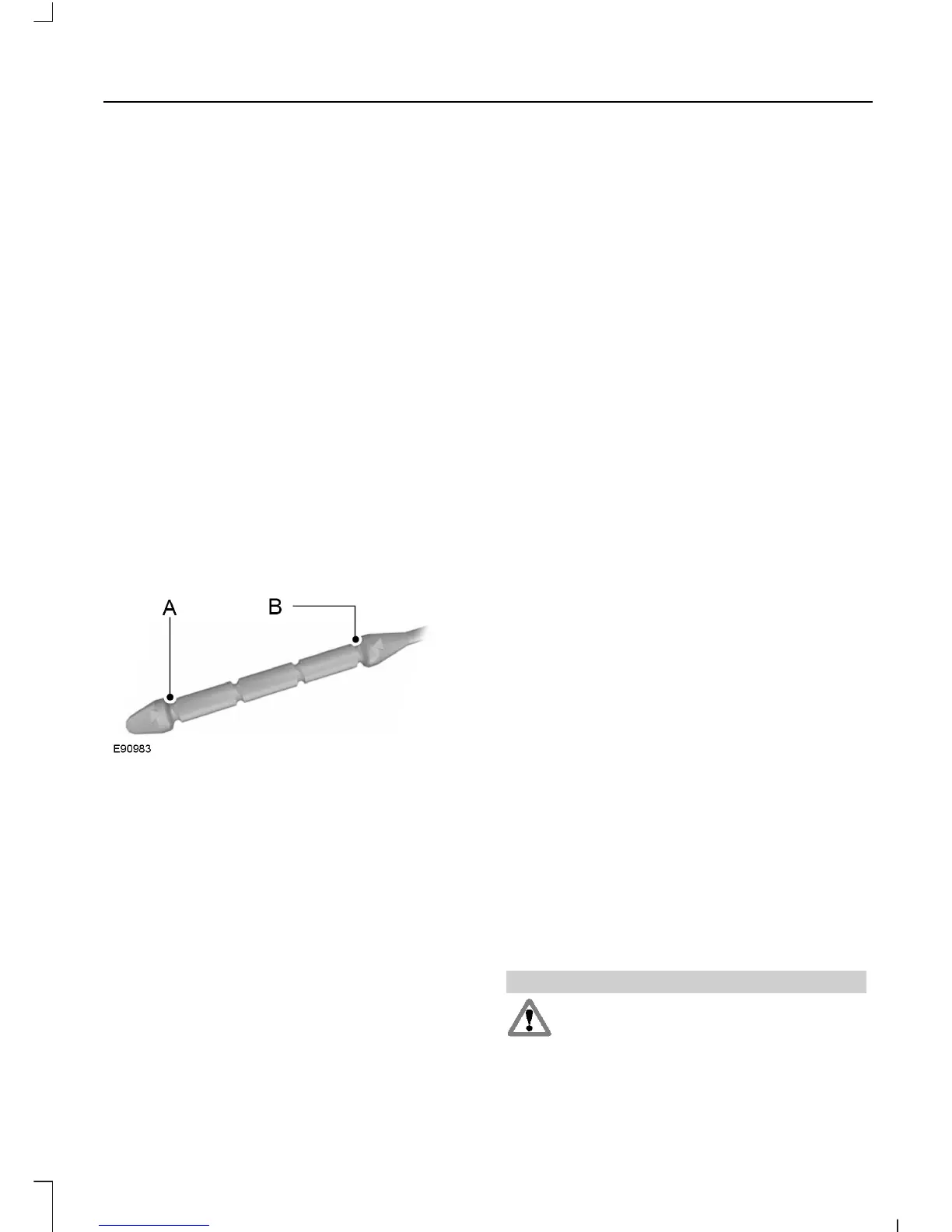
Engine oil dipstick
*
. See Engine Oil Check (page 147).G
Engine oil filler cap. See Engine Oil Check (page 147).H
Power steering fluid reservoir. See Power Steering Fluid Check (page 149).I
*
The filler caps and the engine oil dipstick are colored for easy identification.
ENGINE OIL DIPSTICK
MinimumA
MaximumB
ENGINE OIL CHECK
1. Make sure that your vehicle is on level
ground.
2. Switch off the engine and wait 10
minutes for the oil to drain into the oil
pan.
3. Remove the dipstick and wipe it with
a clean, lint free cloth. Replace the
dipstick and remove it again to check
the oil level.
If the oil level is at the minimum mark, add
oil immediately. See Technical
Specifications (page 161).
Note: Check the oil level before starting the
engine.
Note: Make sure that the oil level is
between the minimum and the maximum
marks.
Note: Do not use oil additives or other
engine treatments. Under certain conditions,
they could damage the engine.
Note: The oil consumption of new engines
reaches its normal level after approximately
3000 mi (5,000 km).
Adding Engine Oil
WARNINGS
Only add oil when the engine is cold.
If the engine is hot, wait 10 minutes
for the engine to cool down.
147
Tourneo Custom/Transit Custom (TTF)
Maintenance









 To Next Page