Installation Preparation
Recommended Tools (unabridged list):
● Personal Protection Equipment (goggles, gloves, protective shoes, anti-dust respirator, etc.) to protect personal safety.
● Drill with 5/32” Brad Point bits or 5/32” Auger bits, to drill pilot holes in wooden walls for mounting the equipment.
1/2”, 3/4”, 1”, 1-1/2”, 2” sized wood bits, to create holes in wooden walls for running cables.
1/2”, 3/4”, 1”, 1-1/2”, 2” sized hole saw, to create holes in metal walls for running cables.
● Hammer drill with 1/2” Masonry bits, to create pilot holes on concrete or brick walls for mounting up the equipment.
1/2”, 3/4”, 1”, 1-1/2”, 2” Diamond core bits, to create holes in concrete or brick walls for running cables.
● Electric screwdriver and cross screw bits, to tighten the fastening screws.
● Torque wrench and bent-handle ratchet wrench, with 11/32 ”, 5/16 ”, 7/16'', and 3/8” hex sockets, to tighten and check the torque of
outer hexagonal bolts.
3/16” and 7/32” inner hexagon screwdriver bits, to fasten cables at switches and pressure connectors and to check the torque.
3/16”, 1/4 ” straight screwdriver bits, to fasten cables at switches and connectors and to check the torque.
PH2, PH3 cross screwdriver bits, to fasten cables at switches and to check the torque.
● Flat head screwdriver (1/8”X4”, 1/4”X4”), to fasten signal terminals and take wooden boxes apart.
● Phillips cross screwdriver (#2X4”, #3X4”), to tighten fasteners.
● Claw hammer, to break knockout holes and to release locks on wooden box.
● Utility knife, to cut open cartons.
● wire cutters, strippers, diagonal cutting pliers and other cable preparation tools.
● Wire crimper, cable testers, and other network cable preparation tools.
● Induction electroprobe, to detect the cables in walls to avoid short circuits when drilling.
● Multimeter, to measure voltage, current and other electric parameters.
● Loop resistance tester, to measure the wiring resistance and to detect poor connection of cables.
● Task light, to illuminate the area when power supply is off.
● Spirit level, to check whether the equipment is leveled.
● 14mm open-end wrench or 9/16” open-end wrench, to operate aPower leveling screws and to adjust the heights of aPower on a
single side.
● Steel measuring tape, to measure lengths.
● Markers, to make marks.
● Camera, to record the installation process.
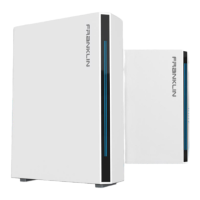
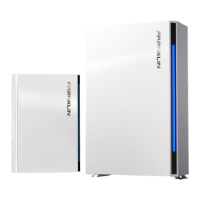
● Fork hand truck. aPower is heavy at a little less than 400lbs. Several well trained workers are required to maneuver the unit. Use of a
fork hand truck is recommended to avoid potential injury or death of workers. The maximum length of fork hand truck should be less
than 72 inches. Fork hand trucks with retractable features are preferred because they are easy to transport and to access the installation
site.
● Deep Cut Band Saw, to cut thin-wall steel conduit or PVC pipes.
● Conduit Bender, if bending thin walled steel conduits with the head size depending on the types and sizes of conduits.
1/2”, ¾”, 1”, 1-1/2”, 2” diameters
● Knockout Tool Kit, to drill holes for conduits on the distribution box case.
● Wooden block, approximately 24 inch long 2x4 stud
● Adjustable wrench, size: 0-2” wide.
● 6”,10”,18” Pipe Wrench Sizes
* Battery-powered or hand tools are preferred because there may not be any power source at the construction site and power might be
shut off for extended periods during the installation process.
15


 To Next Page