The FusionServer 5288 V5 (5288 V5) is a new-generation 4U dual-socket or single-socket storage server designed for media and entertainment, and finance fields. It is ideal for applications such as cold data storage, video surveillance, cloud storage, and big data processing, delivering outstanding computing performance, exceptional flexibility, and unmatched storage expandability in a compact, dense design.
Function Description
The server is powered by one or two Intel® Xeon® Scalable Skylake or Cascade Lake processors, providing up to 28 cores, 3.8 GHz frequency, a 38.5 MB L3 cache, and two 10.4 GT/s UPI links between processors for supreme processing performance. It supports up to two processors with 56 cores and 112 threads for multithreaded applications. Each core can exclusively use 1 MB of L2 cache and at least 1.375 MB of L3 cache. Intel Turbo Boost Technology 2.0 allows processor cores to run faster than the specified Thermal Design Power (TDP) configuration if operating below power, current, and temperature limits. Intel Hyper-Threading Technology enables each processor core to run up to two threads, improving parallel computation capability. Hardware-assisted Intel® Virtualization Technology (Intel® VT) allows operating system (OS) vendors to better use hardware for virtualization workloads. Intel® Advanced Vector Extensions 512 (Intel AVX-512) significantly accelerates floating-point performance for computing-intensive applications. Cascade Lake processors support Intel® Deep Learning Boost vector neural network instructions (VNNI) to improve deep learning application performance.
The server supports DDR4 registered dual in-line memory modules (RDIMMs) and load-reduced DIMMs (LRDIMMs) with error checking and correcting (ECC). A server fully configured with twenty-four 2933 MT/s memory modules (only available with Cascade Lake processors) provides 3072 GB memory space and a maximum theoretical memory bandwidth of 249.9375 GB/s. It also supports a maximum of 12 Intel® OptaneTM DC persistent memory modules (DCPMMs). When DDR4 memory modules are used together, the server supports a maximum of 7.5 TB memory capacity (calculated based on a maximum of 128 GB capacity per DDR4 memory module and a maximum of 512 GB capacity per DCPMM).
Flexible drive configurations cater to a variety of business requirements and ensure high elasticity and scalability of storage resources. The use of all solid-state drives (SSDs) is supported, offering up to 100 times more I/O operations per second (IOPS) than typical hard disk drives (HDDs), resulting in higher I/O performance. The server supports hot-swappable SAS/SATA/NVMe drives and RAID 0, 1, 1E, 10, 5, 50, 6, and 60, depending on the RAID controller card used. A supercapacitor protects RAID cache data against power failures.
The server provides 10 PCIe 3.0 slots, including one dedicated for a screw-in RAID controller card, one for a FlexIO card, and eight for standard PCIe cards. It supports PCIe SSD cards to bolster I/O performance for applications such as searching, caching, and download services.
Important Technical Specifications
- Form factor: 4U rack server
- Chipset: Intel® C622
- Processor: Supports one or two Intel® Xeon® Scalable (Skylake and Cascade Lake) processors with up to 28 cores, max 3.8 GHz, min 1.375 MB L3 cache per core, and max 205 W TDP. Features built-in memory controller with six memory channels and built-in PCIe controller supporting PCIe 3.0 and 48 lanes per processor. Two UPI buses provide up to 10.4 GT/s transmission per channel.
- DIMM: Supports 24 DDR4 memory modules (RDIMM and LRDIMM) with max 2933 MT/s memory speed. Up to 12 DCPMMs (max 2666 MT/s) can be used with DDR4 memory modules, supporting AD or MM mode.
- Storage: Supports various drive configurations, including up to 24 front 3.5" SAS/SATA drives, 2 rear 3.5" SAS/SATA drives in I/O module 1, 2 rear 3.5" SAS/SATA drives in I/O module 2, 4 rear 2.5" SAS/SATA/NVMe drives in I/O module 3, 12 rear 3.5" SAS/SATA drives, and 4 internal 3.5" SAS/SATA drives. Supports two M.2 SSDs for RAID 0/1 and hot swap with Avago SAS3004iMR RAID controller card.
- Network: LOMs support two 10GE optical ports and two GE electrical ports, or two 10GE electrical ports and two GE electrical ports via the NIC chip integrated on the mainboard. LOM ports support NC-SI, WOL, and PXE. FlexIO cards offer on-demand configuration with various types, including GE, 10GE, and 56G IB optical ports.
- I/O Expansion: 10 PCIe 3.0 slots (1 dedicated for RAID controller, 1 for FlexIO, 8 standard).
- PSUs: Supports one or two hot-swappable AC or DC PSUs in 1+1 redundancy. 80 Plus Platinum PSUs provide 94% power efficiency at 50% load.
- Fans: Supports four hot-swappable fan modules. The server tolerates failure of a single fan.
- Video card: SM750 video chip with 32 MB display memory, max resolution 1920 x 1200 at 60 Hz with 16 M colors.
- Environmental Specifications:
- Operating temperature: 5°C to 40°C (41°F to 104°F) (ASHRAE Classes A1 to A3 compliant).
- Storage temperature: –30°C to +60°C (–22°F to +140°F) for three months.
- Relative humidity: 8% to 90% (non-condensing).
- Operating altitude: ≤3050m.
- Acoustic noise: LWAd 6.04 Bels (Idle), 6.51 Bels (Operating).
- Physical Specifications: 175 mm x 447 mm x 748 mm (H x W x D). Net weight: 65 kg (143.30 lb).
Usage Features
- Performance Optimization: Intel Turbo Boost Technology 2.0, Hyper-Threading, AVX-512, and VNNI enhance computing performance. High-speed memory modules and flexible drive configurations ensure efficient data processing.
- Storage Flexibility: Supports a wide range of drive types (SAS/SATA/NVMe) and configurations, allowing customization for specific business needs. M.2 SSDs can be used as boot devices.
- Networking Options: LOMs and FlexIO cards provide diverse port types (GE, 10GE, 56G IB optical/electrical) to meet various networking requirements. NC-SI, WOL, and PXE are supported.
- Energy Efficiency: 80 Plus Platinum PSUs, active/standby power supplies, HVDC support, efficient VRD power supplies, intelligent fan speed adjustment, CPU frequency scaling, power capping, and staggered drive spin-up contribute to reduced power consumption. SSDs consume 80% less power than HDDs.
- System Management: Built-in iBMC (Intelligent Baseboard Management Controller) provides remote server management, including KVM and text console redirection, remote virtual media, IPMI, SNMP, Redfish, and browser-based login. It supports fault detection, system watchdog, screen snapshots, black box function, DNS/LDAP, dual-image backup, device asset management, and intelligent power management.
- Security Features: Power-on password, Administrator password, TCM/TPM, secure boot, and lockable server chassis panel enhance security. Advanced Encryption Standard–New Instruction (AES NI) and Intel Execute Disable Bit (EDB) provide faster and stronger encryption and protection against buffer overflow attacks. Intel Trusted Execution Technology defends against malicious software. BIOS firmware digital signature update and flash security protection prevent unauthorized modifications.
Maintenance Features
- High Availability: Carrier-class components and process expertise ensure high system reliability. Hot-swappable drives, redundant PSUs (1+1 redundancy), and tolerance for single fan failure contribute to continuous operation.
- Troubleshooting & Diagnosis: UID/HLY LED indicators on the front panel, fault diagnosis LED, and iBMC WebUI simplify O&M and efficient troubleshooting. The iBMC monitors system parameters in real time, triggers alarms, and performs recovery actions.
- Memory Protection Technologies: Supports ECC, full mirroring, address range mirroring, SDDC, SDDC+1, rank sparing mode, static virtual lockstep, faulty DIMM isolation, memory thermal throttling, memory address parity protection, memory demand/patrol scrubbing, device tagging, data scrambling, adaptive double device data correction (ADDDC), and ADDDC+1.
- DCPMM Protection Technologies: Includes DCPMM error detection and correction, persistent memory address range scrub (ARS), DCPMM data poison, DCPMM DDR-T fault tolerance, and faulty DCPMM isolation.
- PCIe Reliability: PCIe Advanced Error Reporting improves server serviceability.
- UPI Reliability: Intel UPI Link Level Retry and Intel UPI Protocol Protection via CRC enhance UPI link reliability.
- System Reliability: Core Disable For FRB (Fault Resilient Boot) and Socket disable for FRB isolate faulty CPU cores/sockets during startup. Corrupt Data Containment Mode limits the impact of data errors. Architected Error Records collect and report error information. Error Injection Support verifies RAS features. Machine Check Architecture (MCA) and Enhanced Machine Check Architecture (eMCA): Gen2 rectify uncorrectable errors. OOB access to MCA registers facilitates fault analysis. BIOS Abstraction Layer for Error Handling and BIOS-based Predictive Failure Analysis (PFA) improve system serviceability and predict failures.
- Component Monitoring: A comprehensive sensor list monitors temperatures (Inlet, Outlet, PCH, CPU core, DIMM), voltages (CPU VDDQ, VRD, VSA, VCCIO, VMCP, SYS 3.3V, 5V, 12V), fan speeds, PSU status, disk temperatures, QPI link health, PCIe status, and RAID controller health.
- Warranty and Support: For maintenance and warranty policies, refer to the Customer Support Service and Warranty information. Technical support resources are available via QR code on the quick access tag.

 Need help?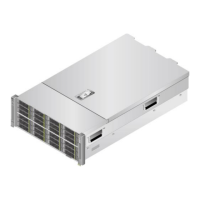

 To Next Page
 General