Grounding
3A4399A 7
Grounding
The sprayer cord includes a grounding wire with an
appropriate grounding contact. Do not use the sprayer if
the electrical cord has a damaged ground contact.
The plug must be plugged into an outlet that is properly
installed and grounded in accordance with all local
codes and ordinances.
Do not modify plug! If it will not fit in outlet, have
grounded outlet installed by a qualified electrician. Do
not use an adapter.
Power Requirements
230V units require 220-240 VAC, 50 Hz, 10A-16A
Extension Cords
Use an extension cord with an undamaged ground
contact.
If an extension cord is necessary, use a 3-wire, 12 AWG
(2.5 mm
2
) minimum. Longer cords and higher gauge
cords reduce sprayer performance.
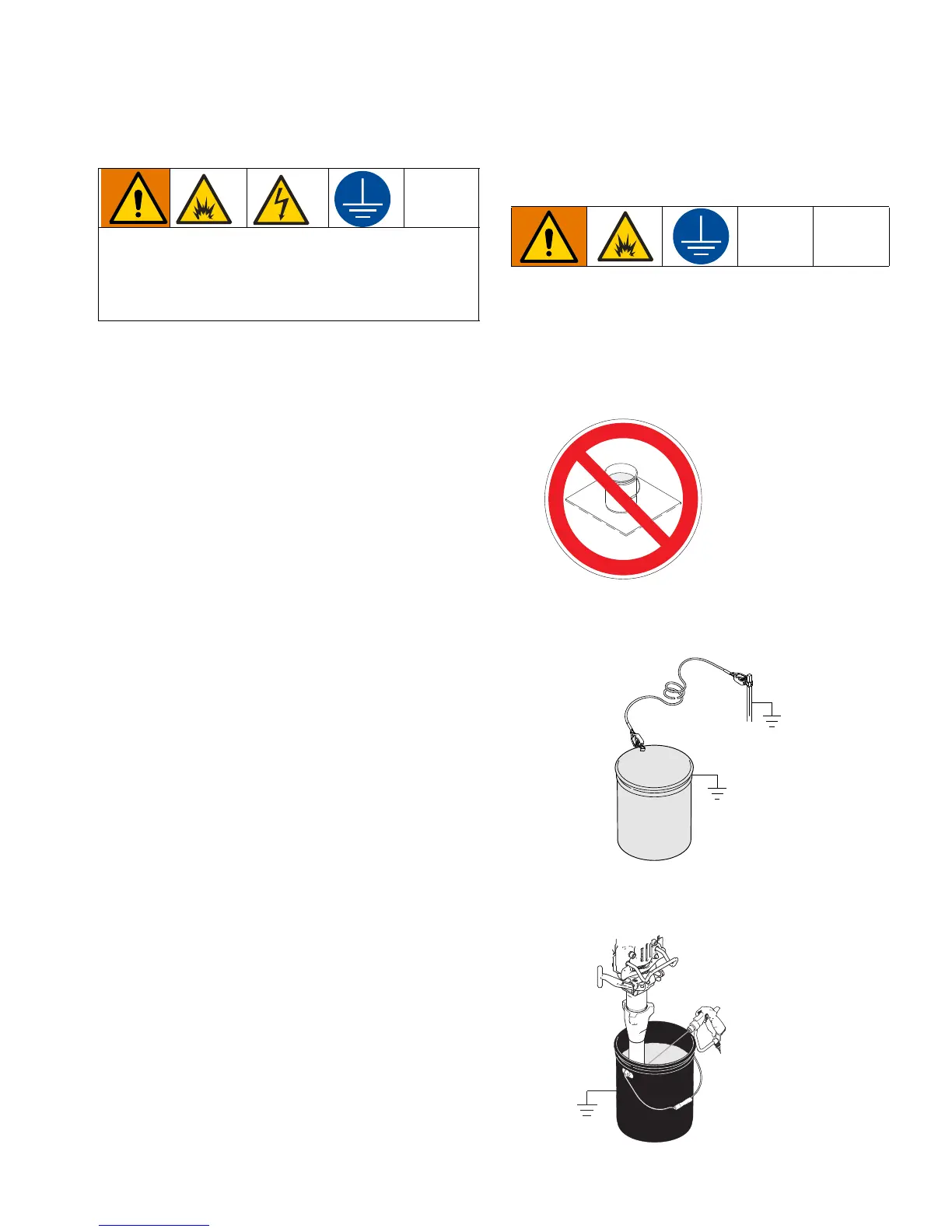
Pails
Solvent and oil-based fluids: follow local code. Use
only conductive metal pails, placed on a grounded sur-
face such as concrete.
Do not place pail on a nonconductive surface such as
paper or cardboard which interrupts grounding
continuity.
Grounding a metal pail: connect a ground wire to the
pail by clamping one end to pail and other end to a true
earth ground.
To maintain grounding continuity when flushing or
relieving pressure: hold metal part of spray gun firmly
to side of a grounded metal pail. Then trigger gun.
The equipment must be grounded to reduce the risk of
static sparking and electric shock. Electric or static
sparking can cause fumes to ignite or explode.
Improper grounding can cause electric shock. Ground-
ing provides an escape wire for the electric current.







 To Next Page