Waste and Sanitation Systems
10.1
tank or bilge pump, or a common drain fed from multiple
sources.
Thru-hulls are typically fitted to drain hoses or pipes
and sized to be compatible with the system they drain.
Hoses that feed the thru-hulls or common drains are
generally looped over the fitting in order to prevent any
water or waste from leaking or draining back into your
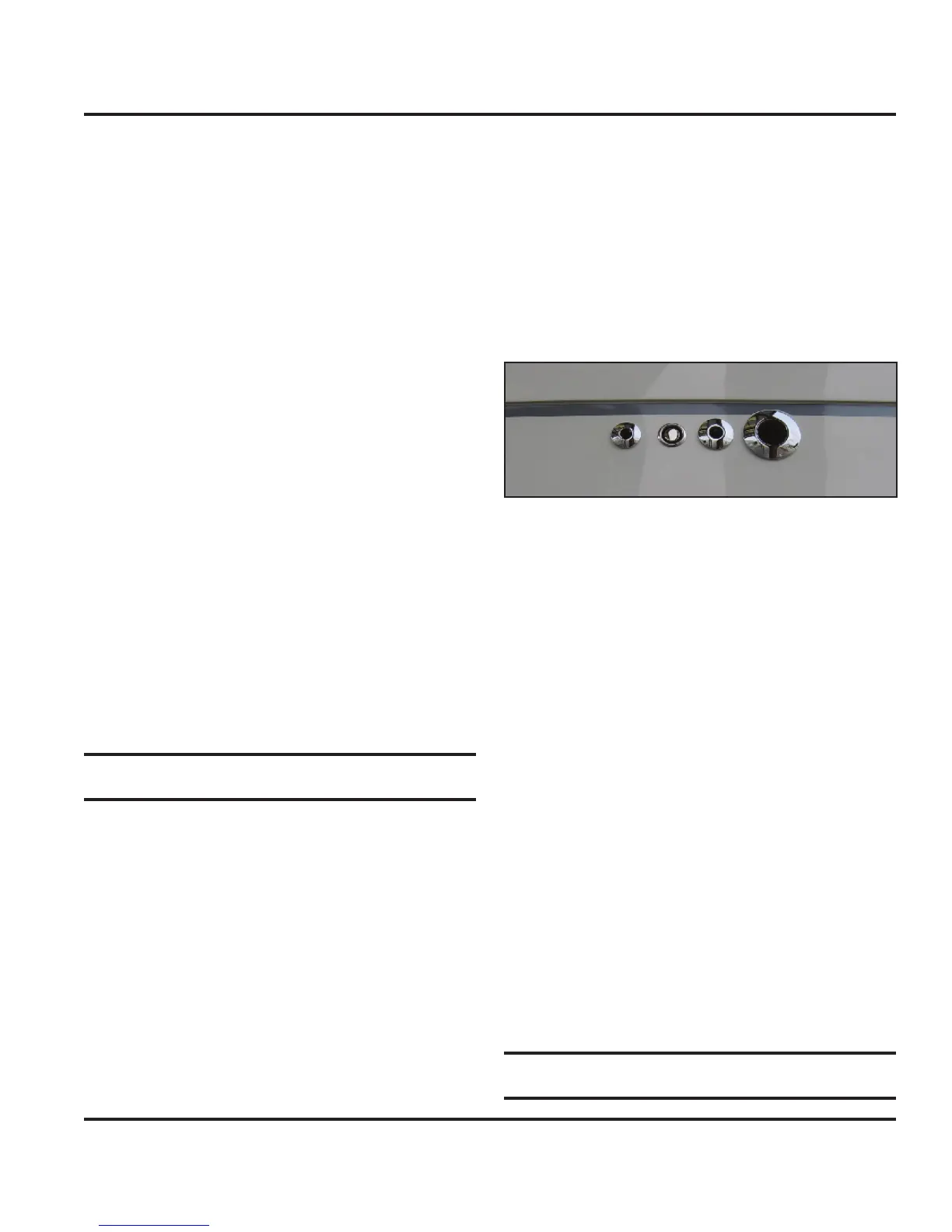
boat. Fig. 10.1 gives you a summary view of some thru-
hulls. Please refer to the Underwater Gear chapter in
this manual for specific details on thru-hull locations on
your boat.
Figure 10.1
Vents, shown second from the left in Fig. 10.1, are anoth-
er type of thru-hull or thru-deck and represent another
method of waste disposal. These thru-hulls are limited to
allowing over-flow or air to escape the fuel, holding and
water tanks aboard your boat. This is one way that gas-
eous waste products, and in some instances liquids, are
properly disposed. However, avoid using the fuel tank
vent as a method to determine if your tanks are full when
fueling. Fuel spills are a dangerous hazard (see the Fuel
System chapter in this manual for additional information).
Please refer to the Underwater Gear chapter in this man-
ual for specific details on vent locations on your boat.
10.1.2 Overboard Discharge
Some discharges have valves associated with them.
The black water, or raw sewage system from the head,
is one such system (although technically this system is a
drain, it is generally discussed as a discharge). This ball
valve or Y-valve is the overboard discharge valve which
allows the discharge of the solid waste from the holding
tank when at sea (discussed in greater detail within the
Holding Tank section).
NOTE: The black water overboard discharge valve should
remain closed at all times except during a purposeful discharge
in lawful waters.
10.2 Pumps
Your boat has waste systems designed to fit the most
demanding environment and feature the latest innova-
tions in sanitation. These systems process waste based
on the following general categories:
Liquid, with subcategories of:
Black water - raw sewage
Gray water - waste not considered raw sewage
Raw water - cooling water that is taken in through
pickups, etc. and discharged back
Gaseous - exhaust, tank ventage and ventilation
With these categories in mind, we will discuss the waste
and sanitation systems organized into the following com-
ponents:
Drains and Discharges
Pumps
Engine & Generator Waste
Head System
Holding Tank
Blower
IMPORTANT: U.S. Coast Guard regulations require that boats
have a sanitation system on board to control pollution. Waste
is to be stored in a holding tank or other device so it can be
properly disposed of at a shore facility. Discharging this waste
overboard in U.S. lakes, rivers, bays, and sounds, and within
three miles of shore in international waters is prohibited. Check
with the Coast Guard regarding regulations in your area.
10.1 Drains and Discharges
Any liquid waste removal system that is gravity fed would
be termed a drain. Likewise, any waste removal system
incorporating a pump would be termed a discharge. The
passage of waste from the boat into the external envi-
ronment is by thru-hulls or thru-decks. These exchange
points are connected by hose or pipe to a collection point
or point of waste origin.
10.1.1 Thru Hulls
There has to be an exchange point or outlet to release
liquid waste. These outlets are called thru-hulls and are
openings in the hull of your boat and generally incorpo-
rate bronze or plastic fittings. Thru-hulls can either drain
or discharge from a single source, such as a holding
A.
1.
2.
3.
B.
1.
2.
3.
4.
5.
6.



 To Next Page