–
80
–
Trouble Case (1) Case (2) Check and Corrective measures
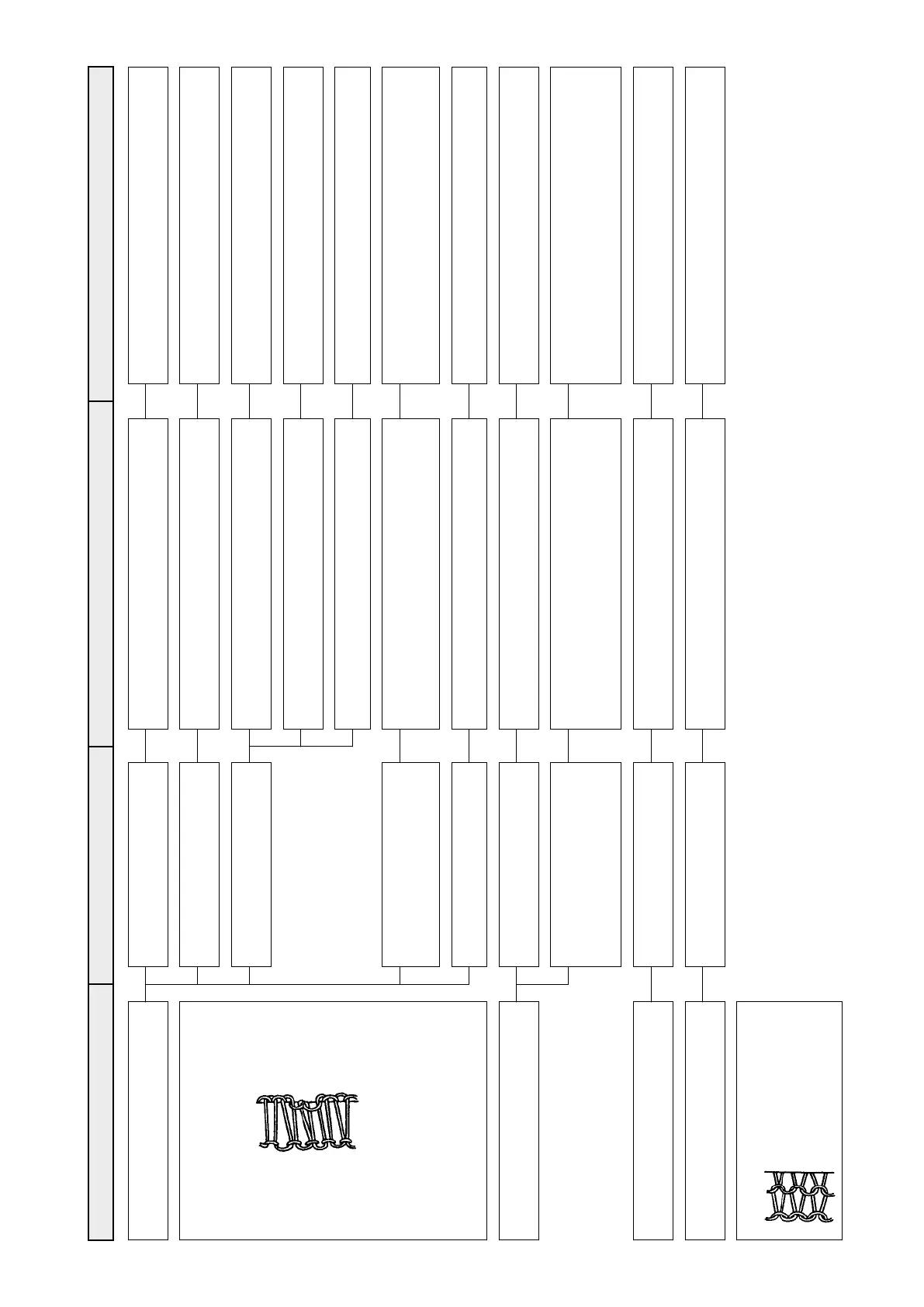
10. Irregular stitches 10-1) Looper thread tension 1-A) The upper and lower looper thread ten-
sions are not enough.
Slightly increase the upper and lower looper
thread tensions.
The knotting position of the
upper and lower looper threads
varies as shown below.
10-2) Knife width 2-A) The knife width is unsuited for the over-
edging width.
Make the overedging width slightly smaller than
that given for the knife width.
10-3) Thread path 3-A) Scratches on the thread path catch
thread.
Check the thread path for scratches.
3-B) The thread path parts have become
loose (instable).
Fix them with adhesive agent.
3-C) The looper pipe is not securely inserted. Insert the looper pipe until it will go no further.
10-4) Presser foot 4-A) The presser foot cones into contact
unevenly with the throat plate and feed
dogs and tends to meander.
Make the presser foot come into contact with
them evenly.
10-5) Thread stand 5-A) Thread dose not come out smoothly. Make the thread come out smoothly.
11. The looper thread bulges out 11-1) Knife width 1-A) The knife width is too small for the over-
edging width.
Use a knife having width suited to the overedg-
ing width.
11-2) Looper thread take-up
adjustment
2-A) The looper thread take-up draws out
excessive looper thread.
Decrease the radius of the looper thread take-
up (left) (reduction in dimension I). Raise the
looper thread take-up (right) (increase in dis-
tance O).
12. Looper thread bite 12-1) Knife width 1-A) The knife width is too large for the over-
edging width.
Use a knife having width suited to the overedg-
ing width.
13. Knotting position is not correct 13-1) Threading 1-A) Re-threading after thread breakage, etc.
has been done erroneously.
Refer to the threading diagram.
(Refer to the Instruction Manual)
Knots are deected to
the upper looper side.
Right side



 To Next Page