4.2 Pellet flue gas temperature probe
The flue gas probe used to measure the pellet's flue gas temperature has the following features:
Thermocouple probe: J type
Measuring field: 0/+350°C
Obtain a tester to check if probe is faulty, set it in ohm and measure the two probe pins (wire ends);
however, this only verifies if the probe is interrupted (no change compared to value shown on
unconnected tester).
The tester can also be used to check if the probe connection to the power board contacts are in short;
if 0 ohm resistance is measured by connecting the tester to the contacts, these are in short.
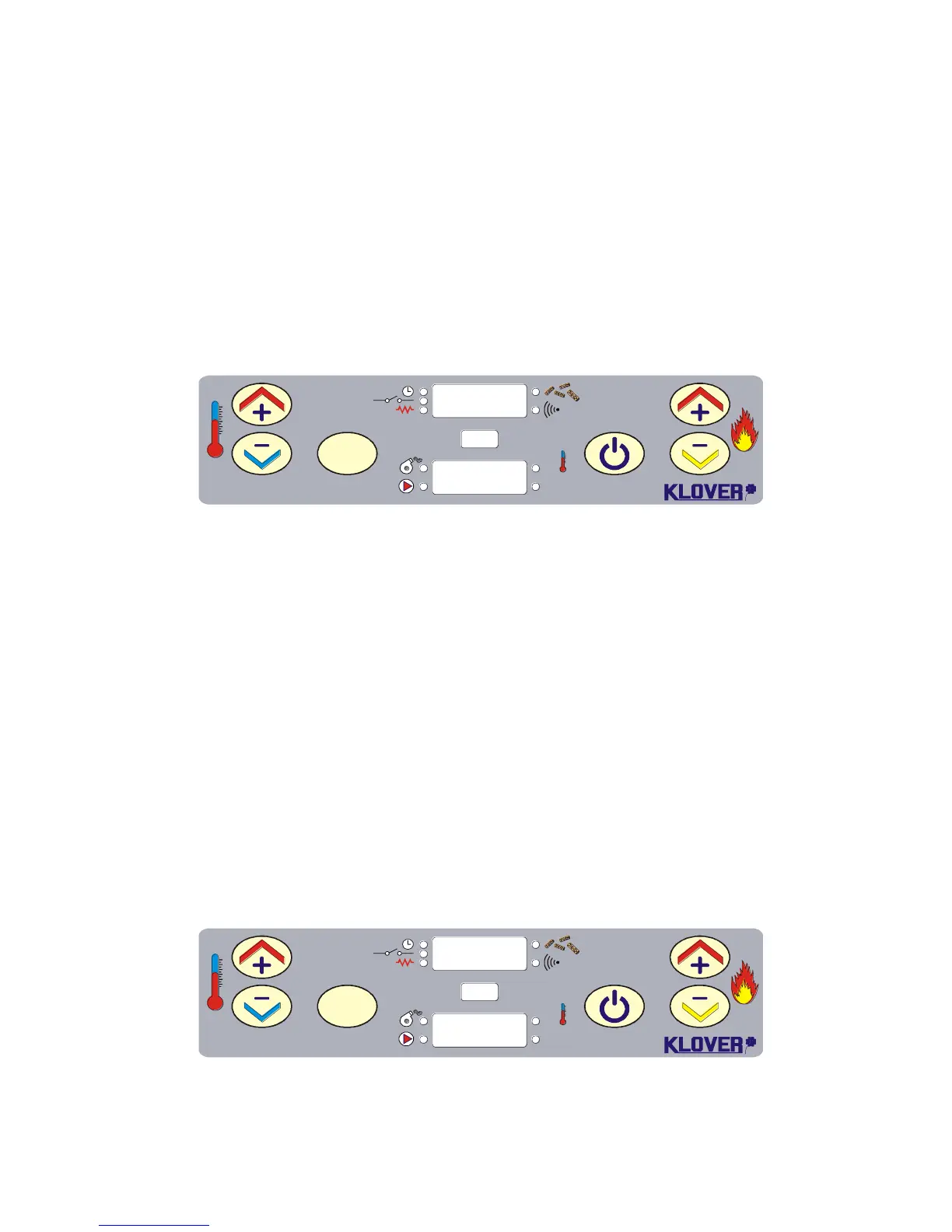
The upper display shows the pellet flue gas temperature (by pressing key 1) at 284°C if the pellet flue
gas probe is not connected to the power board. The display appears as in figure 11.
Pay attention to wires polarity when connecting the pellet flue gas probe to the power board. A
fixed temperature of 30°C appears on upper display that does not change with the increase of
flue gas temperature if the wires' polarity is inverted.
4.3 Wood flue gas temperature probe (BI-FIRE MID – BI-FIRE wood side)
The flue gas probe used to measure the wood's flue gas temperature has the following features:
2 Wires PT1000 probe: PT 1000 class B
Measuring field: 0/+500°C
Obtain a tester to check if probe is faulty, set it in ohm and measure the two probe pins (wire ends):
The probe measures about 1k 1.1kohm at 25/30°C if it works correctly
If the probe is faulty: - resistance greater than 1Mohm (open)
- resistance to 0 ohm (in short)
The tester can also be used to check if the probe connection to the power board contacts are in short;
if 0 ohm resistance is measured by connecting the tester to the contacts, these are in short.
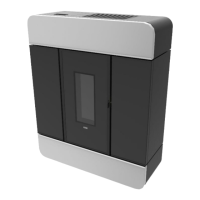
The lower display shows the wood flue gas temperature (by pressing key 2) at h86°C if the wood flue
gas probe is not connected to the power board. The display appears as in figure 12.


 To Next Page