93
Explanation Section
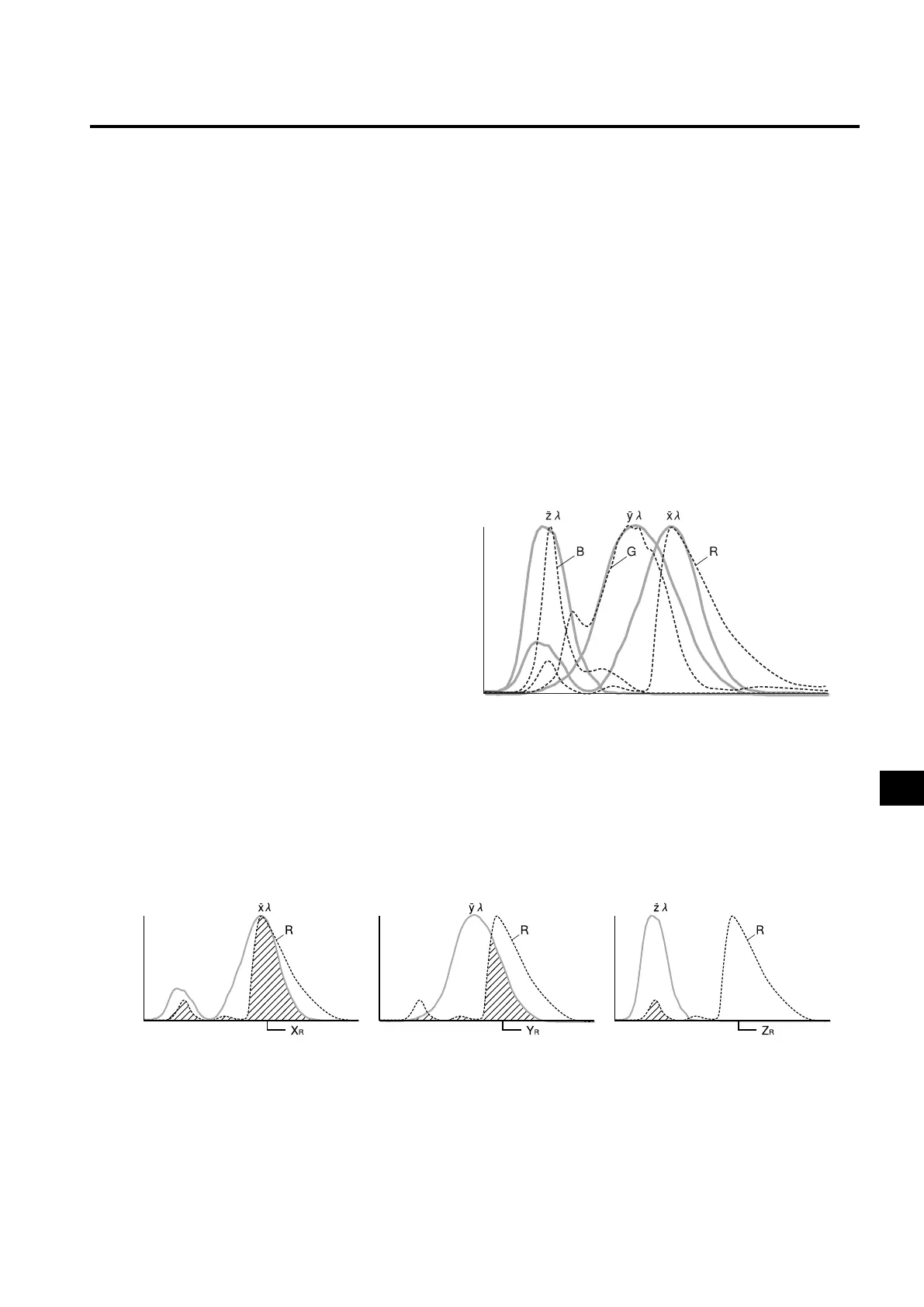
Fig. 1 Display’s Spectral Distribution and Sensor’s Spectral Sensitivity
Fig. 2 Outputs of Sensors
–
x
λλ
λλ
λ,
–
y
λλ
λλ
λ, and
–
z
λλ
λλ
λ by Emitted Monochrome Light R
4. Principle of Analyzer Mode
In analyzer mode, the emission characteristics of the display’s three monochrome lights (R, G, B) and the target
color are set to the instrument’s memory. Once they are set, display’s screen colors obtained by measurement can
be converted to emission of each monochromatic light and displayed.
For instance, if emission of R among R, G and B is adjusted, only the output of R will change and the outputs of B
and G will remain the same, making white balance adjustment easy (white balance measurement is performed by
adjusting the output of a monochrome color).
Each sensor (spectral sensitivity:
––
xλ,
–
yλ,
–
zλ) of the measuring probe has sensitivity towards the display’s R, G and
B. Thus, even if R monochrome light is emitted on the display’s screen, an output will be provided from each
sensor (
–
xλ,
–
yλ,
–
zλ). This is also true in the case of G and B monochrome colors.
Therefore, to measure each of R, G and B monochrome colors independently, a certain technique is required. In
this instrument’s analyzer mode, measurement is performed based on the following concept.
<About Principle of Analyzer Mode>
Fig. 1 shows measuring probe sensor’s spectral sensitivity and display’s R, G and B spectral distributions.
The outputs of sensors
––
xλ,
–
yλ, and
––
zλ when only the monochrome light R is emitted are the values equivalent to
the hatched areas X
R
, Y
R
and Z
R
, respectively. Although the outputs of these sensors change according to the
output of the monochrome color R, the output ratio will be constant because of the spectral characteristic of the
display and sensors.
400 450 500 550 600 650 700 750
Relative sensitivity
Wave length (nm)
400 450 500 550 600 650 700 750
Relative sensitivity
Wavelength (nm)





 To Next Page