OPERATING THE BOAT
© 2003-2018 Ken Cook Co.
SECTION
7
Bass l
7 - 7
BEFORE REFUELING
Fire/Explosion Hazard: Gasoline is extremely
flammable and highly explosive under certain conditions. Be sure to check the
fuel hoses and connectors for leaking and deterioration before fueling and on
a monthly basis.
• Refuel the tanks only in a well-lighted area.
• Know where the fire extinguishers are.
• Stop all engines, motors and appliances before refueling. Keep the engine
compartment blower on if equipped.
• Do not smoke or allow open flames or sparks nearby, within 50 feet (15
meters), of the fueling area.
• If equipped, close all doors, windows, hatches and ports.
• Determine the amount of fuel required to fill the tanks. Do not overfill the
fuel tanks. Allow for at least a 2% expansion of fuel when refueling. If the
fuel temperature is 32°F (0°C) or lower, allow at least 6% for fuel
expansion.
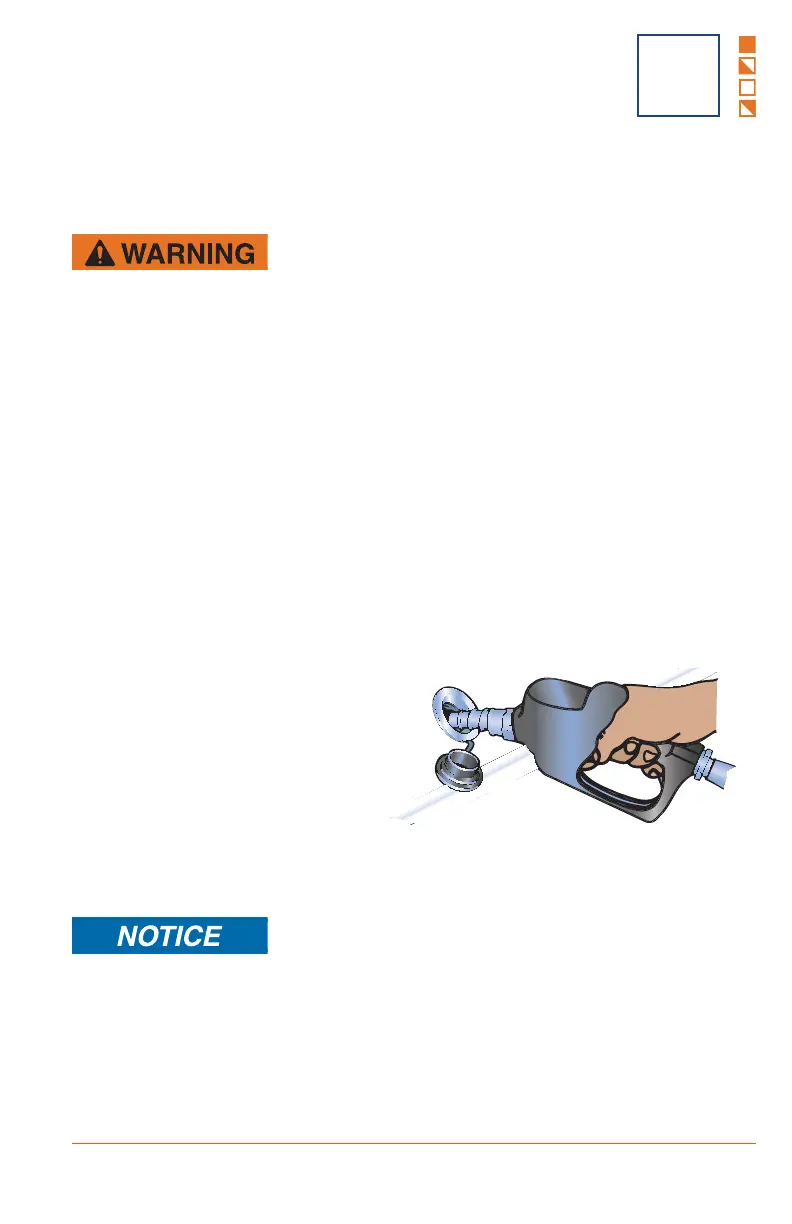
FUELING
The fuel filler on boats with built-in
tanks is usually located on the
gunwale. The fuel tank is equipped
with either a shutoff valve or
antisiphon valve. The shutoff valve
requires you to manually turn the fuel
valve, while the antisiphon valve
operates automatically. Because
gasoline fumes are heavier than air,
they will sink to the lowest part of
your boat, such as the bilge. Always evacuate fumes with the bilge blower (if
equipped) before attempting to start the engine.
To prevent unwarranted engine damage, refer to the
Engine Operator’s Manual for recommended fuel and oil specifications.
KC-0027C-A



 To Next Page