OPERATING THE BOAT
© 2003-2018 Ken Cook Co.
SECTION
7
Bass l
7 - 19
• Leave some slack in the lines to allow for wave movement or tidal action if
applicable.
ANCHORS AND ANCHORING
Anchors are available for various applications and come
in many sizes, types and shapes. Boat weight and size
are primary factors in choosing an anchor. When
selecting an anchor, consult other qualified boaters
familiar with the waters or the boat dealer.
Anchor line is constructed from various materials and is
available in many diameters and types. The anchor rode
for recreational boats consists of the anchor line
connected to a length of chain attached to the anchor.
Consult with the boat dealer for a recommendation on
appropriate lines for the boat anchor and application.
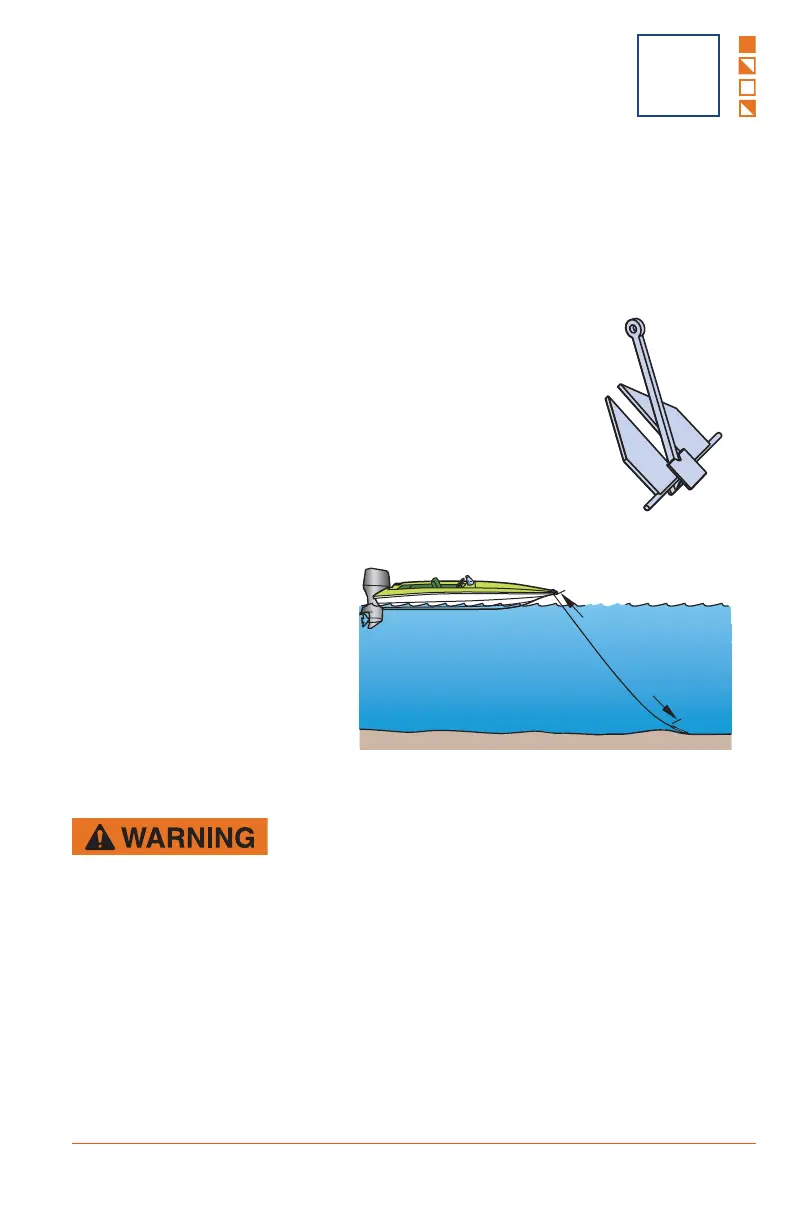
For most applications, anchor
line length should be at least six
to seven times longer than the
depth of the water in which you
are anchoring. Always have
plenty of additional anchor line
on board. If anchoring in tidal
waters, consider a rode chain
about the length of the boat and
increase the total anchor line
length to ten times the depth of
the water at low tide.
Sinking Hazard: ALWAYS anchor from the bow; NEVER
anchor from the stern. A small amount of current will make a boat unsteady. A
strong current can pull a boat anchored by the stern under the water and
keep it there.
Helpful guidelines when anchoring:
• Make sure the anchor line is tied to the anchor. Tie the other end of the line
to the forward cleat or bow eye.
• Head the boat into the wind or current over the spot where you want to
lower the anchor.
KC-0146C-A
6 TO 7 TIMES
THE DEPTH



 To Next Page