SAFETY
SECTION
2
© 2003-2018 Ken Cook Co.
2 - 18
l Bass
FIRE EXTINGUISHER
USCG-approved fire extinguishers are required on all Class I, II
and III boats. Mount all handheld fire extinguishers in readily
accessible areas away from the engine compartment and other
combustible devices. All passengers must know the location and
operating procedure of each extinguisher. Follow the
manufacturer’s instructions for proper use and operation of the fire
extinguisher.
All fire extinguishers used on marine boats must be classified to
extinguish type B fires (gasoline, oil or grease). The size and
number of required fire extinguishers depend on the size of the boat. The two type
B fire extinguishers commonly used are B-I and B-II. Type B fire extinguishers are
classified by the different extinguishing compound amounts used in each.
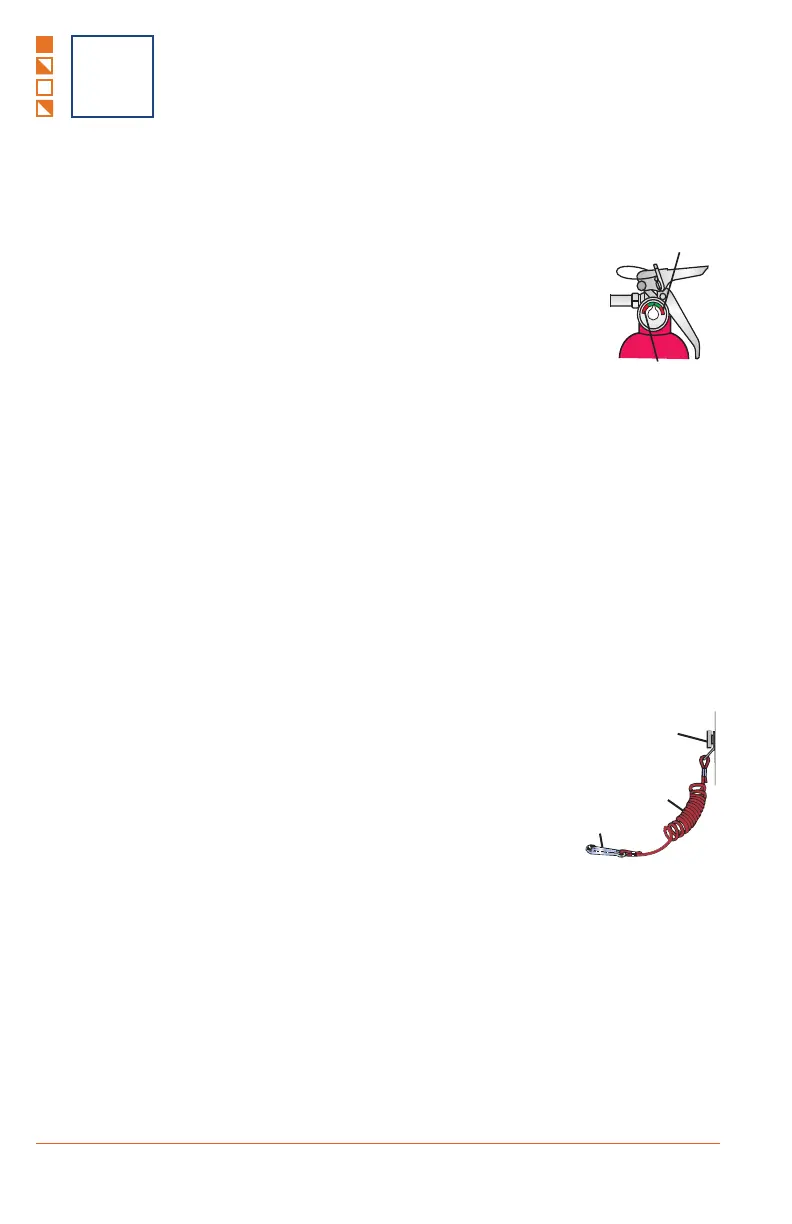
Check the fire extinguisher condition and pressure gauge regularly, if not before
every trip, to ensure that the fire extinguisher is in good operating condition and is
fully charged. If the fire extinguisher is damaged or not properly pressurized,
replace it.
See the U.S. Coast Guard Minimum Onboard Personal Safety Equipment Required
section of this manual for specific onboard requirements.
ENGINE EMERGENCY STOP SWITCH AND LANYARD
The engine emergency stop switch is an extremely important
safety precaution. Use the engine emergency stop switch when
operating the boat’s engine. This safety device prevents the
boat from becoming a runaway if the operator is accidentally
thrown from the seat or away from the helm.
Before turning on the boat’s engine, secure the engine
emergency stop switch lanyard to the operator. If the operator
is thrown from the seat or moves too far from the helm, the
lanyard will disconnect from the switch, activating the switch to
turn off the engine.
OVERCHARGED
RECHARGE
KC-0009C-B
KCB-0003
STOP SWITCH
LANYARD
HOOK



 To Next Page